Emergency Electrician Big Bear: When to Call vs. When You Can Wait
February 13, 2026
Emergency Electrician Big Bear: When to Call vs. When You Can Wait
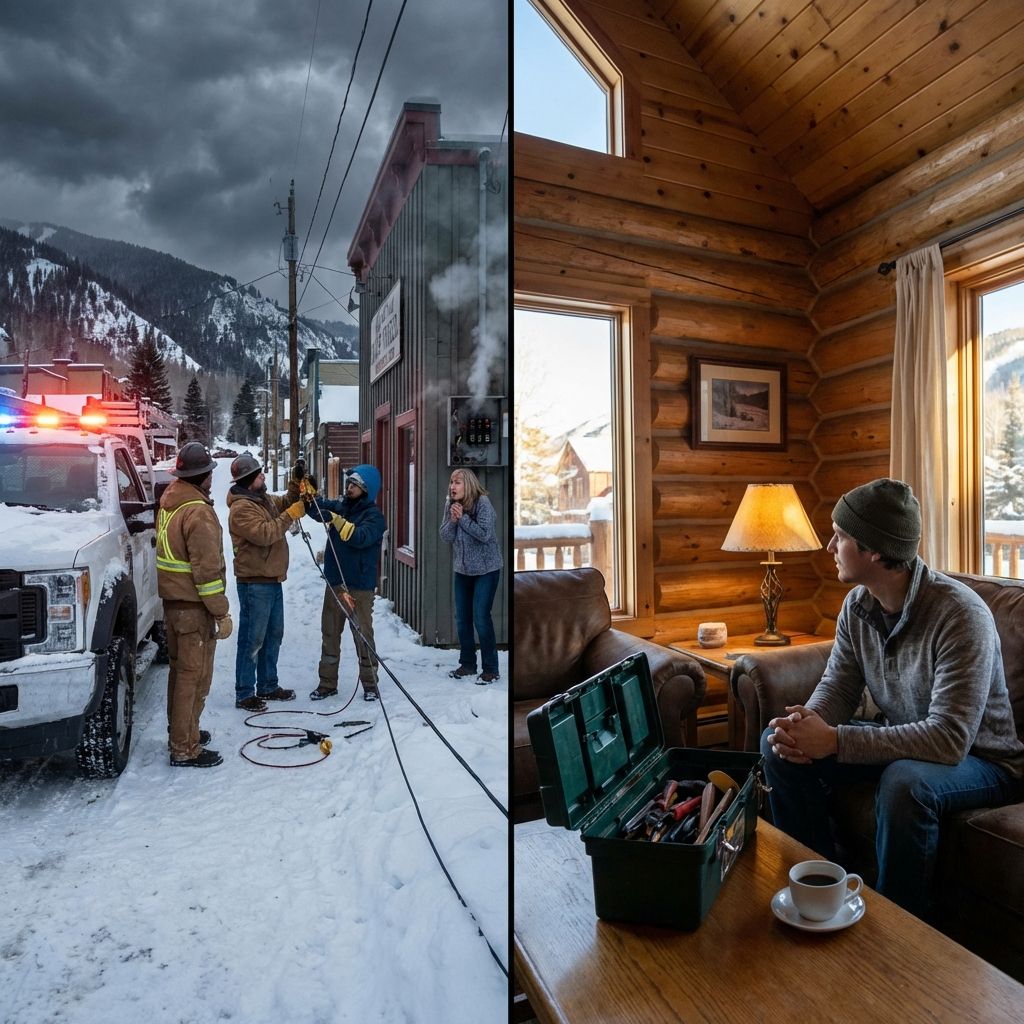
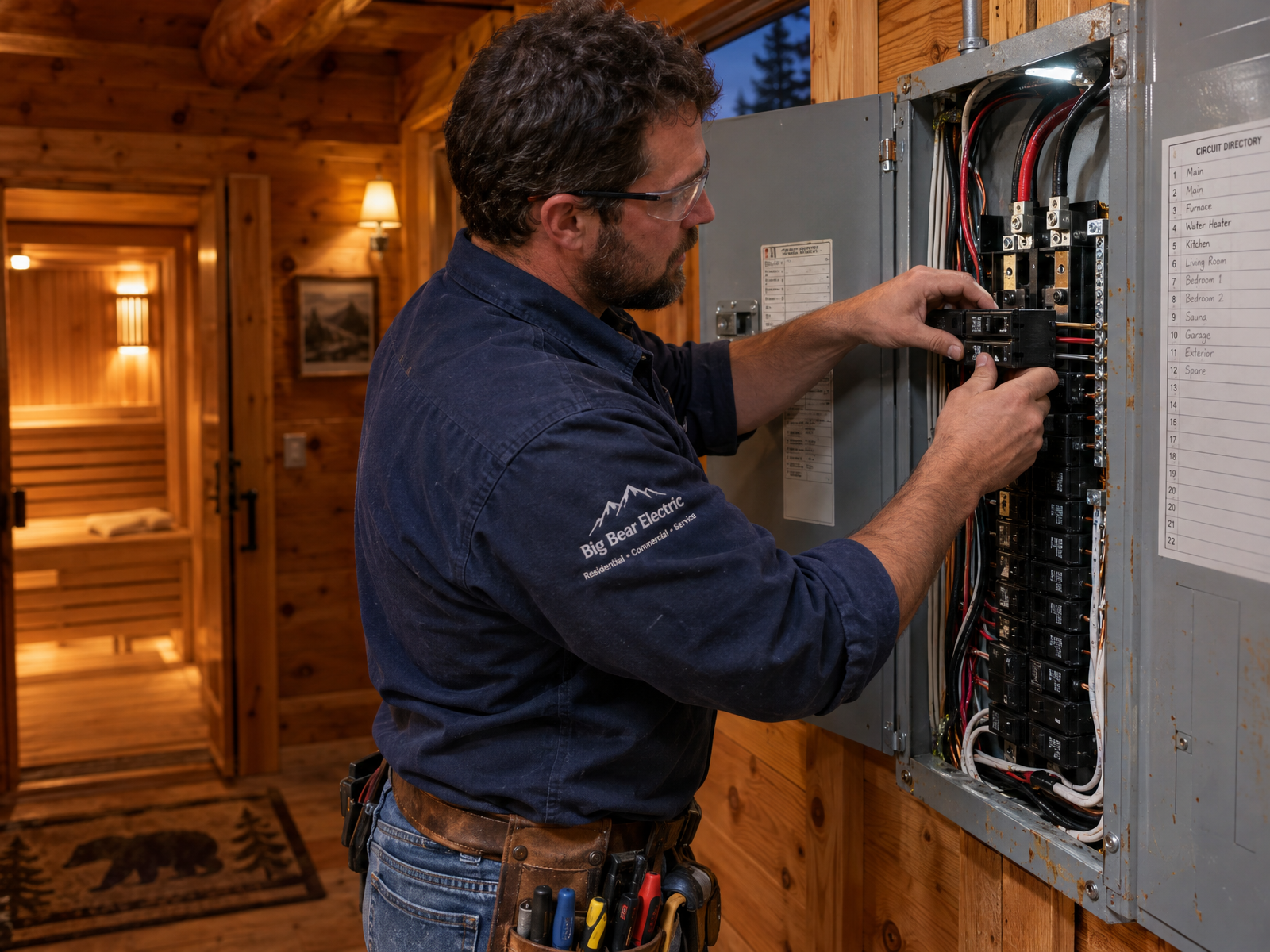
It's 9 PM. Your lights just flickered, went dark, and now there's a faint burning smell near your breaker box.
This is the moment every Big Bear homeowner dreads. You're wondering: Is this an emergency? Can it wait until morning? Should I try to fix it myself?
Here's the truth: some electrical problems demand immediate professional attention, while others can safely wait. But knowing the difference could literally save your cabin—and your family.
Call an Emergency Electrician in Big Bear RIGHT NOW If You Experience:
🔥 Burning Smell or Smoke
If you smell burning plastic or see smoke coming from outlets, switches, or your electrical panel, shut off your main breaker and call immediately. This isn't just an inconvenience—it's an active fire hazard. Electrical fires account for 13% of home fires nationally, and in Big Bear's dry mountain climate with older cabins, that risk multiplies.
âš¡ Sparking Outlets or Visible Arcing
Small sparks when plugging in devices might be normal. But repeated sparking, visible arcing, or outlets that char or scorch walls? That's dangerous fault current that can ignite surrounding materials. Don't wait—this gets worse, not better.
🌊 Water and Electricity Contact
Water intrusion from Big Bear's heavy snowmelt, frozen pipe bursts, or roof leaks that reach electrical systems creates immediate shock and fire danger. If water has contacted your electrical panel, outlets, or wiring, do not attempt to dry it yourself. Call a licensed electrician equipped to handle wet electrical emergencies safely.
💥 Tripped Main Breaker That Won't Reset
Individual circuit breakers trip occasionally—that's normal. But if your main breaker trips and refuses to stay on, or trips repeatedly, you have a serious short circuit or ground fault. Operating a damaged system risks catastrophic failure or fire.
🔊 Buzzing, Humming, or Sizzling Sounds
Electrical systems should operate silently. Audible buzzing from panels, outlets, or switches indicates loose connections arcing under load. These connections generate extreme heat—hundreds of degrees—that ignites surrounding materials.
These Can Probably Wait Until Normal Business Hours:
Single outlet stopped working (with no burning smell or visible damage)
Light fixture needs replacement
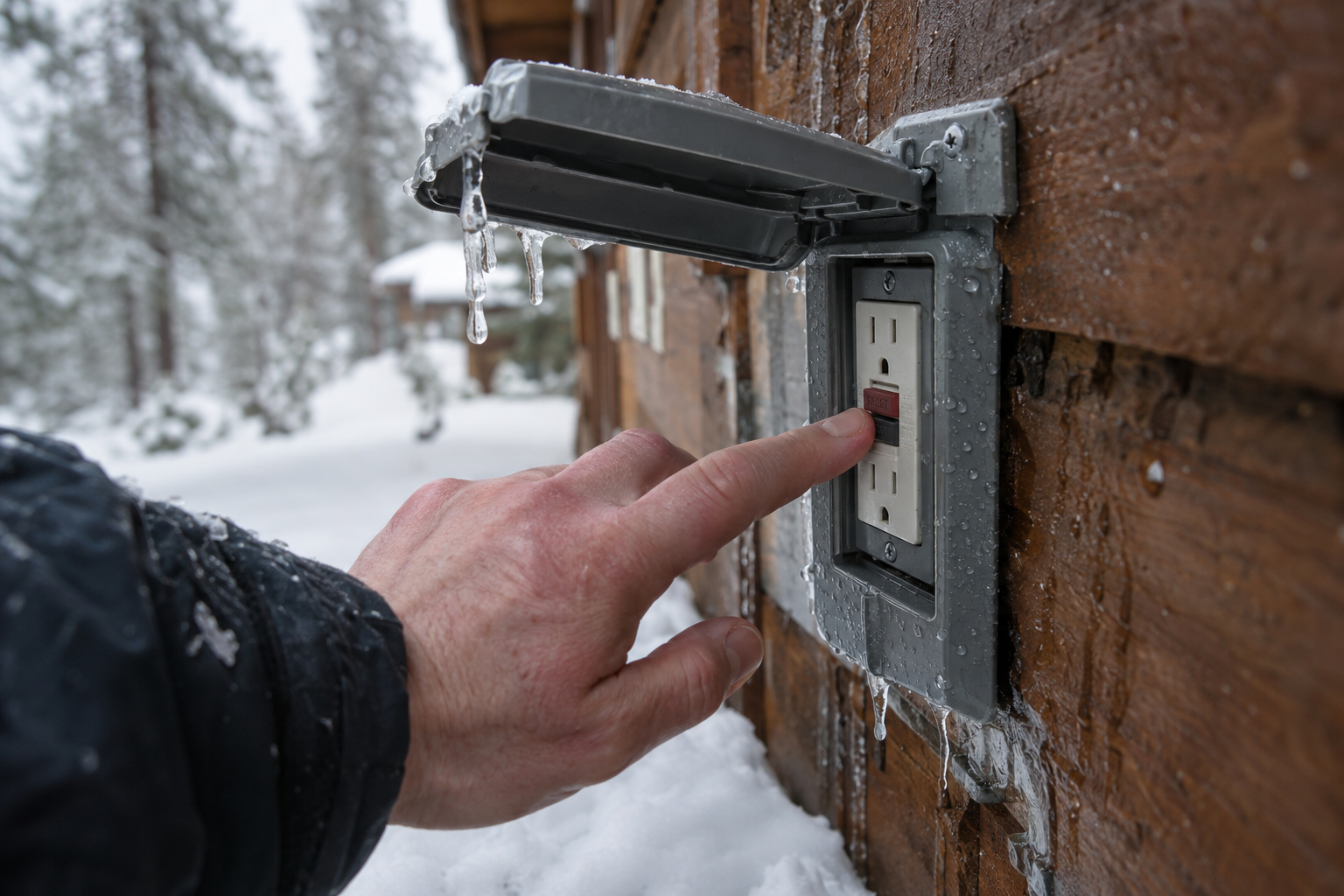
GFCI outlet tripped but resets normally
Dimmer switch acting up
Ceiling fan running slow or making noise
These are annoying, but not dangerous. Schedule service during normal hours and save the emergency service premium for actual emergencies.
The Big Bear Difference: Why Location Matters
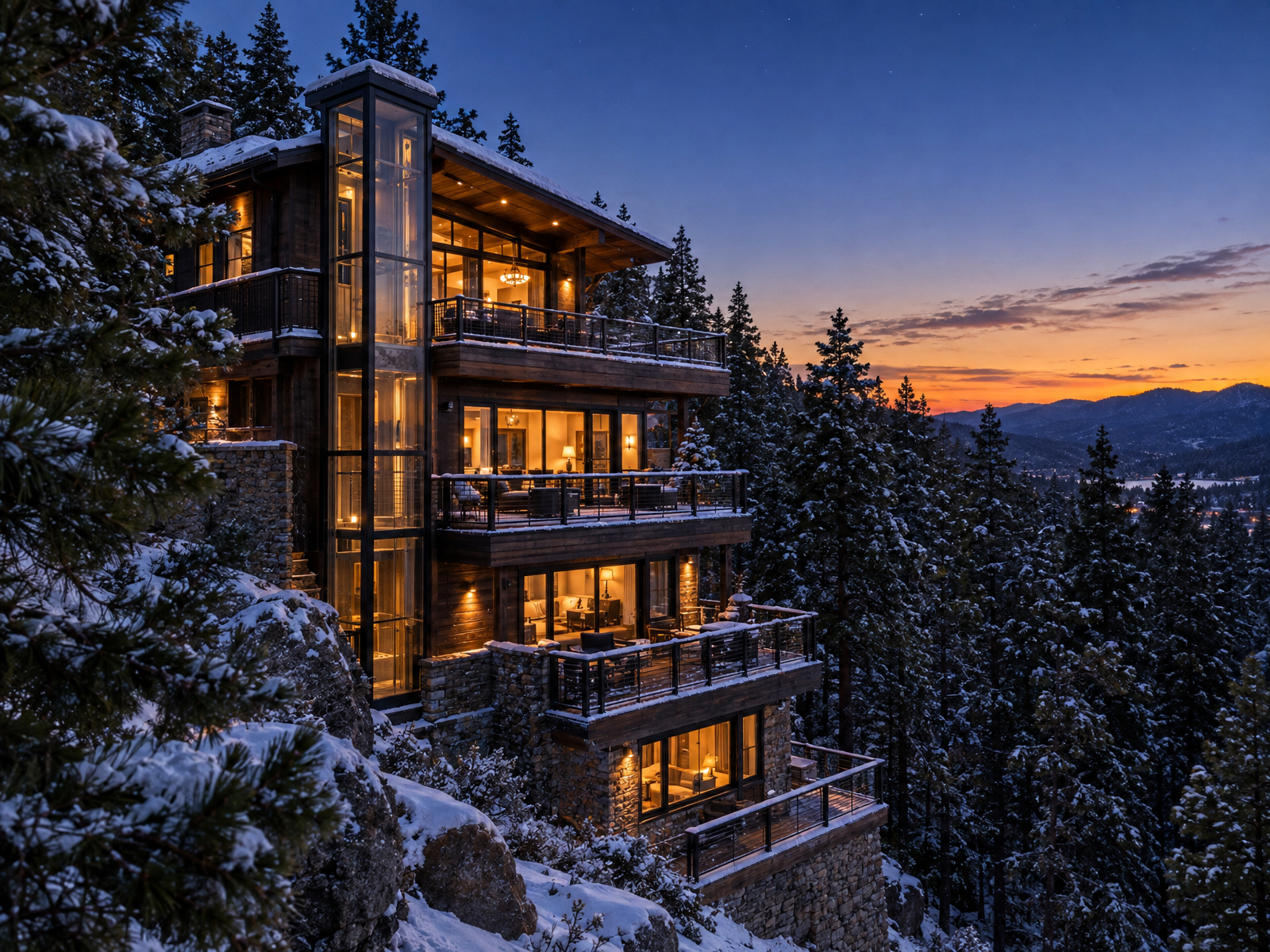
Big Bear isn't Los Angeles. When electrical emergencies strike at 7,000 feet elevation, you face unique challenges:
Slower Response Times: Many "Big Bear electricians" are actually based in the valley, meaning 60-90 minute response times during your emergency.
Winter Access Issues: Heavy snow, chain requirements, and road closures can delay outside contractors for hours—or days.
Older Cabin Electrical Systems: Big Bear's charming vintage cabins often have outdated wiring, overloaded panels, and aluminum wiring that increases fire risk.
You need an electrician who actually lives and works in Big Bear. Someone who understands mountain electrical challenges. Someone who can respond fast because they're already here.
What to Do While Waiting for Emergency Service
If you've called for emergency electrical service, protect your property and family while waiting:
Shut off the main breaker if it's safe to access
Evacuate if you see flames or heavy smoke—property can be replaced, you cannot
Keep a fire extinguisher nearby (but never use water on electrical fires)
Don't attempt DIY repairs in emergency situations
Turn on exterior lights so emergency responders can locate your cabin quickly
Why Choose a Local Big Bear Emergency Electrician?
When your electrical system fails at the worst possible moment—during a winter storm, holiday weekend, or late at night—you need someone who:
Responds from Big Bear, not San Bernardino (30-45 minutes faster)
Knows Big Bear's older cabin electrical systems inside and out
Stocks parts and equipment specifically for mountain homes
Is licensed, insured, and experienced with high-elevation electrical work
Can navigate winter road conditions safely and legally
Big Bear Electric Pros
provides true emergency electrical service 7 days a week, 365 days a year. We live here. We work here. When you call, we're already on the mountain—not stuck in valley traffic calculating whether chain requirements will delay our arrival.
The Bottom Line
Electrical emergencies don't wait for convenient business hours. And in Big Bear's mountain environment with limited resources and challenging access, having a trusted local electrician's number saved in your phone isn't optional—it's essential.
Burning smell? Sparks? Smoke? Don't wait. Don't guess. Don't risk it.
Call Big Bear Electric Pros 24/7 Emergency Service: (909) 415-5573
We're here. We're ready. We're local.
Serving Big Bear Lake, Big Bear City, Fawnskin, Sugarloaf, and all San Bernardino Mountain communities with professional emergency and scheduled electrical services. Licensed, bonded, and insured California electrical contractor.
A hot tub is the single most-searched amenity for Big Bear vacation rentals. Guests filter for it. Hosts charge more for it. And every year, electricians in the San Bernardino Mountains get called out to properties where hot tubs are wired incorrectly — missing GFCI protection, running on undersized circuits, or connected without permits. This isn't a minor compliance issue. Hot tub electrical faults cause electrocutions. If you're installing a new hot tub at your Big Bear cabin or buying a property where one is already installed, here's what you need to know. Why Hot Tub Wiring in Big Bear Isn't a DIY Job Hot tubs require a dedicated 240-volt circuit, a GFCI breaker, a disconnect box, and weatherproof conduit — all installed to National Electrical Code (NEC) standards and inspected by San Bernardino County. California law requires a licensed C-10 electrical contractor for this work, and permits are mandatory. Beyond the legal requirement, Big Bear's environment creates specific installation challenges: Freeze-thaw cycles. At 7,000 feet elevation, buried conduit and underground wiring face repeated freezing and thawing that loosens connections and degrades materials faster than valley installations. Proper conduit depth and materials matter. Snow load on equipment. The disconnect box, conduit runs, and any exposed wiring near a hot tub need to be mounted and protected with mountain weather in mind — not just coastal California specs. Older panels in cabin stock. A significant percentage of Big Bear properties were built in the 1960s–1980s with 100-amp panels. A hot tub draws 50–60 amps. On an already-loaded panel, that's not a circuit you can add without a panel assessment first. Vacation rental liability. If a guest is injured or killed due to a hot tub electrical fault at your Airbnb or VRBO property, and that wiring was unpermitted or non-compliant, your homeowner's insurance may deny the claim. Both Airbnb and VRBO require hosts to certify their properties meet local safety codes. What a Code-Compliant Hot Tub Electrical Installation Actually Requires Here's what every properly wired hot tub in Big Bear needs: Dedicated 240-volt circuit. Hot tubs require their own dedicated circuit — typically 50–60 amps, though some smaller units run on 40 amps. The circuit must be sized to the specific hot tub model. Sharing a circuit with another load is a code violation. GFCI breaker. A Ground Fault Circuit Interrupter (GFCI) breaker on the hot tub's dedicated circuit is non-negotiable. GFCI protection detects dangerous current leakage — the exact failure mode that causes electrocutions in and around water — and cuts power in milliseconds. This is required by the NEC and by California code, and it's the most important safety feature in the entire installation. Disconnect box. A lockable disconnect switch must be installed within line of sight of the hot tub, at least 5 feet away from the water's edge. This allows power to be cut quickly in emergencies and gives service technicians a safe shutoff point. Proper wire gauge and conduit. The circuit requires wire sized appropriately for the amperage (typically 6 AWG for 50-amp circuits) run in weatherproof conduit. In Big Bear, conduit runs should use materials rated for temperature extremes — standard PVC can become brittle in sustained cold. Bonding. The hot tub's metal components — shell, frame, pump motors, heater — must be bonded together and connected to the electrical system's grounding. This equalizes voltage between components and prevents shock. Burial depth. If conduit runs underground (common when the panel is inside and the tub is on a deck or patio), it must be buried to code-required depth. In Big Bear's terrain, this often requires hand-digging around tree roots and through rocky soil. Permits and inspection. San Bernardino County requires an electrical permit for hot tub wiring. A county inspector will verify the installation before you're cleared to use the tub. Without a permit, the work isn't legally complete — and it's a liability that will surface during home sales. Does Your Big Bear Panel Have Room for a Hot Tub Circuit? This is the first question a licensed electrician will ask. A 50-amp hot tub circuit on a 100-amp panel that's already running a well pump, electric heating zones, kitchen appliances, and a washer/dryer is a problem. You're not just adding a breaker — you're adding a load that may push the panel past safe capacity. Before any hot tub installation, a qualified electrician should perform a load calculation to determine whether your current panel can handle the addition. If it can't, you have two options: a panel upgrade, or a load management approach that accounts for simultaneous demand. Panel upgrades for Big Bear cabins typically run $2,500–$4,500 and are often worth doing proactively, especially if you're also considering an EV charger, a generator, or additional circuits for a vacation rental. Combining work in a single project reduces permit fees and labor costs. According to the Consumer Product Safety Commission, there are approximately 33 pool and spa electrocution fatalities in the U.S. annually — nearly all involving improper grounding, bonding, or missing GFCI protection. At Big Bear's elevation, where emergency response times are longer and guests may not know where your breaker box is, that risk calculus matters more. What Hot Tub Wiring Costs in Big Bear Costs vary based on your panel situation, the distance from panel to tub, and whether conduit needs to be buried. Here are realistic ranges for San Bernardino Mountain area installations: Straightforward install, adequate panel, short run: $800–$1,500 Standard install with longer conduit run (30–60 ft): $1,500–$2,500 Install requiring underground conduit burial: $2,000–$3,500 Hot tub install plus panel upgrade (100A to 200A): $4,000–$7,000 San Bernardino County permit and inspection: $75–$150 These are installed costs including labor, materials, disconnect box, GFCI breaker, conduit, and permit. They don't include the hot tub unit itself. If you're buying a property with an existing hot tub, ask when the wiring was done and whether it was permitted. An uninspected hot tub installation is a known liability — budget $150–$300 for an electrician to inspect the existing wiring and give you a written assessment before you use it. Buying a Big Bear Property With an Existing Hot Tub: What to Verify Hot tubs on Big Bear vacation rental properties change hands frequently. Before you close escrow — or before your first guests use the tub — verify these four things: Confirm a GFCI breaker is installed. This is non-negotiable. If the hot tub circuit doesn't have a GFCI breaker at the panel, don't use the tub until one is installed. This is a $200–$400 fix that could prevent a fatality. Verify the disconnect box exists and is code-compliant. It should be within sight of the tub, at least 5 feet from the water, and lockable. Missing or undersized disconnect boxes are among the most common violations found on older Big Bear properties. Ask for permit documentation. A permitted installation will have a San Bernardino County inspection record. If the seller can't produce one, assume the wiring is unpermitted and budget for a compliance inspection. Check the wire gauge and conduit condition. If the conduit running from the panel to the tub is visibly degraded, undersized, or improperly supported, plan for remediation. Big Bear's temperature extremes are hard on materials over time. If any of these items are uncertain, schedule a hot tub electrical inspection before use — not after. Hot Tub Wiring for Vacation Rentals: The Compliance Angle If your Big Bear property is on Airbnb, VRBO, or a similar platform, hot tub electrical compliance isn't just a safety issue — it's an operational one. San Bernardino County's short-term rental permit requirements include compliance with all applicable safety codes. Electrical work, including hot tub wiring, must be permitted and inspected. An STR inspection that turns up unpermitted hot tub wiring creates a compliance problem that can jeopardize your permit. Beyond the county, your STR insurance policy matters. Standard homeowner's policies often don't cover commercial rental use. STR-specific policies typically require that the property meets local safety codes. If a guest is injured in a hot tub with non-compliant wiring, coverage under a non-STR policy is unlikely. A documented, permitted, inspected hot tub electrical installation is your paper trail. It shows due diligence. It satisfies county requirements. And it gives your insurance company what it needs to cover a claim if something goes wrong despite your best precautions. Frequently Asked Questions Can a handyman wire my hot tub in Big Bear? No. California law requires a licensed C-10 electrical contractor for this work. Unlicensed hot tub wiring is illegal, cannot be permitted or inspected, voids the hot tub manufacturer's warranty, and creates serious liability exposure for vacation rental hosts. My hot tub came with an installation manual — can I do it myself? The manufacturer manual describes how the tub should be wired. It doesn't authorize you to perform the electrical work yourself. California requires licensed contractors for 240V circuit installations regardless of what the manual says. How long does hot tub wiring take? A straightforward installation typically takes one day. If a panel upgrade is required or conduit needs to be buried across a long run, plan for 2–3 days. San Bernardino County permit approval adds 1–2 weeks of lead time before installation can begin. What if my hot tub runs on 120V instead of 240V? Plug-and-play 120V hot tubs (often called "soft tubs") plug into a standard outdoor GFCI-protected outlet. They don't require a dedicated circuit, though the outlet must be GFCI-protected and rated for outdoor use. A licensed electrician should verify your outdoor outlet is properly configured before use. Does my hot tub need to be bonded separately from grounding? Yes. Bonding and grounding are different and both are required. Bonding connects metal components together to equalize voltage; grounding provides a fault current path back to the panel. Missing bonding is a common deficiency found on older Big Bear hot tub installations. Ready to Wire Your Big Bear Hot Tub the Right Way? Big Bear Electric Pros handles hot tub wiring throughout Big Bear Lake, Big Bear City, Fawnskin, Sugarloaf, and the surrounding communities. We assess your panel capacity, pull all San Bernardino County permits, install GFCI protection and disconnect boxes to code, and provide documentation you can use for STR compliance and insurance purposes. Call (909) 415-5573 for a free hot tub wiring assessment. We'll walk you through what your installation requires and give you a clear, itemized quote. Licensed C-10 electrical contractor. Fully insured. Local to Big Bear.