Outdoor Lighting for Big Bear Vacation Rentals: What to Install, Where It Goes, and Why Summer Is the Right Time
Outdoor Lighting for Big Bear Vacation Rentals: What to Install, Where It Goes, and Why Summer Is the Right Time
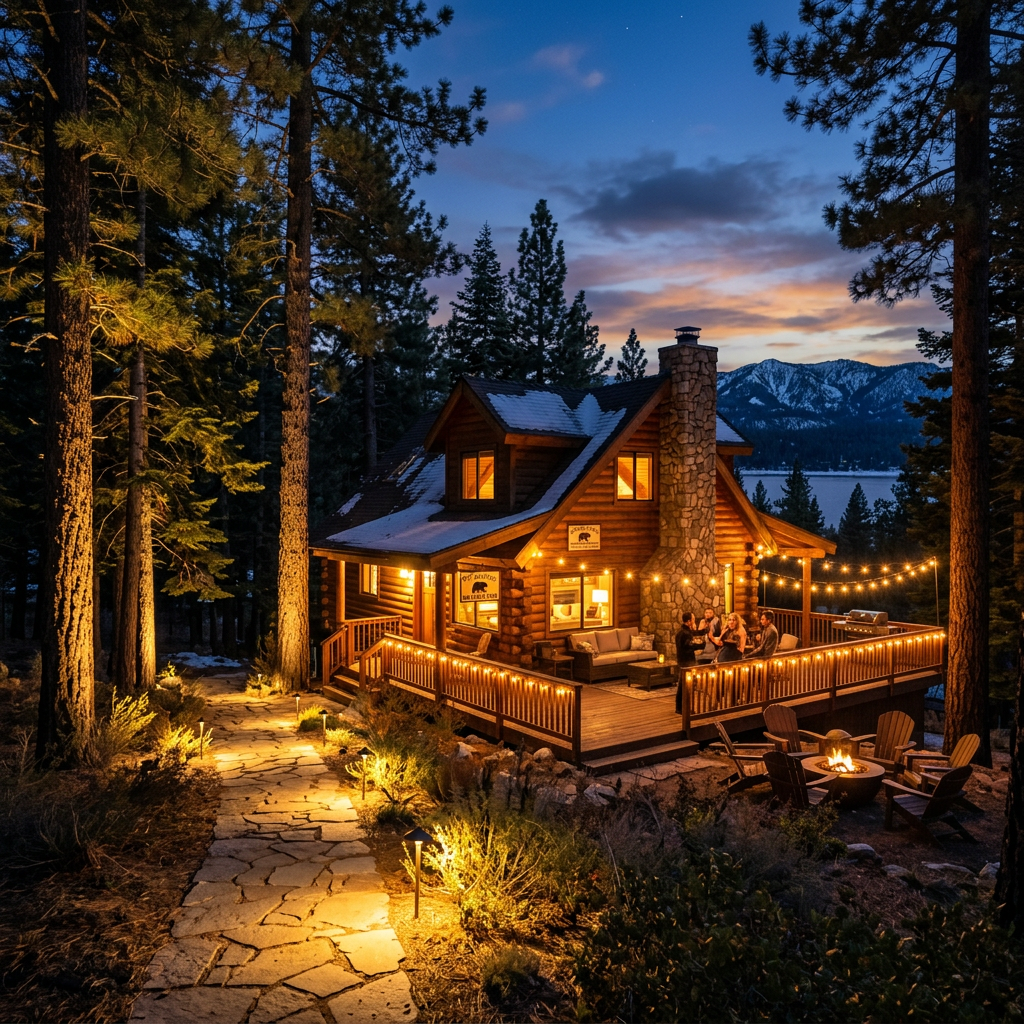
Summer in Big Bear is peak opportunity for vacation rental owners. The lake draws swimmers, the trails draw hikers, the cool mountain air draws every Southern California family looking for a weekend break from valley heat — and the rental market reflects it. Cabins that photograph well, offer outdoor spaces that feel inviting after dark, and give guests a reason to extend their evenings outside command higher nightly rates and generate the kind of reviews that build long-term occupancy.
Outdoor lighting is the single most photogenic and guest-experience-impactful electrical upgrade you can make to a Big Bear cabin. It's also the upgrade that most owners put off because they don't know what to install, where it should go, or what it actually takes to do it correctly at 7,000 feet elevation.
This guide covers what outdoor lighting actually does for your Big Bear rental, which systems work at mountain elevations, what requires a licensed electrician versus what's genuinely DIY-safe, and what you can expect to pay.
For a free outdoor lighting assessment and estimate, call Big Bear Electric Pros at (909) 415-5573.
Why Outdoor Lighting Makes a Bigger Difference in Big Bear Than in Other Markets
Big Bear's rental market has a characteristic that most urban short-term rental markets don't: guests arrive expecting to spend significant time outdoors, in the dark, in terrain that's unfamiliar to them.
A family arriving Friday evening at a cabin off a forest road in Fawnskin or Sugarloaf is navigating an unlit driveway, unfamiliar steps, a deck they've never walked, and a property where the trees block ambient neighborhood light completely. At 7,000 feet, on a mountain with minimal light pollution, it is genuinely dark in a way that Airbnb guests from Los Angeles and San Diego have often never experienced.
That darkness is part of Big Bear's appeal — the night sky over the lake and the San Bernardino National Forest is stunning. But it also means your outdoor spaces are invisible after sunset without intentional lighting, your property photos are limited to daylight shots that miss the evening atmosphere entirely, and your guests are navigating unfamiliar terrain in conditions that can cause falls on uneven surfaces or stairs.
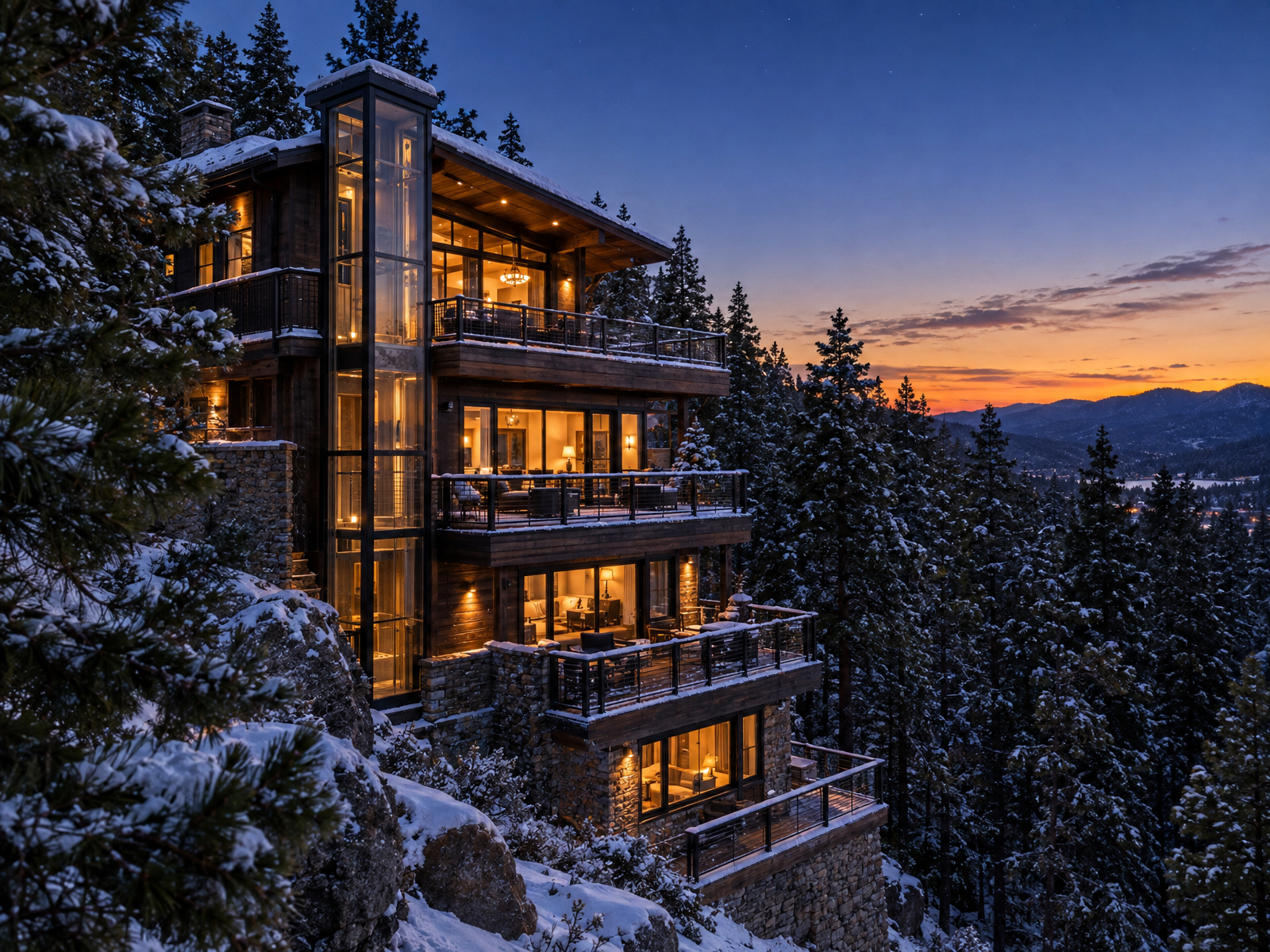
Well-designed outdoor lighting turns all three of those problems into advantages. It makes your evening listing photos glow. It makes guests feel safe and welcomed from the moment they pull up. And it extends the usable hours of your deck, fire pit area, and outdoor dining space — which means more of the amenities you've invested in actually get used and show up in five-star reviews.
What Types of Outdoor Lighting Should a Big Bear Vacation Rental Have?
Not all outdoor lighting serves the same function. A complete outdoor lighting plan for a Big Bear cabin addresses five distinct purposes, each of which requires different fixtures, placement, and in some cases different electrical infrastructure.
Pathway and Driveway Lighting
This is the non-negotiable baseline for any Big Bear rental. Guests arriving after dark need to see where to walk from the car to the front door, where steps begin and end, and where the driveway edge stops and the hillside or landscaping begins.
Low-voltage pathway lights — spaced every six to eight feet along walkways and driveways — accomplish this at minimal wiring complexity. The key consideration in Big Bear is fixture quality: cheap plastic pathway lights sold at hardware stores crack and fail rapidly under the freeze-thaw cycles that hammer mountain properties from November through April. Spec fixtures with cast aluminum or solid brass housings and NEMA 4-rated weatherproofing. They cost more than the box store versions and last five to ten times longer in the mountain environment.
At Big Bear's elevation and temperature range, buried low-voltage cable also needs attention. Standard landscape wire insulation can become brittle in sustained cold; direct-burial rated wire with UV and cold-temperature resistance is the right spec for mountain installs.
Deck and Patio Lighting
The deck is where Big Bear guests spend their evenings — watching the sunset over the lake, using the fire pit or hot tub, eating dinner outside in July and August when the temperature drops to the mid-60s after dark. Deck lighting transforms this space from something that shuts down at dusk to an amenity that's functional and inviting all evening.
String lights are the most photographable option and consistently appear in the Big Bear cabin listing photos that drive the highest booking engagement. Suspended across a deck or patio on a simple catenary system — wire stretched between posts or anchor points — they create the warm overhead ambient glow that reads as "relaxing mountain getaway" in every photo. For Big Bear, spec commercial-grade string lights rated for outdoor and cold-weather use rather than residential decoration lights that degrade quickly.
Recessed deck lighting and step lighting serve safety and code compliance. California electrical code and San Bernardino County short-term rental requirements both require safe lighting of steps and egress paths. Recessed step lights — mounted flush into deck risers — illuminate each step individually and are far more durable than above-surface fixtures that get knocked, stepped on, and covered in snow.
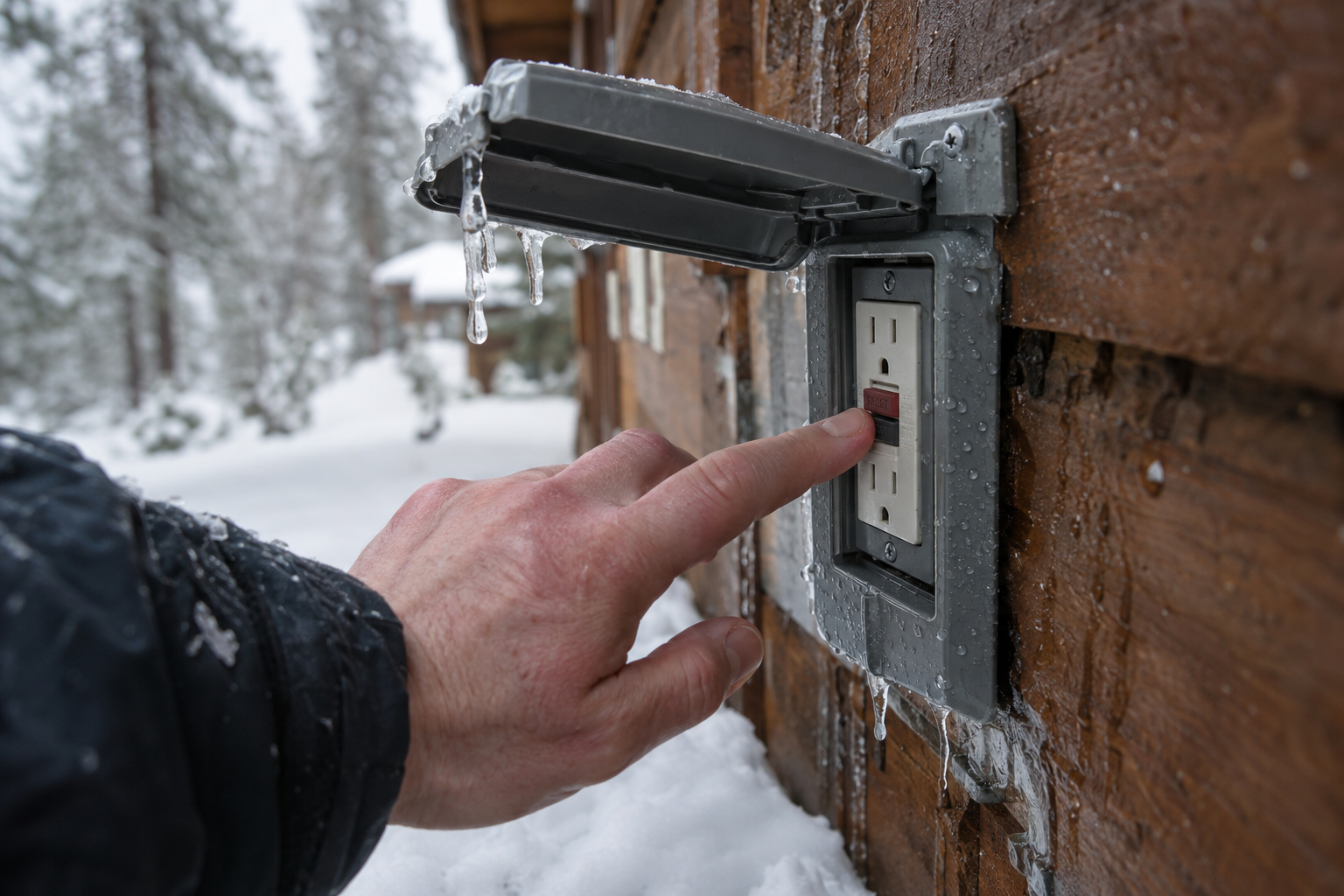
Any electrical work on the deck — installing junction boxes, running circuits to string light power points, adding recessed step lighting — requires a licensed C-10 electrician and proper weatherproof installation. Outdoor circuits must be GFCI-protected at the source. Our GFCI outlet guide for Big Bear covers exactly why this matters in a mountain moisture environment.
Landscape and Feature Uplighting
Uplighting — fixtures mounted at ground level aimed upward at trees, architectural features, or cabin facades — is what distinguishes a photogenic cabin listing from a flat-looking one at night. In Big Bear, the pine trees surrounding most properties are natural architectural elements that look genuinely dramatic when lit from below.
Two or three well-placed uplight fixtures aimed at the pines closest to the cabin can transform evening photos from "dark house against black sky" to "warm mountain retreat glowing among the trees." This is the lighting that makes guests screenshot your listing, text it to their group, and commit to booking.
Uplights also add motion-activated perimeter lighting to the property without the institutional look of security floodlights — a lit tree line reads as atmospheric, not surveillance.
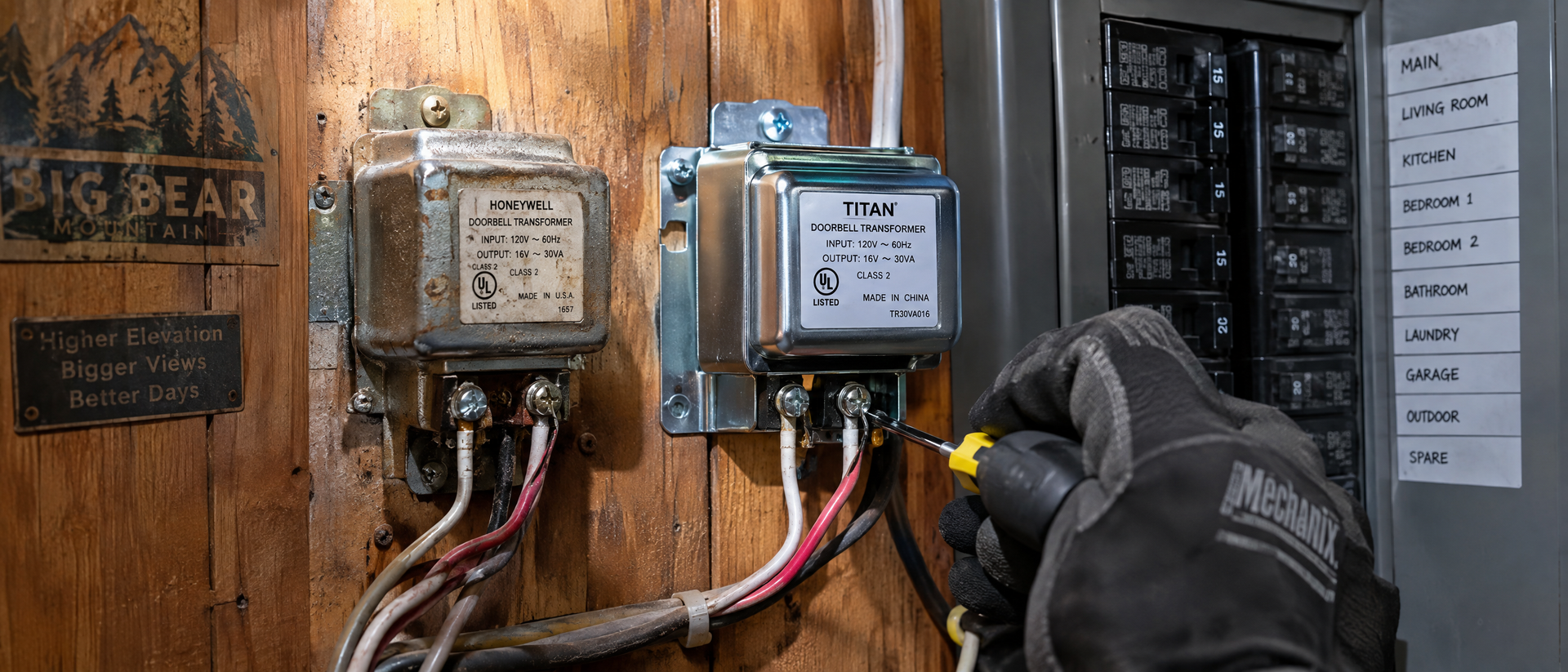
Low-voltage landscape lighting for uplights can be run off the same transformer as pathway lighting if the circuit capacity supports it. A licensed electrician sizes the transformer correctly for the full system load and places it in a weatherproof enclosure mounted high enough to remain accessible in snow conditions.
Security and Perimeter Lighting
Big Bear cabins — particularly those that sit vacant for extended periods between bookings — benefit from motion-activated security lighting at key entry points: the front door, the gate or driveway entrance, and any secondary access points to the property.
Motion-activated LED floodlights serve two functions simultaneously: they deter unauthorized access to the property between guest stays, and they provide automatic illumination for arriving guests at night without requiring them to find a switch. A guest arriving at 10 PM who walks up to a front door that lights automatically feels welcomed and confident. A guest arriving at 10 PM to a dark, unlit cabin entrance does not — and that first impression lands in the review.
Security lighting circuits need to be on dedicated outdoor circuits with GFCI protection and properly rated for the voltage and amperage the fixture requires. Motion sensors rated for Big Bear's temperature range (down to well below freezing) perform more reliably than consumer-grade sensors that false-trip in cold conditions.
Smart Lighting and Remote Control
Big Bear vacation rental owners who manage their properties remotely — which describes most hosts — benefit from outdoor lighting that can be controlled via app or scheduled automatically. Smart outdoor lighting systems allow you to:
Set lighting schedules so the pathway and deck lights turn on at dusk and off at midnight without manual intervention. Turn on exterior lighting remotely when guests are arriving after dark and text them that the property is lit up and ready. Verify lighting is off between guest stays to avoid running up electricity costs with BVES. Integrate outdoor lighting with your smart lock system so the front approach illuminates automatically when the door code is entered.
Smart outdoor lighting integration requires a licensed electrician to install the correct circuits, smart switches, and weatherproof control points. It's most cost-effective to include smart control capability in the initial lighting installation rather than retrofitting later.
What Big Bear's Mountain Environment Does to Outdoor Lighting (and What to Do About It)
The installation practices that work in San Bernardino, Los Angeles, or the Coachella Valley don't fully translate to Big Bear's mountain conditions. Here's what's different and why it matters for fixture and installation spec.
Freeze-thaw cycles. Big Bear's temperature swings from above freezing during the day to below freezing at night, repeatedly, throughout the winter. Every component in an outdoor lighting system — fixtures, conduit, buried cable, junction boxes, transformer housings — experiences this cycle hundreds of times per year. Materials that don't handle thermal expansion and contraction correctly fail within a few seasons. This is why cast metal fixtures, direct-burial-rated cable, and weatherproof electrical enclosures rated to NEMA 4 or better are the right specifications for mountain lighting, not the consumer-grade options that work fine in coastal California.
Snow load and accumulation. Pathway lights on ground-level stakes get buried under snowpack in a heavy winter. Fixtures need to be rated for this — either low-profile designs that tolerate burial, or mounted at heights that keep them above typical snow depth. Junction boxes and transformers need to be mounted on structures above ground level rather than near grade. String light suspension systems need to account for snow load on the cable.
Altitude and temperature effects on LED performance. LED fixtures are the correct technology for Big Bear outdoor lighting — they're the most energy-efficient and longest-lasting option by a wide margin, and BVES customers benefit from lower electricity consumption. But LED performance at Big Bear's elevation and in extreme cold varies by fixture quality. Spec fixtures with drivers rated for the full temperature range of Big Bear's climate.
Wildlife. Squirrels, bears, and other San Bernardino National Forest wildlife interact with outdoor electrical installations in ways that valley installations don't account for. Conduit and cable runs near the ground need to be protected from chewing; transformer housing should be mounted out of easy reach of wildlife that might investigate it.
Does Outdoor Lighting at a Big Bear Cabin Require a Permit?
It depends on what you're installing and how it's powered.
Low-voltage landscape lighting — the 12-volt systems running pathway lights and uplights from a transformer — generally does not require a permit in San Bernardino County for residential properties. This is the one outdoor lighting category with a legitimate DIY pathway for handy homeowners, though the quality and durability concerns about mountain conditions still apply.
Line-voltage outdoor circuits — the 120-volt circuits that power security lighting, deck electrical outlets, string light power points, and smart lighting infrastructure — require a permit and inspection in San Bernardino County. These are the circuits that run from your electrical panel through conduit to outdoor junction boxes and fixtures. A licensed C-10 electrician pulls the permit, performs the installation, and coordinates the inspection.
GFCI protection. All outdoor circuits in California are required to have GFCI protection — either at the panel via GFCI breaker, or at the first outlet in the circuit via GFCI outlet. This is code and it's non-negotiable for San Bernardino County short-term rental permits. If you're adding outdoor circuits for your lighting project, every circuit gets GFCI protection as part of the installation.
For vacation rental hosts, permitted and inspected outdoor electrical work is documentation that matters. San Bernardino County's short-term rental permitting process requires electrical compliance, and unpermitted outdoor electrical work — including unpermitted outlet installations or circuits — is a liability that surfaces at permit renewal. We handle all permitting as part of every job, and provide documentation you can use for your STR permit file. Our full vacation rental electrical compliance guide covers what Big Bear Airbnb and VRBO hosts need to document.
What Does Outdoor Lighting Installation Cost at a Big Bear Cabin?
Costs vary based on the scope of the project, the current state of your outdoor electrical infrastructure, and whether line-voltage circuits need to be added or extended.
Low-voltage pathway and landscape lighting system (materials + installation): $800 to $2,500 for a complete pathway and uplighting installation on a typical Big Bear cabin lot. This includes the transformer, fixtures, direct-burial cable, and labor. Higher-end fixtures (cast brass, commercial-grade) sit at the top of this range and last significantly longer in mountain conditions.
Deck string light installation with new power point: $400 to $800 for a licensed electrician to install a weatherproof exterior outlet or junction box on the deck and run the conduit back to the panel. This is the line-voltage work that requires a permit. String light fixtures themselves run $100 to $400 depending on length and quality.
Motion-activated security lighting (per fixture): $250 to $500 per location including the fixture, conduit, wiring, and weatherproof junction box. Two to three fixtures at key entry points is typical for a Big Bear vacation rental.
Recessed deck step lighting: $150 to $300 per fixture installed, depending on deck construction and circuit access.
Complete outdoor lighting package — pathway system, deck power point and string lights, two security fixtures, and two to three uplights — typically runs $2,500 to $5,000 for a mid-size Big Bear cabin on an existing adequate panel. If your panel needs additional circuit capacity or your outdoor electrical infrastructure is starting from scratch, add accordingly.
The investment is front-loaded but durable. Mountain-spec outdoor lighting correctly installed by a licensed electrician lasts ten to fifteen years with minimal maintenance — and starts paying back in better listing photos and guest experience from the first summer season.
Summer Is the Right Time to Install
The timing argument for doing this now rather than before next winter:
The soil, conduit runs, and landscape are accessible in summer without frozen ground or snowpack complicating the installation. Trenching for buried cable, driving stakes for pathway lights, and running conduit on exterior walls all happen faster and cleaner in July than in November.
Your summer booking photos are taken this season. Listing photos updated now with evening lighting shots — deck glowing with string lights, pathway lit through the pines, front of the cabin illuminated — go into your Airbnb and VRBO profile in time to influence fall and winter bookings, which are when the Big Bear rental market competes hardest on amenity quality.
Outdoor circuit work requires a permit and inspection from San Bernardino County. Starting that process in summer builds in adequate lead time before the fall season when demand peaks and contractor availability tightens.
And practically: a licensed Big Bear electrician's schedule in summer has more flexibility than in late October and November when every cabin owner is simultaneously trying to get winter prep done before snowfall.
Frequently Asked Questions
Can I install low-voltage landscape lighting myself at my Big Bear cabin?
Low-voltage 12-volt landscape lighting systems — transformer, direct-burial cable, pathway lights, and uplights — can legally be installed by homeowners without a permit in San Bernardino County. The practical challenge is that Big Bear's conditions demand higher-spec materials than what most DIYers source at hardware stores. If you want to DIY the low-voltage portion and have a licensed electrician handle the line-voltage deck circuits and security lighting, that's a reasonable split.
Do outdoor lights need to be GFCI-protected at my Big Bear cabin?
Yes. California electrical code requires GFCI protection on all outdoor circuits. This is also a San Bernardino County short-term rental permit requirement. Our
GFCI guide for Big Bear properties explains the requirement and what compliance looks like in practice.
Will outdoor lighting make a difference in my Airbnb or VRBO listing photos?
Significantly. Evening photos of a well-lit cabin exterior, a glowing deck, and a lit pathway through the pines are among the highest-engagement images in Big Bear vacation rental listings. Guests book based on how the property feels in photos, and outdoor lighting at dusk communicates atmosphere and quality that daytime-only shots can't capture. Update your listing photos after installation.
How much does outdoor lighting increase my Big Bear rental's nightly rate?
There's no universal answer, but outdoor amenity upgrades — lighting, fire pits, deck improvements — consistently correlate with higher nightly rates and occupancy in the Big Bear market. Guests searching for premium mountain cabins are filtering for properties that photograph well and offer functional outdoor evening spaces. Updated listing photos with professional lighting and a more inviting outdoor presentation typically support meaningful rate increases in a competitive market.
Do you serve Fawnskin, Sugarloaf, and Big Bear City in addition to Big Bear Lake?
Yes. Big Bear Electric Pros serves the full Big Bear Valley including Big Bear Lake, Big Bear City, Fawnskin, Sugarloaf, and Running Springs.
Contact us or call
(909) 415-5573 for a free outdoor lighting assessment at your property.
Big Bear Electric Pros is a licensed C-10 electrical contractor serving Big Bear Lake, Big Bear City, Fawnskin, Sugarloaf, Running Springs, and all San Bernardino Mountain communities. 41659 Big Bear Blvd, Big Bear Lake CA 92315. Services provided by Current Electric | CA License C-10 #1120740. Call (909) 415-5573 for a free estimate.
Big Bear Planned Power Outage Oct. 16–17: BVES's Timeline, Rolling Blackouts, and What to Do Tonight