Big Bear Vacation Rental Electrical Compliance: What Airbnb & VRBO Hosts Need to Know
February 17, 2026
Big Bear Vacation Rental Electrical Compliance: What Airbnb & VRBO Hosts Need to Know
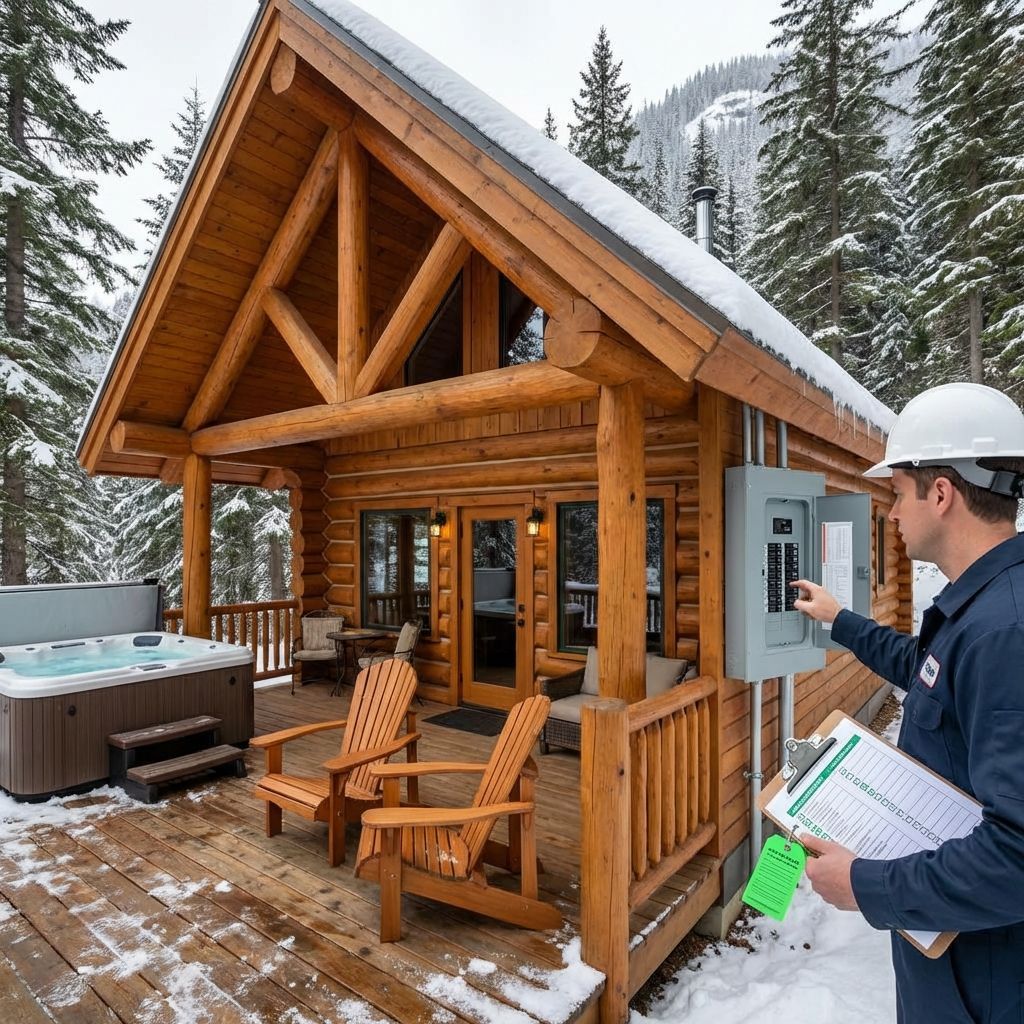
You bought your Big Bear cabin. You listed it on Airbnb. Guests are booking. Five-star reviews are rolling in.
Then a guest trips a breaker trying to blow-dry their hair while the coffee maker runs. Someone reports a sparking outlet in the bathroom. Your listing gets flagged. Your insurance company gets involved.
This scenario plays out regularly in Big Bear — and it's almost always preventable.
Short-term rentals in Big Bear Lake and Big Bear City face a unique intersection of older cabin electrical systems, maximum-capacity guest loads, county permit requirements, and platform liability. If you're operating a vacation rental without verifying electrical compliance, you're carrying risk most hosts don't realize exists.
Here's what you actually need to know.
The Big Bear Vacation Rental Electrical Reality
Big Bear has over 1,500 active short-term rental units. Most are cabins built between the 1960s and 1990s — designed for a family of four, a few lights, a refrigerator, and a TV.
Today those same cabins host 8-10 guests simultaneously, each with smartphones, laptops, and hair tools, while the hot tub runs, the oven preheats, and a space heater warms the back bedroom.
That's not what the original 100-amp panel was designed for.
The result is predictable: tripped breakers, overloaded circuits, warm outlets, and in worst-case scenarios, electrical fires in properties that were never upgraded for commercial-level use.
San Bernardino County Short-Term Rental Requirements
San Bernardino County requires short-term rental operators to obtain a Short-Term Rental Permit and comply with all applicable safety codes — including electrical.
Key requirements that affect electrical systems:
Working smoke detectors in every bedroom and on every level. California law mandates this regardless of rental status, but county enforcement for STRs is stricter. Inspectors verify placement, function, and manufacturing dates (alarms must be replaced after 10 years).
Carbon monoxide detectors within 15 feet of every sleeping area. Big Bear's cabin stock uses propane furnaces, wood stoves, and gas appliances — all CO sources. Backup generators during outages compound the risk. CO detectors aren't optional.
GFCI protection in all bathrooms, kitchens, outdoor outlets, and wet areas. Code-required since the 1970s-90s depending on location, but many older Big Bear cabins predate these requirements and have never been updated.
No unpermitted electrical work. If previous owners or contractors added circuits, outlets, hot tub wiring, or panel work without permits, that's a liability issue that follows the property — and you as the operator.
Ask: "When was the last time this property had a licensed electrical inspection?" If the answer is "never" or "I don't know," schedule one before your next guest checks in.
Why Guest Loads Exceed What Old Cabins Were Built For
This is the technical root of most vacation rental electrical problems, and it's worth understanding clearly.
A 1970s Big Bear cabin with a 100-amp service panel was designed to handle roughly 24,000 watts of simultaneous load — in theory. In practice, that panel was sized for a vacation family using maybe 30-40% of that capacity on a normal evening.
A fully booked vacation rental with 8-10 guests might simultaneously draw:
Electric range or oven: 4,000-5,000 watts
Refrigerator: 800 watts
Coffee maker: 1,200 watts
Hot tub heater (if on the main panel): 4,000-6,000 watts
3-4 bathroom hair dryers: 1,500-1,800 watts each
Space heaters in bedrooms: 1,500 watts each
EV charger (increasingly common): 3,800-7,200 watts
Lighting, TVs, chargers: 1,000-2,000 watts
Add that up and you're well past what a 100-amp panel can safely sustain. The breakers trip. Guests get frustrated. Reviews mention "electrical problems." Your listing rating drops.
The fix is a 200-amp panel upgrade — a one-day job that permanently solves capacity issues, adds modern AFCI and GFCI breaker protection, and makes your property suitable for the actual demand it faces as a commercial rental.
Hot Tub and Spa Wiring: The Most Overlooked Liability
Hot tubs are the #1 amenity Big Bear guests search for. They're also the #1 source of electrical non-compliance on vacation rental properties.
A properly wired hot tub requires:
A dedicated 240V circuit sized to the specific unit (typically 50-60 amps)
A GFCI breaker on that circuit — non-negotiable, code-required, life-saving
A disconnect box within sight of the spa but at least 5 feet away
Wiring run in weatherproof conduit, buried to code depth if underground
Permits pulled and work inspected by San Bernardino County
What we actually find on many Big Bear rental properties: hot tubs wired by the previous owner, a handyman, or the hot tub installer without permits. Extension cords. Missing GFCI protection. Undersized wire. Circuits shared with other loads.
GFCI protection on hot tubs isn't a technicality — it's the difference between a guest getting out of the spa safely and a drowning-related electrocution. If you can't confirm your hot tub has a dedicated circuit with a GFCI breaker, stop using it as an amenity until a licensed electrician verifies the installation.
A single insurance claim or lawsuit from a hot tub electrical incident will cost you far more than the $800-2,000 it takes to wire it correctly.
EV Charging: The Amenity Guests Are Starting to Expect
Electric vehicles are arriving in Big Bear in significant numbers. Guests with EVs are actively filtering for rentals that offer charging — and they're willing to pay more for properties that have it.
A properly installed Level 2 EV charger:
Requires a dedicated 240V, 40-50 amp circuit
Must be installed in a NEMA 4-rated outdoor enclosure for Big Bear's snow and cold
Needs a permit from San Bernardino County
Should be mounted high enough to remain accessible during winter snowpack
Smart hosts are adding EV chargers now, before guests start leaving negative reviews about the lack of charging options. A professionally installed Level 2 charger costs $1,500-3,000 all-in and earns back its cost quickly through higher nightly rates and improved occupancy.
Airbnb and VRBO Platform Liability — What Most Hosts Miss
Both Airbnb and VRBO require hosts to certify that their properties meet local safety standards and applicable codes. When you accept a booking, you're representing that your property is safe.
If a guest is injured due to an electrical fault — a faulty outlet, an improperly wired hot tub, inadequate GFCI protection — platform host protection programs have limits. Your homeowner's or landlord's insurance policy may deny claims for properties operated as commercial short-term rentals without proper STR coverage.
What actually protects you:
STR-specific insurance policy (not standard homeowner's)
Documented electrical compliance — a licensed electrician's written inspection report
Permitted work on all electrical additions and upgrades
Working GFCI and AFCI protection throughout the property
Functioning smoke and CO detectors in all required locations
An electrical inspection from a licensed Big Bear electrician, documented in writing, is evidence of due diligence. It doesn't just protect guests — it protects you when something goes wrong.
Signs Your Rental Property Needs an Electrical Upgrade
You don't need to wait for a problem to know your cabin's electrical system isn't keeping up. Watch for:
Breakers tripping during guest stays — the most common complaint, and a sign of an overloaded system
Warm outlets or switch plates — indicates circuits running near or above capacity
Lights that dim when appliances start — voltage drop caused by insufficient panel capacity
Outlet or switch discoloration — scorch marks from overheating
No GFCI outlets in bathrooms, kitchen, or outdoor areas — non-compliant and a liability
100-amp panel — almost always inadequate for modern rental demands
Unpermitted hot tub, sauna, or outbuilding wiring — common in Big Bear cabins that have been renovated informally over decades
Any one of these is worth addressing before the next guest checks in.
How Big Bear Electric Pros Helps Vacation Rental Hosts
We work with Big Bear vacation rental operators throughout Big Bear Lake, Big Bear City, Fawnskin, and Sugarloaf to bring properties into full electrical compliance and optimize them for the demands of short-term rental use.
Our vacation rental services include:
Electrical compliance inspections with written documentation
200-amp panel upgrades for properties with capacity issues
GFCI and AFCI protection installation throughout the property
Hot tub and spa wiring — permitted, code-compliant, GFCI-protected
Level 2 EV charger installation — outdoor-rated for mountain conditions
Smoke and CO detector installation and certification
Circuit additions for kitchens, bedrooms, outdoor spaces
Generator installation for uninterrupted guest experience during outages
We're local. We live on the mountain. We understand what Big Bear cabins actually need — and we pull all required permits so your work is documented, inspectable, and legally defensible.
Call (909) 415-5573 for a free vacation rental electrical assessment.
We serve Big Bear Lake, Big Bear City, Fawnskin, Sugarloaf, Running Springs, and all San Bernardino Mountain communities.
Protect your guests. Protect your reviews. Protect your investment.

California home sellers must now give buyers an electrical inspection notice. What SB 382 means for Big Bear cabins, capacity, and insurance. (909) 415-5573
Big Bear Planned Power Outage Oct. 16–17: BVES's Timeline, Rolling Blackouts, and What to Do Tonight
SCE will de-energize Big Bear's main line at 2 a.m. Oct 17. BVES expects to power about 80% of customers and rotate the rest. Timeline and prep. (909) 415-5573
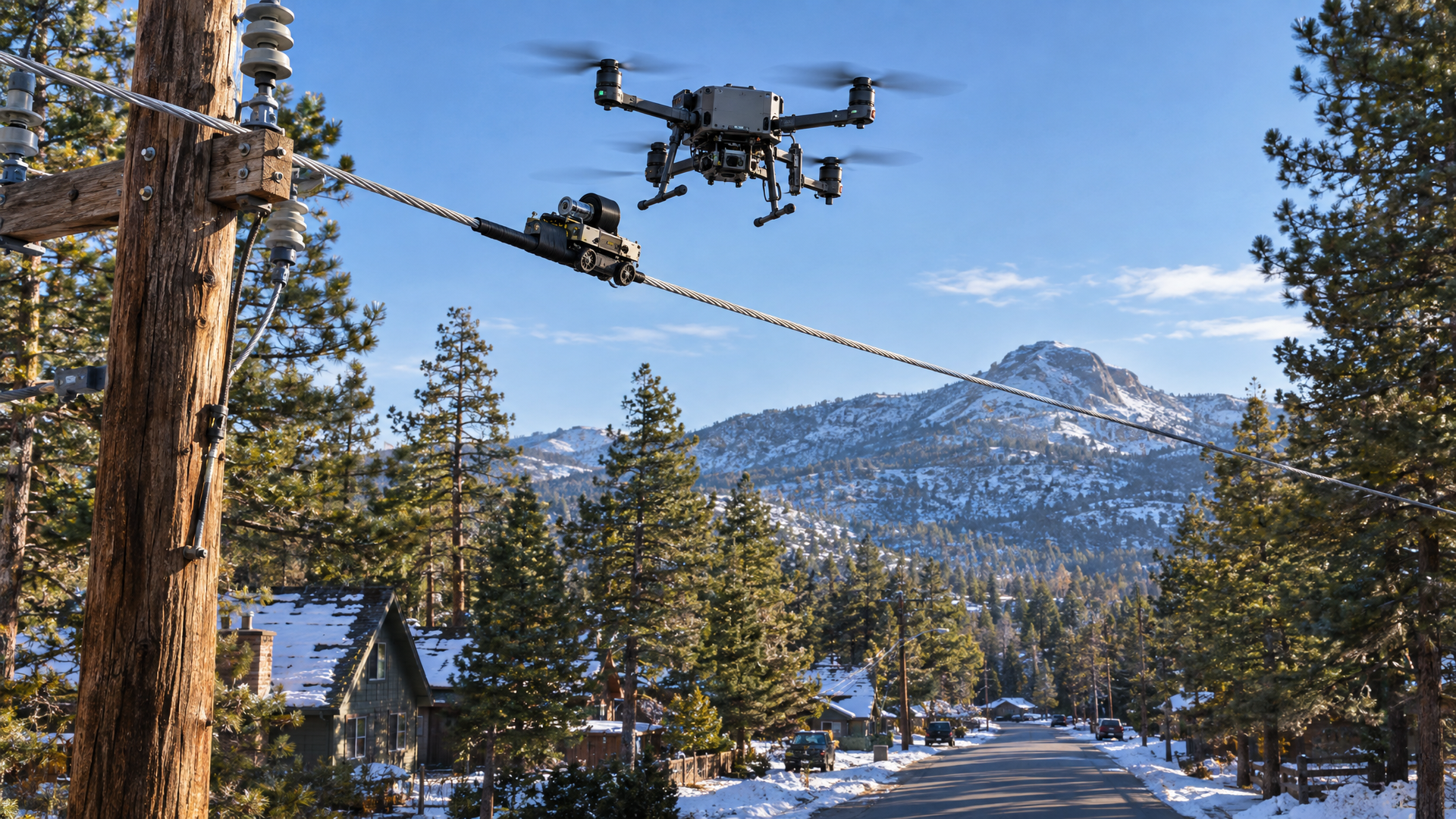
BVES is using robots to insulate bare power lines in Sugarloaf, at less than half the usual cost. What it means for Big Bear outages, bills, and your home.
Power back on after a Big Bear outage or PSPS? Unplug first, restore loads one at a time, and know the 4-hour food rule. (909) 415-5573
BVES wants revenue increases totaling 31.89% through 2030. CPUC forums are Oct 13 and 27. What it means for your bill. (909) 415-5573
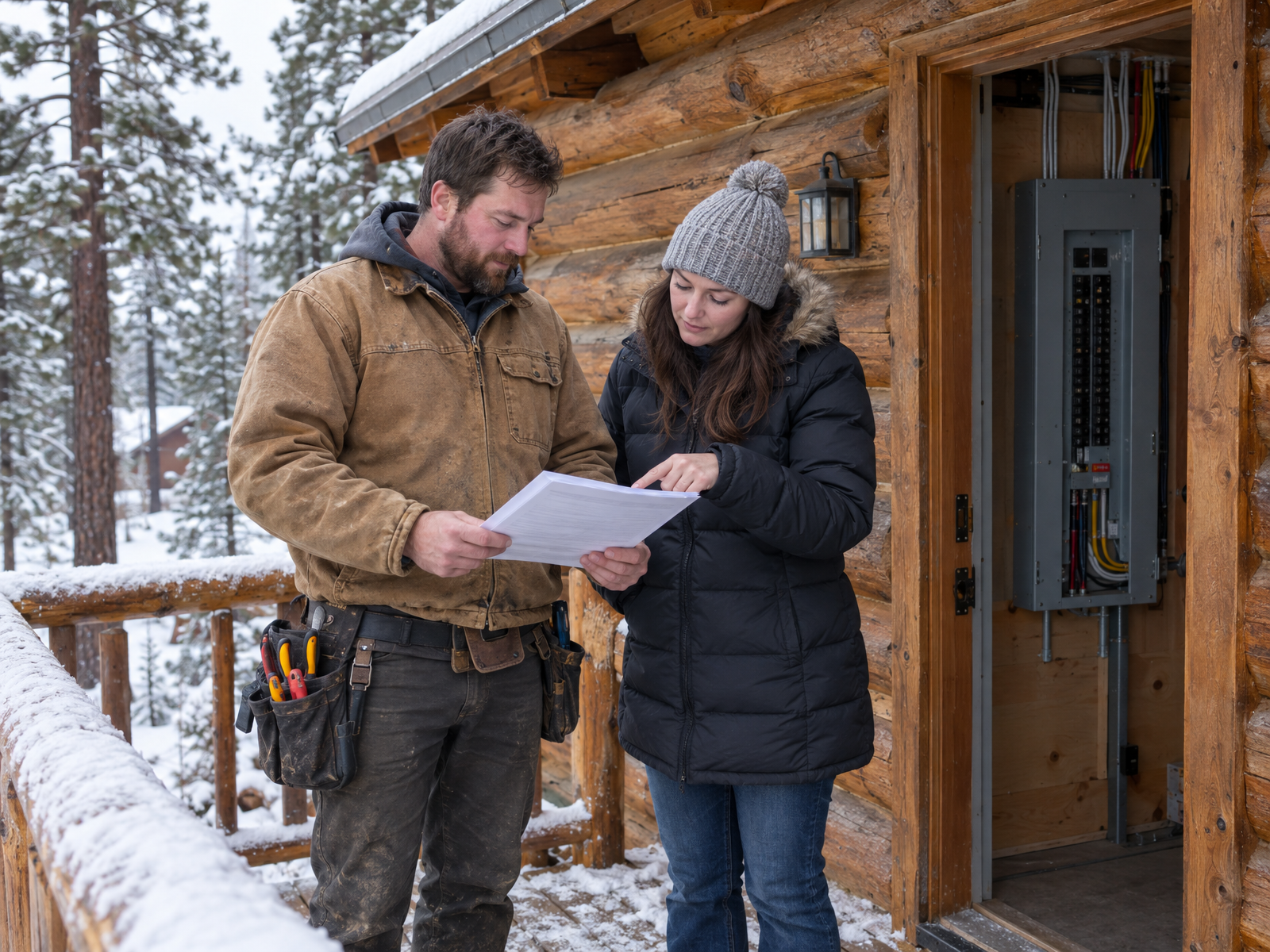
What Big Bear electricians charge, how to verify a C-10 license, and what drives mountain electrical costs up. Free estimates: (909) 415-5573.
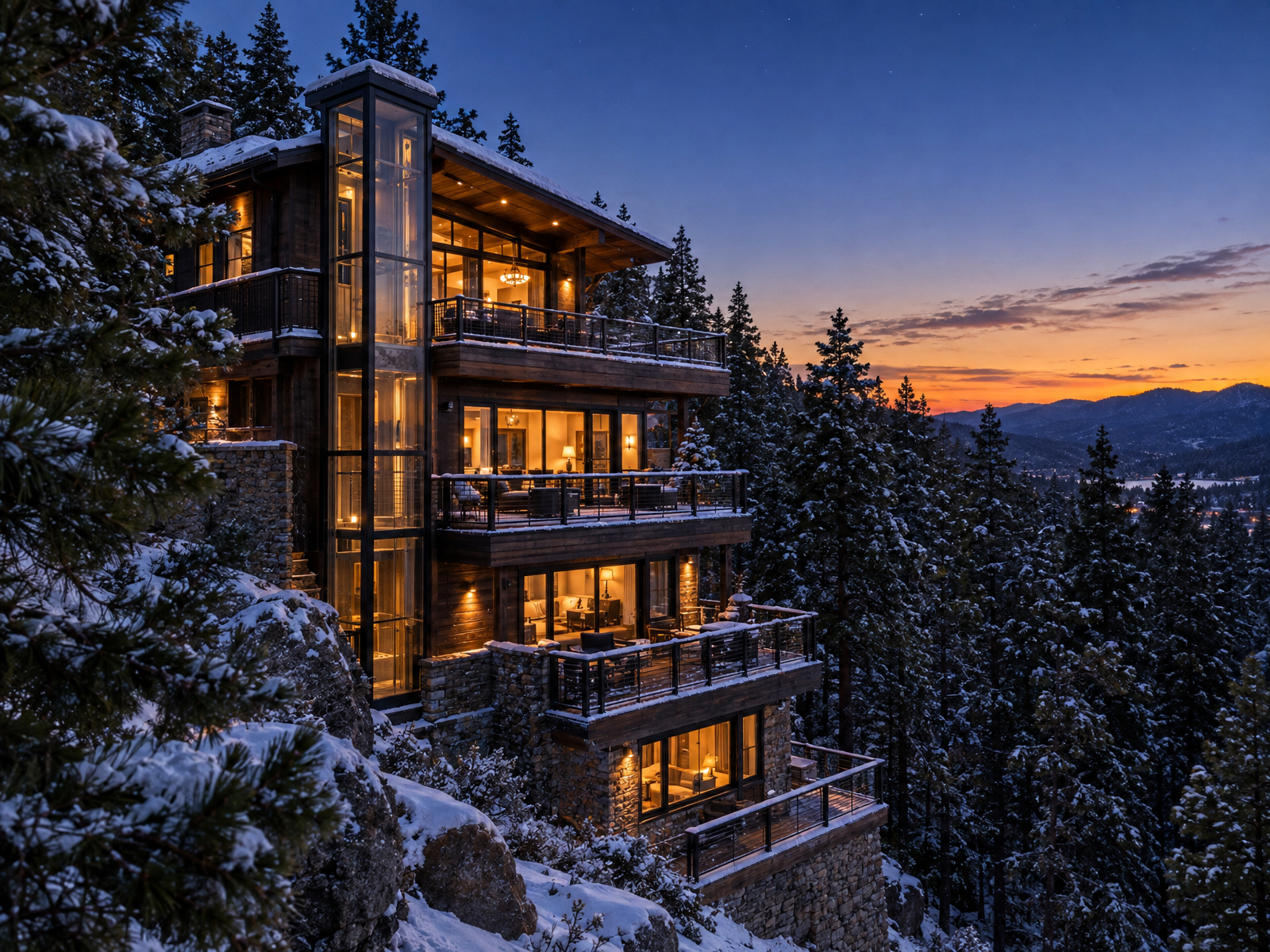
Home elevators need two separate dedicated circuits under NEC 620 and ASME A17.1. Why multi-level Big Bear cabins need this more than most. (909) 415-5573.
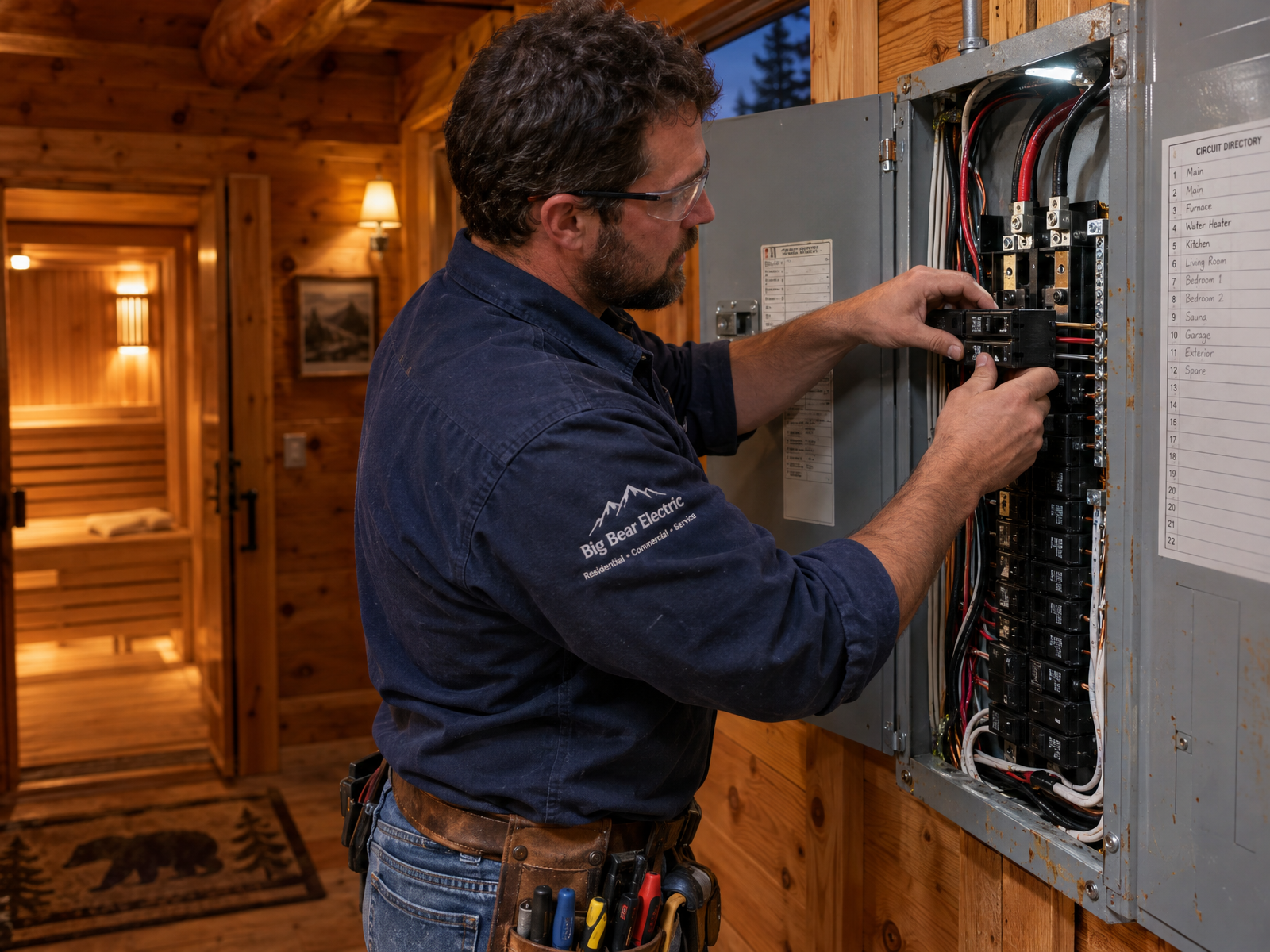
Every sauna heater needs a dedicated 240V circuit sized by wattage. What breaker and wire size your heater actually needs. (909) 415-5573.
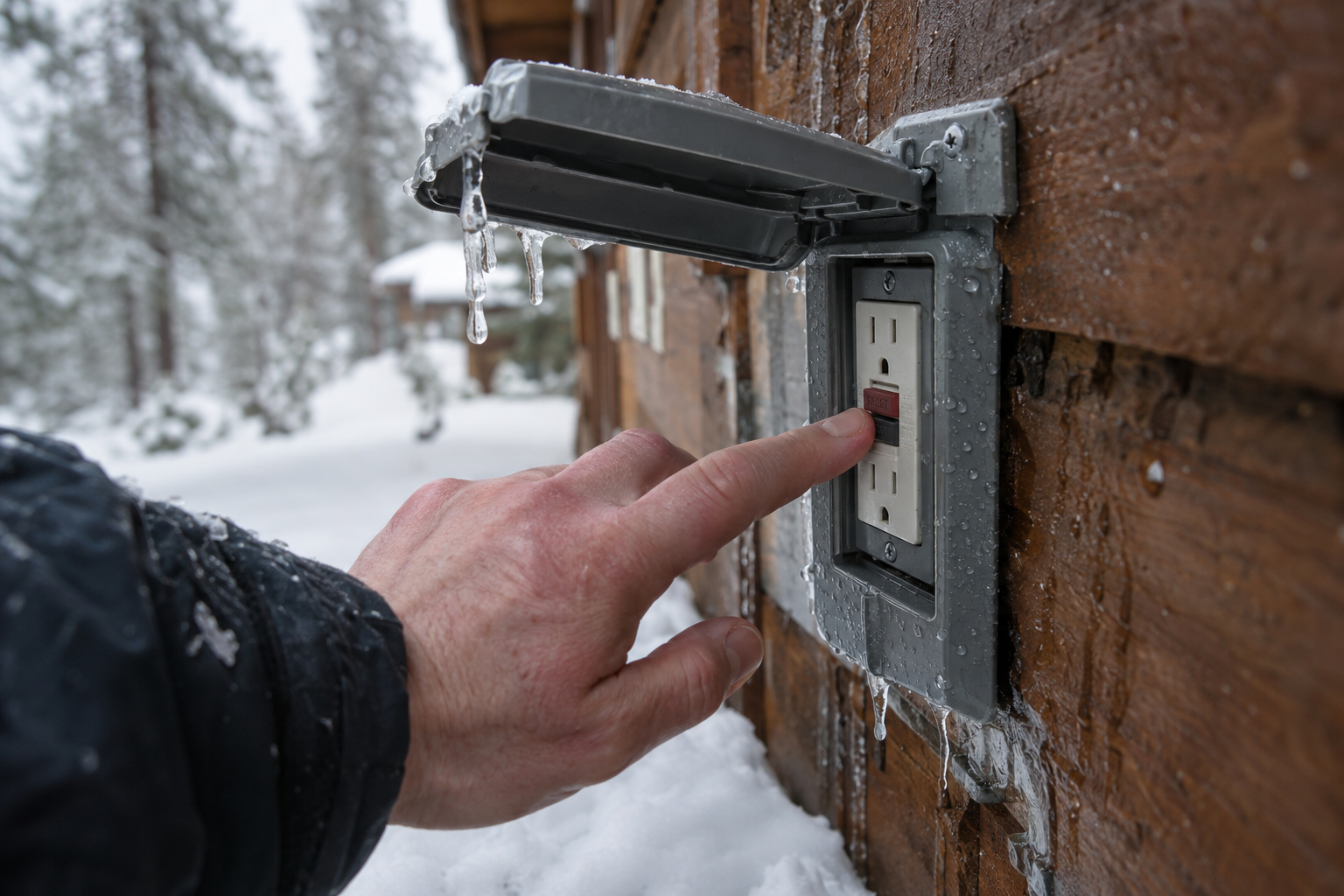
Snowmelt, ice dams, and road salt all trip a GFCI for a reason. Why outdoor outlets act up in a Big Bear winter, and when it's just the device. (909) 415-5573.
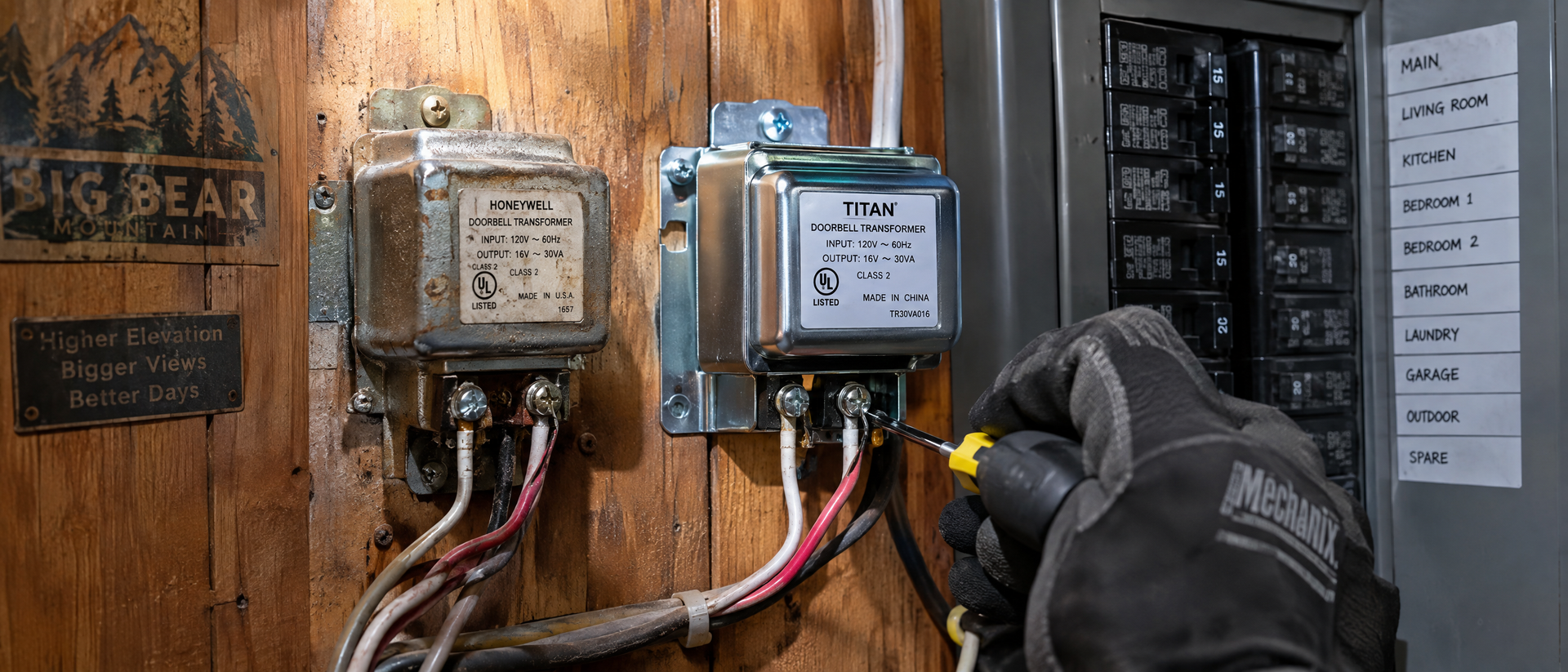
Old doorbell transformers built for simple chimes can't power a modern video doorbell. What voltage and VA rating actually work. (909) 415-5573.