Wildfire-Safe Electrical Upgrades for Big Bear Homes: What Every Mountain Homeowner Needs to Know
Wildfire-Safe Electrical Upgrades for Big Bear Homes: What Every Mountain Homeowner Needs to Know
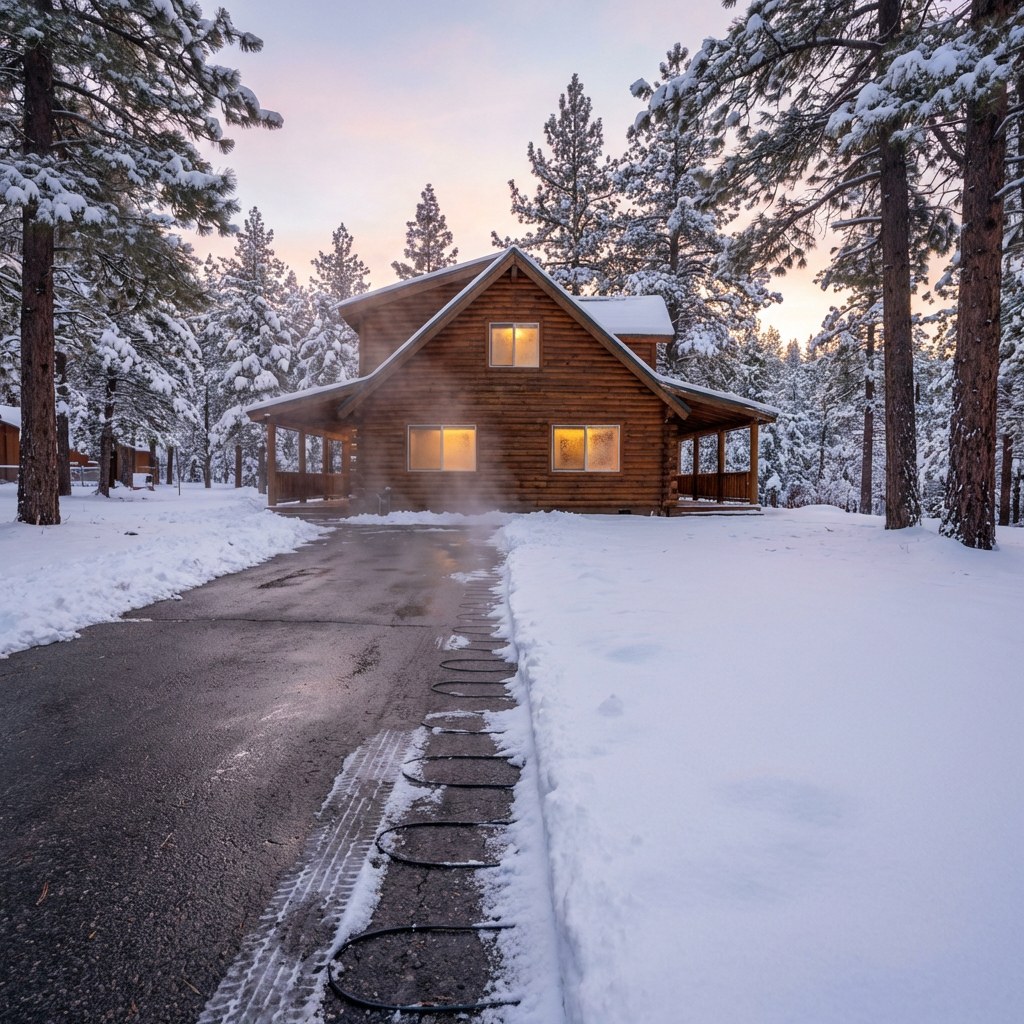
The California Department of Forestry and Fire Protection (CAL FIRE) classifies Big Bear Lake, Big Bear City, Fawnskin, Sugarloaf, and the broader San Bernardino Mountains in a Very High Fire Hazard Severity Zone. The Bridge Fire and Line Fire of 2024 were not distant events — they were immediate threats to communities within miles of properties along the North Shore, Moonridge, and the Highway 38 corridor.
For Big Bear homeowners, wildfire preparedness isn't a theoretical exercise. It's a property management reality that directly affects insurance, resale value, and the safety of the people inside your cabin when conditions turn.
Most wildfire preparedness conversations focus on defensible space — brush clearing, ember-resistant vents, Class A roofing. These are critically important. But your home's electrical system deserves equal attention, and a specific set of licensed electrical upgrades can meaningfully reduce ignition risk from within the structure itself. This guide covers exactly which upgrades matter, why they matter in Big Bear's specific environment, and what to expect from the process.
The Overlooked Ignition Risk: Your Cabin's Electrical System
Wildfire coverage focuses heavily on external ember intrusion as the primary ignition mechanism for structures in the wildland-urban interface. That framing is accurate — embers carried by fire-driven winds are responsible for the majority of structure losses in California wildfires. But internal electrical failures represent a separate, underappreciated ignition pathway that is especially relevant for Big Bear's housing stock.
According to the National Fire Protection Association (NFPA), electrical failures and malfunctions cause approximately 44,000 home structure fires annually in the United States, resulting in roughly 440 deaths and $1.4 billion in property damage. In Big Bear Lake and Big Bear City, the risk profile for electrical ignition is elevated compared to newer suburban communities for several compounding reasons:
Aging wiring infrastructure. A significant portion of Big Bear's cabin stock was constructed between the 1940s and 1980s. Residential wiring installed 40–60 years ago — including aluminum branch circuit wiring common in homes built between 1965 and 1973 — degrades, develops insulation cracks, and accumulates loose connections over decades of temperature cycling from Big Bear's extreme seasonal swings.
Wildlife damage to wiring. Rodents, squirrels, and other wildlife that access attics and crawl spaces in mountain cabins throughout Erwin Lake, Grout Bay, and the Stanfield Cutoff area routinely chew through wire insulation, creating arc fault conditions that can smolder for hours before being detected.
Overloaded circuits in older panels. 100-amp panels serving modern vacation rental loads — hot tubs, space heaters, multiple HVAC systems, EV chargers — run circuits at sustained loads they were never designed to handle, generating chronic heat within walls that accelerates insulation breakdown.
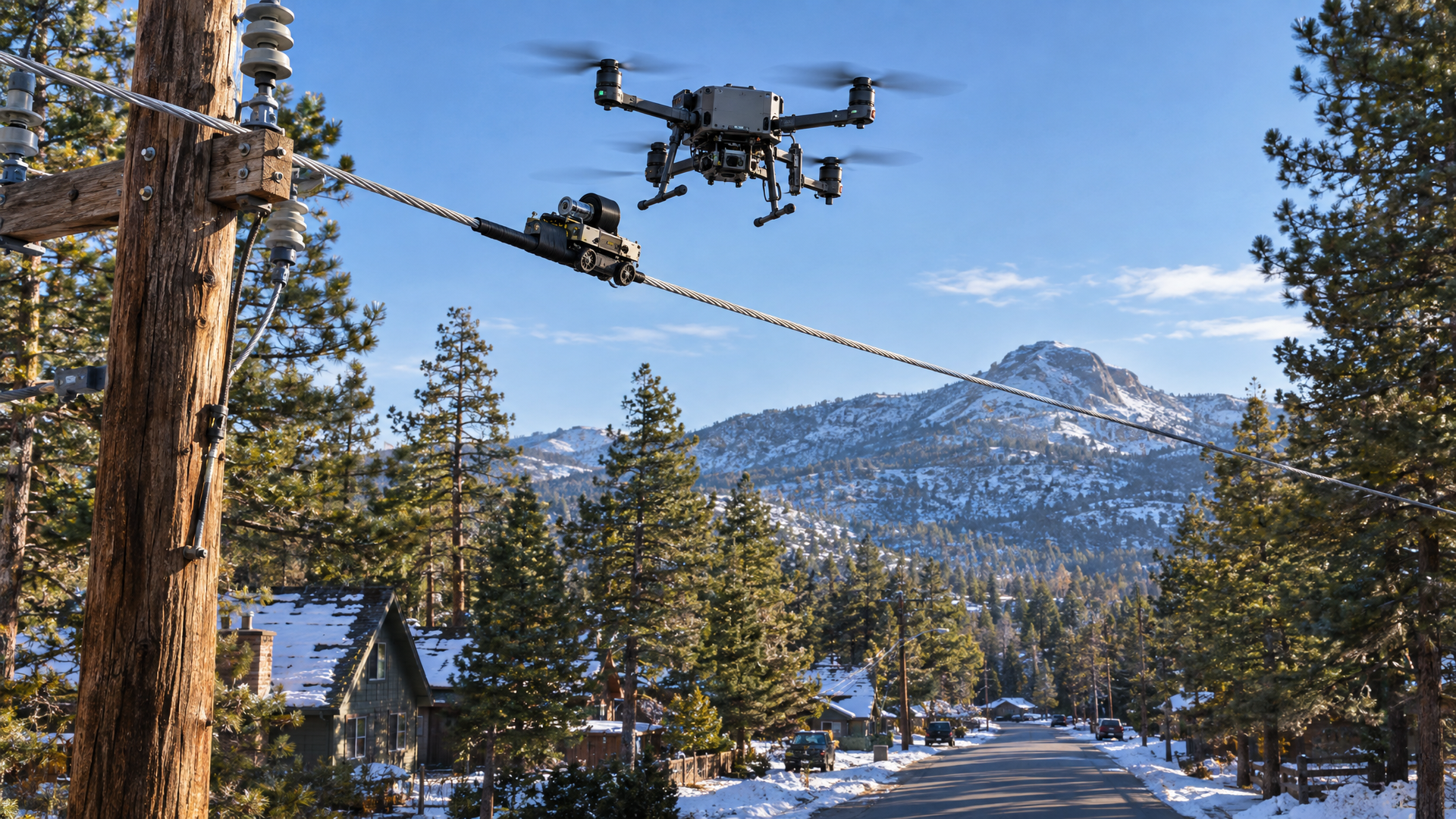
PSPS voltage events. Bear Valley Electric Service (BVES) implements Public Safety Power Shutoffs during high fire risk weather conditions in the Big Bear area. Power restoration after a PSPS generates voltage surges that travel through unprotected home wiring systems and can damage or stress electrical components throughout the structure.
None of these risks disappear when a wildfire is threatening your community from outside. An electrical arc fault igniting inside your cabin walls during an active PSPS restoration — when fire risk is already elevated and emergency services are stretched — represents a worst-case convergence. The electrical upgrades below address each of these specific risk factors.
AFCI Breakers: The Most Impactful Single Upgrade for Older Big Bear Cabins
Arc Fault Circuit Interrupter (AFCI) breakers are the single highest-impact electrical upgrade for fire prevention in Big Bear's aging cabin stock, and they remain the most underutilized.
An arc fault is an unintended electrical discharge — current jumping across a gap in damaged or deteriorated wiring, through a loose connection, or through a wire damaged by rodents or fasteners. Arc faults generate intense localized heat and are capable of igniting wood framing, insulation, and other combustible materials before a standard circuit breaker detects any anomaly. Standard breakers protect against overloads and short circuits — they do not detect arc faults. AFCI breakers detect the distinct electronic signature of arc faults and interrupt the circuit in milliseconds, before ignition occurs.
The NFPA reports that arc faults are responsible for approximately 30,000 home fires per year in the United States. California's current electrical code requires AFCI protection on new bedroom circuits and has progressively expanded required locations with each code cycle. However, existing homes — including the vast majority of Big Bear cabins built before 2014 — are not retroactively required to install AFCI breakers unless the electrical panel is being upgraded or circuits are being added.
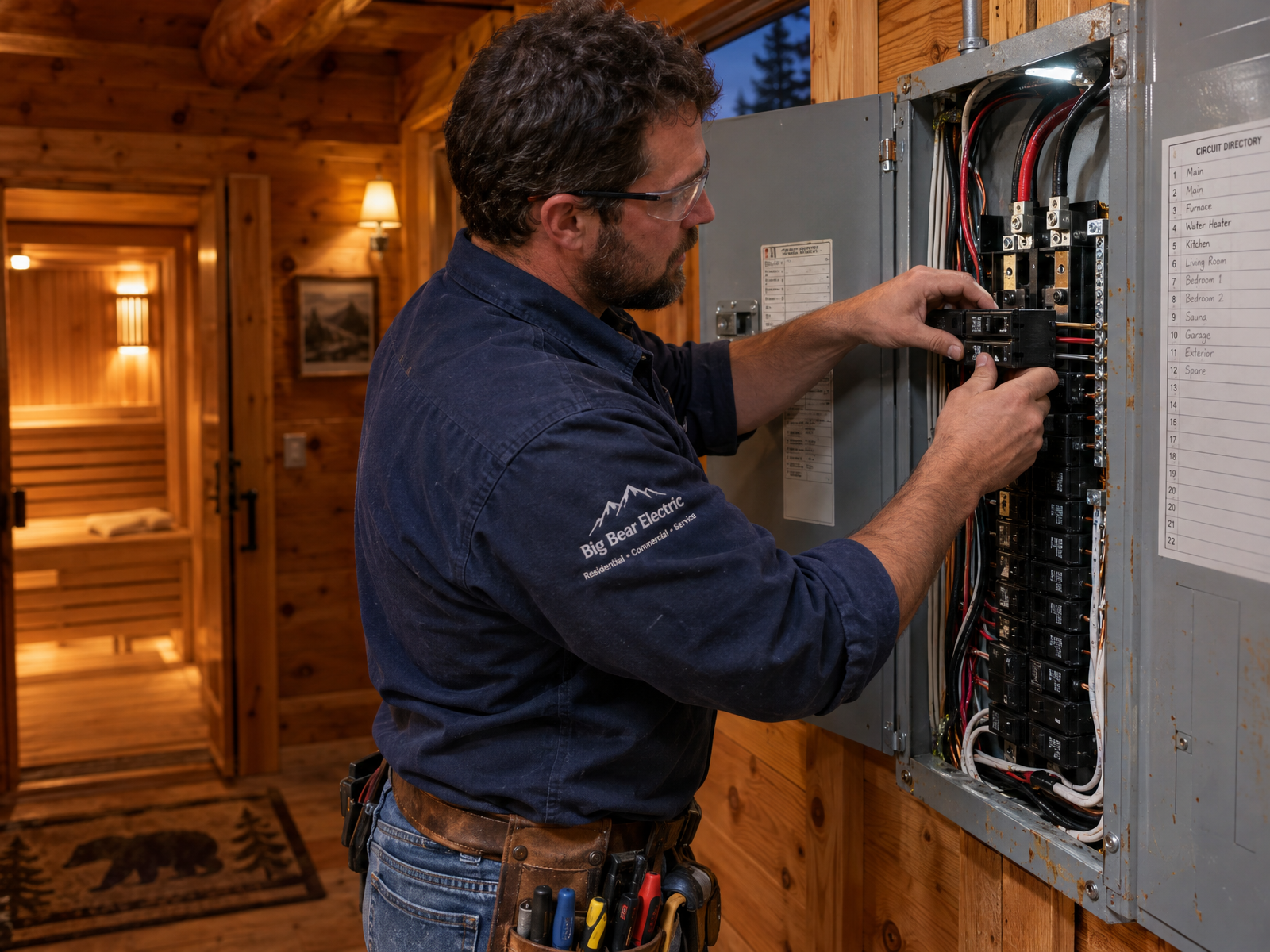
For Big Bear property owners, waiting for a code-required trigger before installing AFCI protection is a meaningful risk calculation. A 1970s cabin in Moonridge with original wiring, an aging panel, and documented wildlife activity in the attic is operating circuits that have had 50+ years to develop the degradation conditions that produce arc faults. Retrofitting the panel with AFCI breakers on bedroom and living area circuits is a one-day project for a licensed electrician and eliminates the primary electrical ignition pathway for most residential fire scenarios.
Cost for AFCI breaker installation on existing circuits typically ranges from $40–$80 per breaker for equipment, plus electrician labor. A full-home AFCI upgrade on a Big Bear cabin with 10–15 circuits generally costs $1,500–$3,500 depending on panel condition and access. When combined with a panel upgrade project, individual AFCI breaker costs decrease because the labor is already allocated.
Whole-Home Surge Protection: Essential for PSPS-Affected Mountain Properties
Bear Valley Electric Service serves Big Bear Lake and Big Bear City as the primary utility provider for most mountain properties. BVES has implemented Public Safety Power Shutoffs during Red Flag Warning conditions — particularly when National Weather Service forecasts show sustained high winds, low relative humidity, and critically dry fuels in San Bernardino National Forest.
Each PSPS event involves a planned de-energization of lines followed by a restoration sequence that sends voltage surges through every unprotected circuit connected to the grid at the moment power returns. These surges are not large enough to trip circuit breakers. They are large enough to degrade electronic components in appliances, damage HVAC control boards, corrupt smart home systems, and stress wiring insulation throughout your home over repeated events.
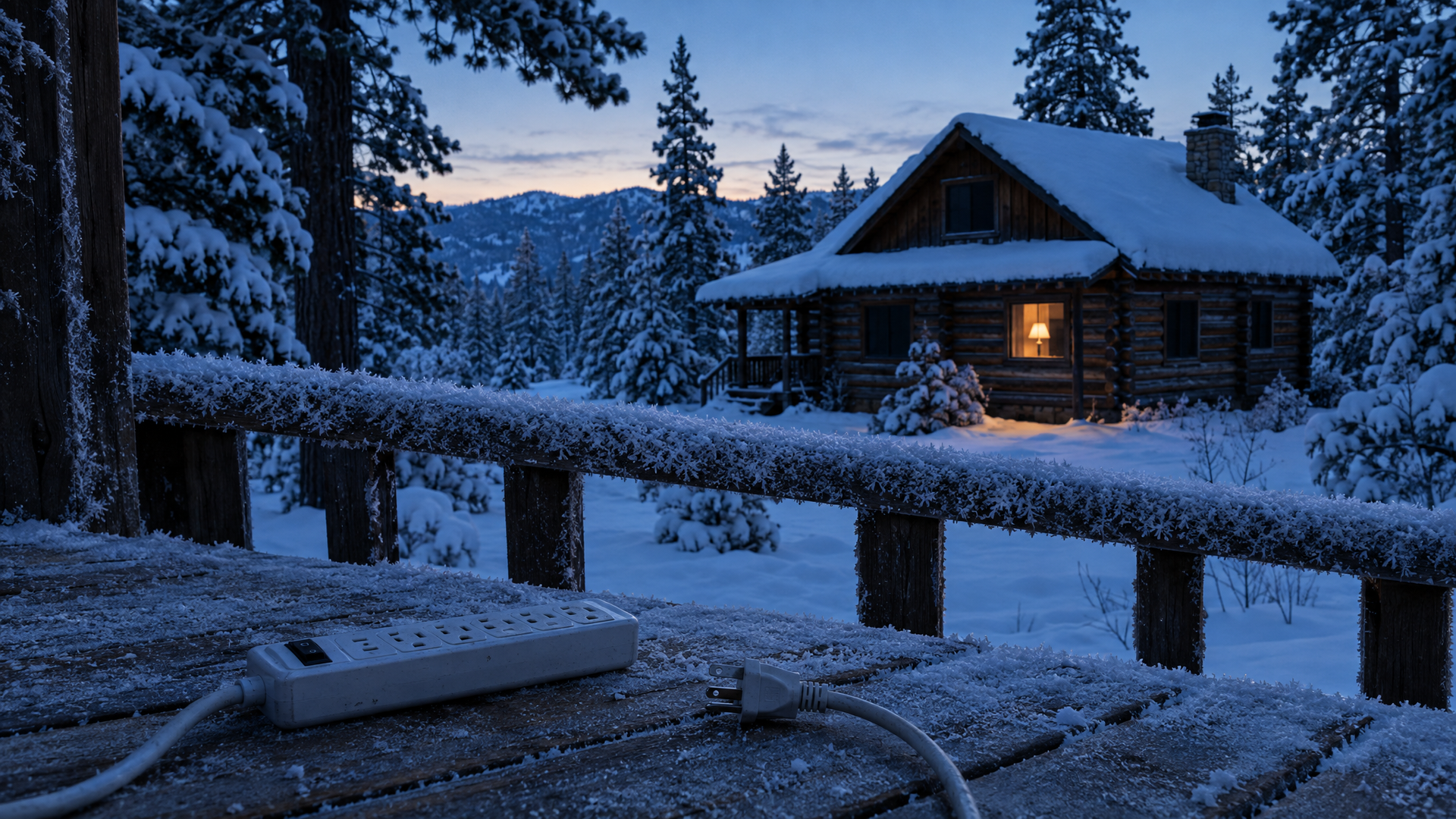
A panel-mounted whole-home surge protection device (SPD) installs directly at your main electrical panel and intercepts these voltage transients before they travel into your home's branch circuits. It is not the same as a power strip surge protector — those point-of-use devices protect individual outlets but do nothing to prevent surges from traveling through your entire wiring system first.
For Big Bear vacation rental operators with significant electronics investment — smart locks, security cameras, smart thermostats, entertainment systems — whole-home surge protection is especially valuable because it protects every device simultaneously, regardless of which room it's in. Installation typically costs $300–$600 including the device and electrician labor, making it one of the highest return-on-investment electrical upgrades available for Big Bear properties.
Electrical Panel Upgrades and Wildfire Insurance: A Direct Connection
California's homeowners insurance market has undergone significant disruption. Multiple major insurers have reduced their exposure in Very High Fire Hazard Severity Zones — including the Big Bear Lake and Big Bear City market in San Bernardino County — through non-renewals, premium increases, and stricter underwriting requirements.
Electrical system condition is one of the factors insurance underwriters evaluate when assessing fire risk for mountain properties. Homes with 100-amp panels, Federal Pacific Electric or Zinsco/Sylvania panels (brands with known defects where breakers fail to trip under overload), aluminum branch circuit wiring, or no AFCI protection face greater scrutiny, higher premiums, or policy non-renewal when insurers reassess coverage in wildfire-exposed areas.
Conversely, documenting a 200-amp panel upgrade with AFCI breakers, whole-home surge protection, and a licensed electrician's inspection report provides evidence of reduced electrical fire risk that some insurers factor into policy decisions. If you own a Big Bear property and are experiencing insurance challenges — a non-renewal notice, a significant premium increase, or a carrier inspection requirement — a licensed electrician's documentation of your current system and completed upgrades is directly relevant to that conversation with your carrier or broker.
Fire-Rated Conduit and Outdoor Wiring
Exposed outdoor electrical wiring — service entrance conductors, low-voltage wiring on exterior walls, or unprotected circuit runs to outbuildings and detached garages — can be directly affected by radiant heat and ember contact during a wildfire event. Protecting these runs in metal conduit (EMT or rigid) rather than plastic PVC conduit provides meaningful additional protection because metal conduit does not burn and maintains the integrity of enclosed conductors at temperatures that would melt plastic conduit and expose live wiring.
For properties in areas of Big Bear with higher ember exposure — including those near Holcomb Valley Road, the Fawnskin area on the north shore, or east-facing slopes near Baldwin Lake — this conduit upgrade is worth discussing with your licensed electrician as part of a broader fire-preparedness electrical assessment.
Smoke Detector Integration: Completing the Electrical Safety Picture
California law requires working smoke detectors in every bedroom and on every level of residential properties, including vacation rentals. For Big Bear properties, interconnected hardwired smoke detectors with battery backup represent the most reliable configuration — when one detector anywhere in the structure activates, all detectors sound simultaneously. This is especially important in multi-level cabins on the Moonridge ski corridor or larger lakefront homes where someone sleeping on the upper floor might not hear an alarm triggered by a smoldering electrical fault in a basement mechanical room.
Hardwired interconnected smoke detectors are an electrical project. If you're already having panel or circuit work completed, adding or upgrading smoke detectors in the same mobilization is the most cost-effective approach. Combined smoke and carbon monoxide detectors satisfy both safety requirements simultaneously and are particularly appropriate for Big Bear homes using propane appliances, wood-burning stoves, or backup generators.
Wildfire Electrical Upgrades: Priority Order for Big Bear Homeowners
First priority — Panel replacement if you have a Federal Pacific Electric (Stab-Lok) or Zinsco/Sylvania panel. These products have documented safety defects and should be replaced regardless of other factors.
Second priority — 200-amp panel upgrade if you have a 100-amp panel with limited capacity. This eliminates chronically overloaded circuits, creates positions for AFCI breakers, and enables other improvements.
Third priority — AFCI breaker installation on bedroom, living room, and hallway circuits. This addresses arc fault ignition risk in the living areas where consequences of an electrical fire are most severe.
Fourth priority — Whole-home surge protection at the panel. This addresses PSPS-related voltage events and general grid transient protection.
Fifth priority — Interconnected hardwired smoke and CO detectors throughout the structure. This ensures rapid detection and evacuation time if any ignition does occur.
Schedule Your Free Electrical Assessment with Big Bear Electric Pros
Big Bear Electric Pros serves Big Bear Lake, Big Bear City, Fawnskin, Sugarloaf, Running Springs, and surrounding San Bernardino Mountain communities with licensed electrical services including wildfire-safety electrical assessments, AFCI panel upgrades, whole-home surge protection, panel replacements, and hardwired smoke detector installation.
Our electricians live and work on the mountain. We understand Big Bear's specific combination of aging cabin stock, extreme seasonal conditions, and Very High Fire Hazard Zone exposure — and we provide practical, prioritized recommendations rather than blanket upgrade lists.
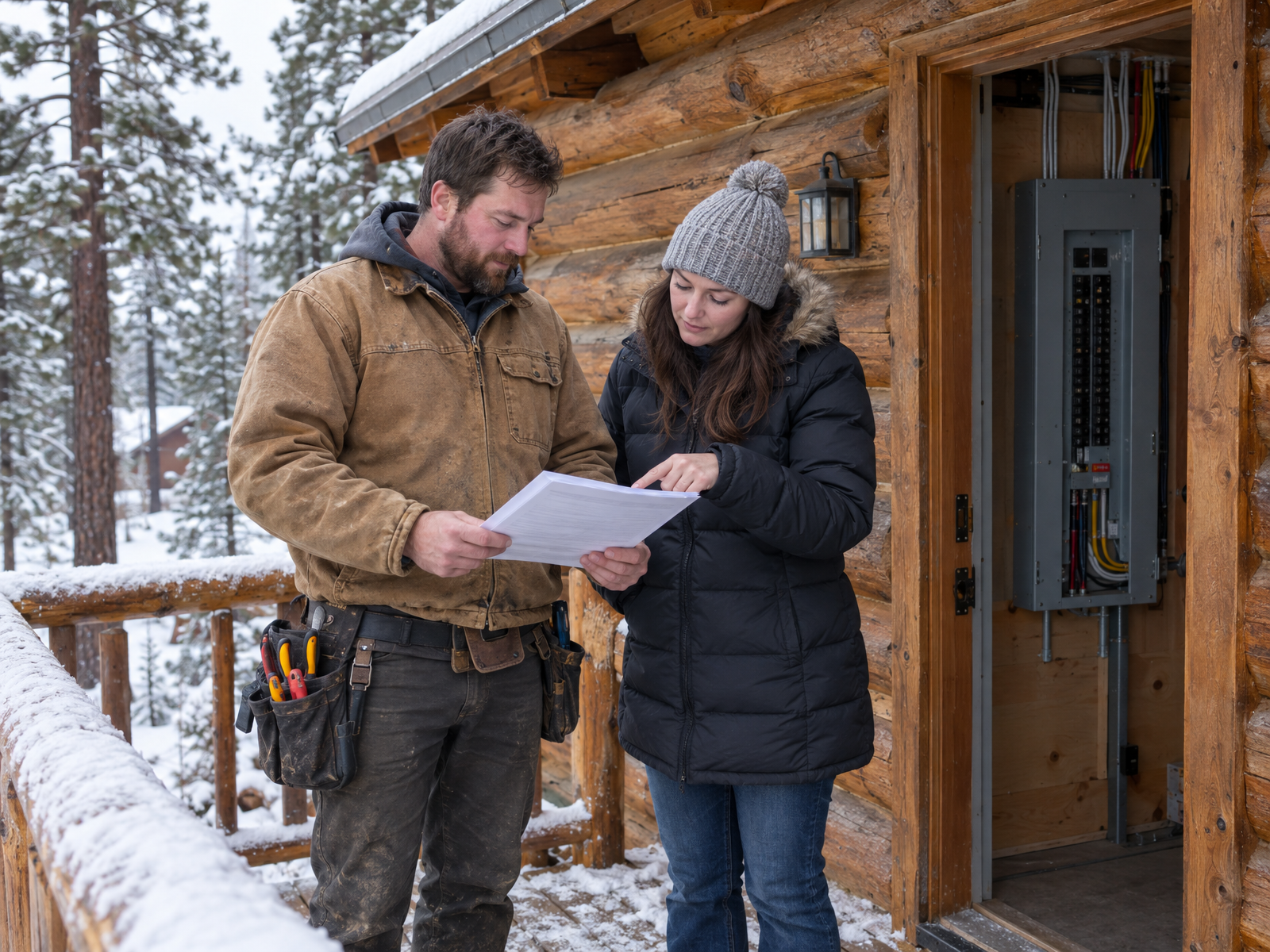
Call (909) 415-5573 for a free electrical safety assessment. We'll document your current system, identify the specific risk factors present in your property, and give you a clear picture of what upgrades matter most for your situation.
Protect your Big Bear investment. Protect the people inside it.
Licensed • Insured • Locally based in the San Bernardino Mountains

Big Bear Planned Power Outage Oct. 16–17: BVES's Timeline, Rolling Blackouts, and What to Do Tonight