Heat Tape and Roof De-Icing Systems in Big Bear: What Cabin Owners Need to Know
Heat Tape and Roof De-Icing Systems in Big Bear: What Cabin Owners Need to Know
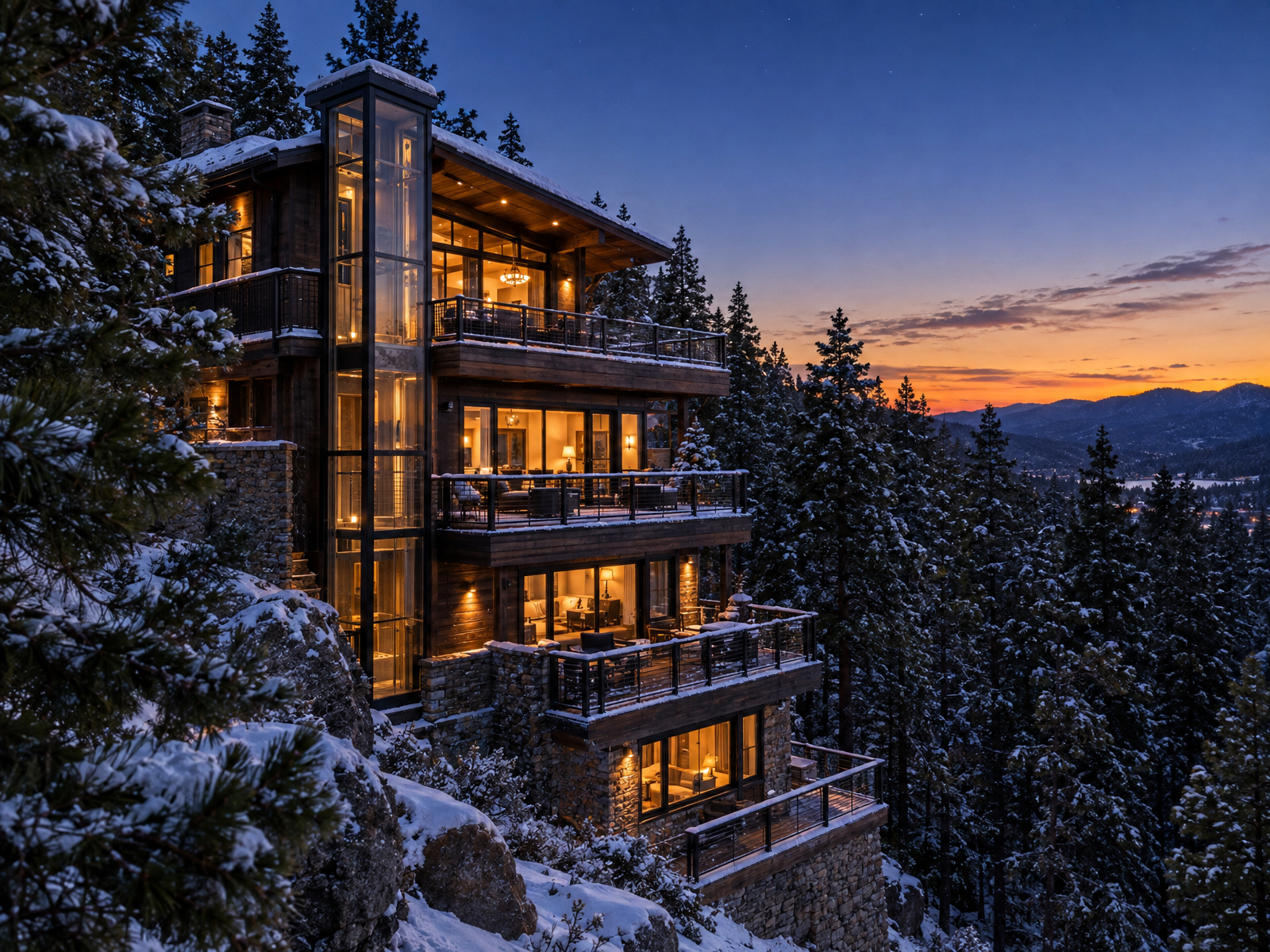
If you've watched icicles the size of baseball bats hanging off your Big Bear cabin's eaves and wondered whether those are charming or expensive — they're expensive. Behind every dramatic icicle is an ice dam, and behind every ice dam is water working its way under your shingles, into your attic insulation, down your interior walls, and eventually into a $15,000 to $40,000 repair bill.
The fix most Big Bear homeowners eventually land on is heat tape — also called heat cable, heat trace, or roof de-icing. It's a permanently installed electrical system that prevents ice dams before they form. And in a market where 70% of cabins are vacation rentals or weekend properties owned by people who aren't on the mountain to climb a ladder during a storm, it's the only practical defense.
Here's what heat tape actually does, what a code-compliant install looks like in Big Bear, what it costs, and the panel and electrical considerations most cabin owners don't think about until the electrician shows up to bid the job.
Why Big Bear Cabins Get Ice Dams in the First Place
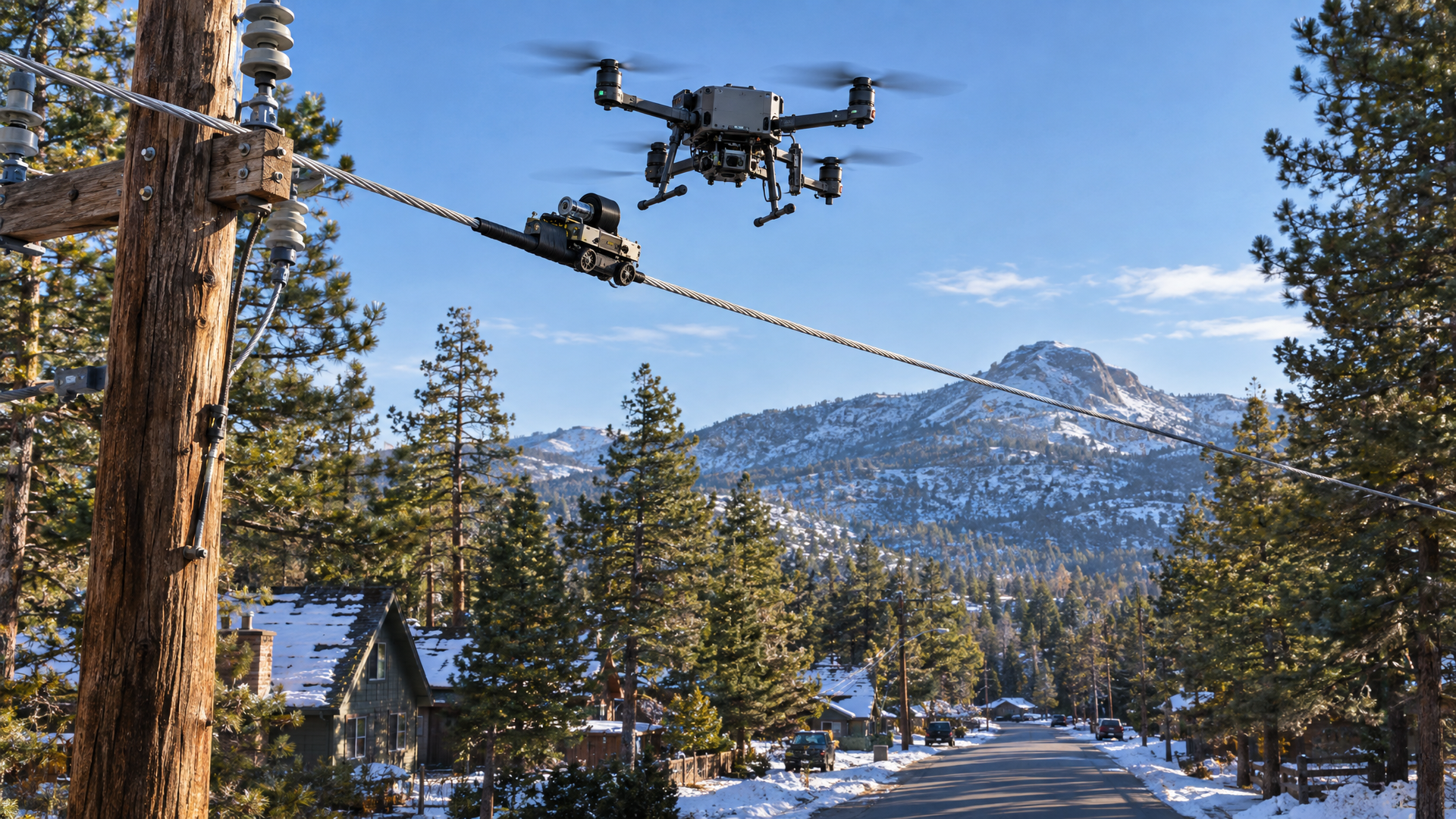
Ice dams form when warm air from inside a cabin rises into the attic, warms the underside of the roof deck, melts snow on the upper roof, and the meltwater runs down to the cold lower edge — the eave — where it refreezes into a wall of ice. Once that wall builds up, every subsequent thaw cycle pushes more water back up the roof under the shingles.
Big Bear gets the perfect ice dam recipe nine months out of twelve:
- Heavy snow loads. 100 to 150+ inches of snow in an average winter at 6,750+ feet elevation
- Wide temperature swings. Sunny 45°F afternoons followed by 15°F nights, repeated for weeks
- Older cabin stock with marginal insulation. Most pre-1990 Big Bear cabins were built to lower R-value standards than modern code, with attic ventilation gaps that let warm interior air reach the roof deck
- Long sunny aspects. South-facing roofs in Big Bear Lake and Sugarloaf get aggressive solar gain even in deep winter, accelerating melt-and-refreeze cycles
- Vacation rental heating patterns. Cabins cycle from 50°F maintenance temperatures to 70°F+ when guests arrive, creating sudden warm-air uplift events that turbocharge ice dam formation
The result is the classic Big Bear winter scene: snow-covered roofs with a 6-inch ridge of ice locked along every eave and 4-foot icicles hanging from gutters. By March, water is dripping inside.
What Heat Tape Actually Does (And What It Doesn't)
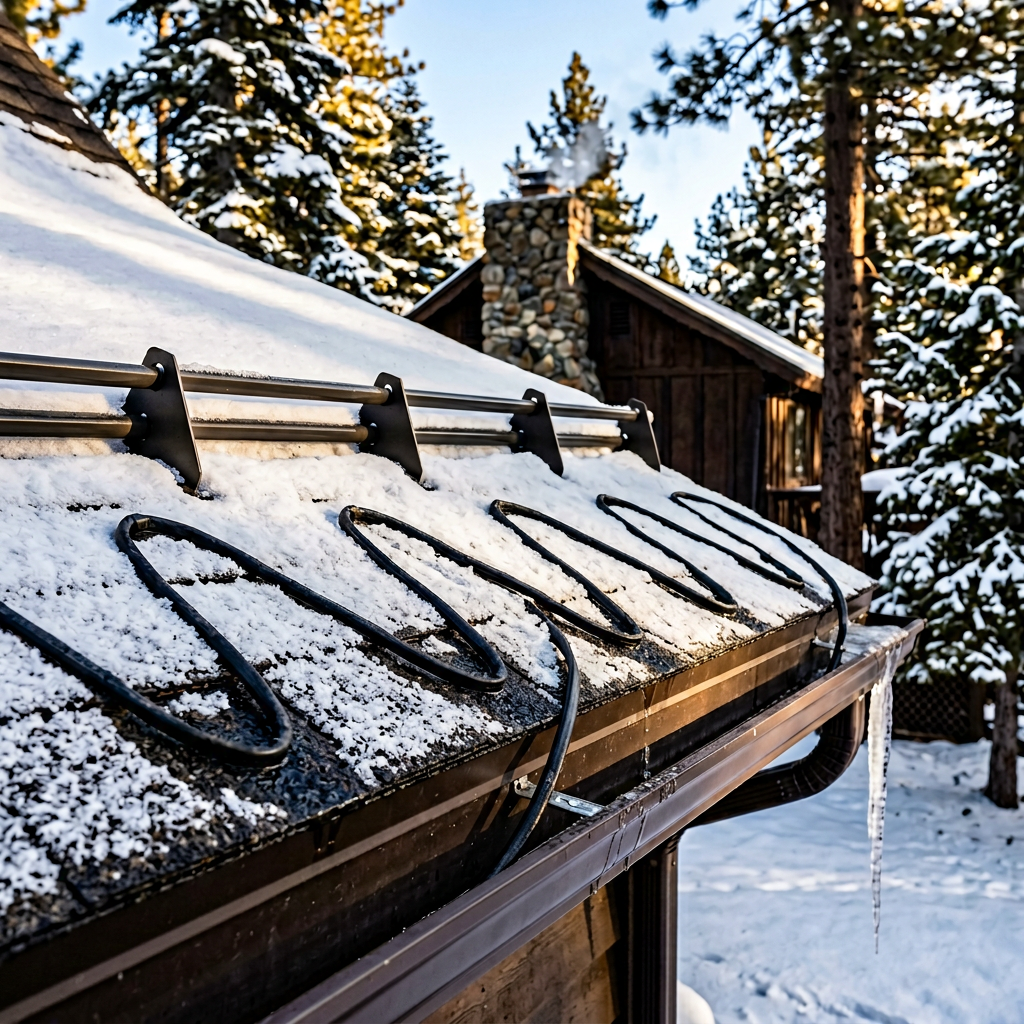
Heat tape is a heating cable installed along roof edges, in gutters, and down downspouts. When energized, it warms enough to keep meltwater channels open through the ice, allowing water to flow off the roof and out the downspout instead of pooling behind a dam.
What it does not do is melt all the snow off your roof. Heat tape is a drainage management system, not a roof melter. The goal is preventing the ice dam at the eave, not eliminating snow from the structure. A properly installed system creates clear meltwater paths through the snow and ice while leaving the bulk of the snowpack alone.
There are two main types of heat cable used in Big Bear:
Constant-wattage heat cable is the older technology. It puts out the same heat regardless of ambient temperature. Cheaper to buy, more expensive to operate, and prone to overheating in mild conditions where it's not needed. Most newer Big Bear installations skip this in favor of self-regulating cable.
Self-regulating heat cable is the current standard. The cable's resistance changes with temperature — colder areas put out more heat, warmer areas put out less. Uses 30 to 50% less electricity than constant-wattage. Won't overheat or burn out if a section is buried in snow or covered with leaves. Higher upfront cost, much lower lifetime cost. This is what should be installed on any new Big Bear cabin project.
Where Heat Tape Goes on a Big Bear Cabin
A complete roof de-icing system on a typical Big Bear single-family cabin includes cable in five locations:
1. Roof eaves. Cable installed in a zigzag pattern (typically 12 to 18 inches up from the eave edge, then back down) along the lower 2 to 3 feet of roof above heated interior space. This is the primary ice dam prevention zone.
2. Valleys. Where two roof slopes meet, snow accumulates and meltwater concentrates. Heat cable runs up valleys for 6 to 10 feet from the eave to keep the drainage channel open.
3. Gutters. Cable laid in the bottom of every gutter section to prevent gutter freeze-up. Without this, even a clear roof edge can dam at a frozen gutter.
4. Downspouts. Cable runs the full length of every downspout to the ground or daylight outlet. A frozen downspout backs water up into the gutter and starts the cycle even with everything else working.
5. Discharge points. Where downspouts daylight onto the ground, a short run of cable prevents ground-level ice damming where snowmelt would otherwise refreeze and pile up.
A 2,000-square-foot Big Bear cabin with a typical roof footprint usually needs 200 to 350 linear feet of heat cable across these five zones combined.
Code Requirements: What a Compliant Install Looks Like in Big Bear
Heat tape is electrical work, and California requires a licensed C-10 electrical contractor and a San Bernardino County permit for the installation. The reasons are not bureaucratic — they're because heat tape installed wrong is a known fire cause.
A code-compliant heat tape installation on a Big Bear cabin includes:
Dedicated GFCI-protected circuit. Heat tape requires its own dedicated circuit, GFCI-protected at the panel. This is non-negotiable. Cable that's been buried in snow, frozen, thawed, gnawed by squirrels, and exposed to UV for years will eventually develop ground faults — and a ground fault in 240V cable on a wet roof without GFCI protection can start a fire or kill someone.
Properly sized circuit. Heat tape draws 5 to 8 watts per linear foot for self-regulating cable. A 250-foot system at 6 watts/foot pulls 1,500 watts — that's a 12.5-amp draw on a 120V circuit. Most installations require either a 20-amp 120V dedicated circuit or, for larger systems, a 240V circuit with appropriate sizing.
Manufacturer-approved cable for the application. Roof and gutter cable, pipe cable, and floor warming cable are all different products with different temperature ratings, jacket materials, and approvals. A roofing contractor or handyman who installs whatever cable was on sale at the supply house creates a product liability and code problem that surfaces at home sale time.
Roof clip system, not nails. Heat cable should be secured to the roof using manufacturer-supplied roof clips that don't penetrate the shingles. Stapling or nailing cable to the roof creates leak points and voids both the shingle warranty and the cable warranty.
Weatherproof connections at all ends. Splices, end terminations, and power connection points need weatherproof boxes rated for outdoor use in cold conditions. Standard PVC junction boxes get brittle and crack at Big Bear winter temperatures.
Controller or thermostat. Energy-efficient installs include either an ambient thermostat (turns the system on below ~38°F and off above ~50°F) or a moisture-sensing controller (only powers up when there's actual snow or ice present, not just cold air). Without a controller, the system runs whenever it's plugged in — wasting hundreds of dollars in electricity per winter.
San Bernardino County permit and inspection. Required for new circuit installation and any modification to the main electrical panel. Pulled before work begins; inspected after.
A handyman or roofer installing heat tape without an electrician and without permits is creating exactly the kind of unpermitted electrical work that surfaces during home sales, voids vacation rental insurance claims, and creates fire liability. Don't be the cabin that's the cautionary tale.
Does Your Big Bear Panel Have Capacity for Heat Tape?
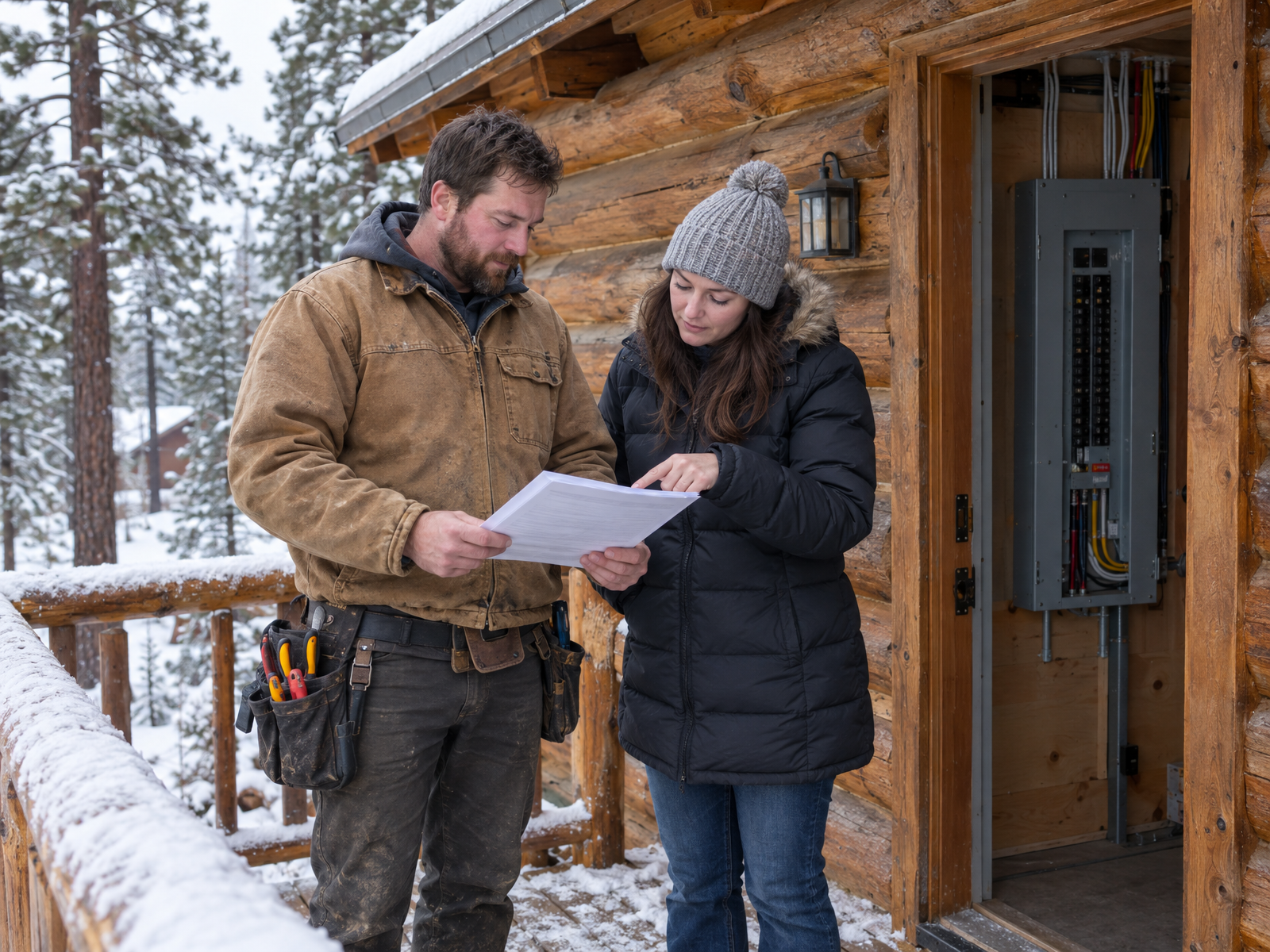
This is the question every cabin owner glosses over and every electrician asks first.
A typical roof de-icing system pulls 1,500 to 3,000 watts continuously when running, depending on cable footage. That's a 12.5-amp to 25-amp continuous load on whatever circuit it's connected to. On a 100-amp service panel that's already running a well pump, electric heating zones, kitchen appliances, and a hot tub, adding a 25-amp continuous load is rarely safe.
Most Big Bear cabin owners adding heat tape end up in one of three scenarios:
Scenario 1: Adequate panel, available breaker space. A 200-amp panel installed in the last decade with open breaker positions is easy. Add a dedicated GFCI-protected circuit, install the cable, energize and test. Total project: $1,500 to $4,500 depending on cable footage and access.
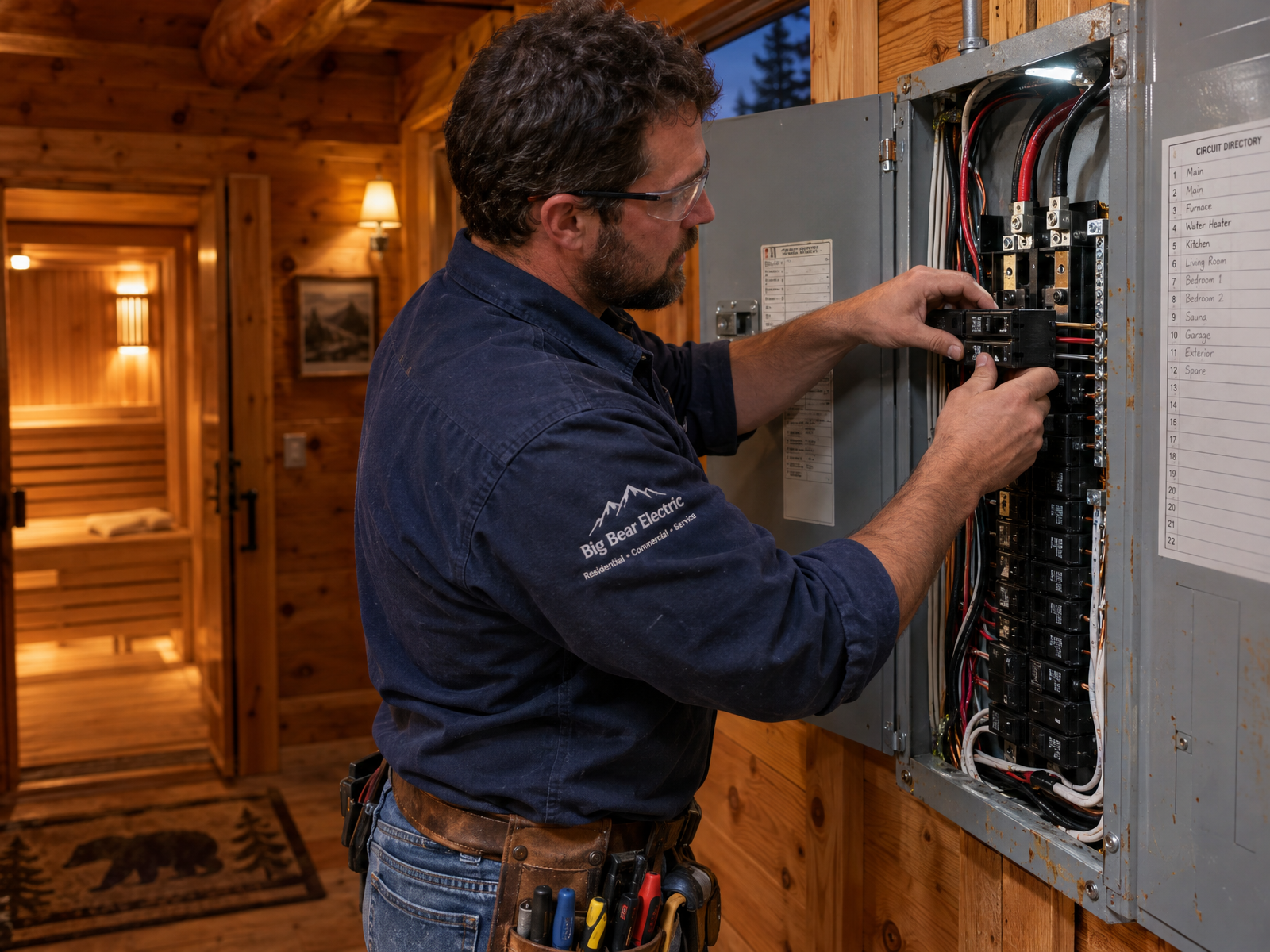
Scenario 2: 100-amp or older 200-amp panel, full breaker positions. Common in Big Bear cabins built in the 1970s and 1980s. Either a panel upgrade is needed first or a sub-panel can sometimes be added near the new circuit run. Panel upgrades typically run $2,500 to $4,500. Add the heat tape install on top.
Scenario 3: Federal Pacific or Zinsco panel. Found in a meaningful percentage of Big Bear cabins built between 1965 and 1980. These panels have known safety defects and should not have any new circuits added to them, including heat tape. The fix is a full panel replacement, typically $3,500 to $6,000 in Big Bear, before heat tape work can proceed.
If you're considering heat tape and you're also thinking about an EV charger, a generator, or a hot tub, this is the right conversation to have with the electrician proactively. Combining the panel work into a single project saves on permits, labor, and trip fees compared to doing each addition separately.
What Heat Tape Costs in Big Bear
Real installed pricing for Big Bear cabins in 2026:
Small cabin, simple roof, short eaves (under 150 ft of cable): $1,500 to $2,500 installed. Includes self-regulating cable, GFCI-protected dedicated circuit, basic ambient thermostat, permit and inspection. Assumes the panel has capacity.
Standard cabin, moderate roof complexity (150 to 250 ft of cable): $2,500 to $4,500 installed. Includes cable in eaves, gutters, downspouts, and one or two valleys.
Larger cabin or complex roof (250 to 400 ft of cable): $4,000 to $7,000 installed. Multiple roof aspects, valleys, longer downspouts, often a moisture-sensing controller for energy efficiency.
Luxury cabin or estate (400+ ft): $6,500 to $12,000+. Premium controller systems, multiple zones, extensive roof complexity.
Add-on costs:
- Panel upgrade if needed: $2,500 to $5,000
- Sub-panel for heat tape circuit: $800 to $2,000
- Replacement of existing failed/non-permitted heat tape: $500 to $1,500 in additional labor for removal
- Snow guards or ice belt installation (sometimes paired with heat tape): $300 to $800 per zone
These are professional electrical contractor prices. Quotes well below these ranges almost always involve a roofer or handyman without permits, a non-licensed installer, constant-wattage cable instead of self-regulating, no controller, no GFCI protection, no dedicated circuit, or some combination of all of those.
Operating Costs: What Heat Tape Adds to Your Electric Bill
This is the question Big Bear vacation rental owners ask second (right after install cost). The answer depends on cable type and controller setup.
Without a controller (cable running whenever it's plugged in): A 250-foot system at 6 watts/foot pulls 1,500 watts. Running 24/7 from November through March, that's roughly 5,400 kWh of electricity. At Bear Valley Electric rates, expect $1,200 to $1,700 per winter season in operating cost.
With an ambient thermostat (runs only below 38°F): Cuts runtime by roughly 50 to 60%. Operating cost drops to $500 to $850 per winter season.
With a moisture-sensing controller (runs only during actual snow or ice events): Cuts runtime by 70 to 85%. Operating cost drops to $200 to $450 per winter season.
The controller pays for itself within one to two winters. Spec the controller into the original install — adding it later costs more than including it from the start.
For comparison, the cost of one ice dam repair on a Big Bear cabin — interior drywall repair, insulation replacement, mold remediation, exterior shingle work — typically runs $8,000 to $25,000. Operating heat tape for 10 winters at the high end of the range costs less than one ice dam repair.
Heat Tape and Vacation Rentals: The Compliance Angle
If your Big Bear cabin is on Airbnb, VRBO, or any short-term rental platform, heat tape is doing more than preventing ice dams — it's protecting your insurance coverage and your STR permit.
San Bernardino County's STR permit requires properties to comply with all applicable safety codes, including electrical. Unpermitted heat tape — installed by a roofer or handyman without a county permit — is unpermitted electrical work that can surface during STR inspections. It's the same compliance issue as unpermitted hot tub wiring.
STR insurance policies typically require properties to be maintained in safe, code-compliant condition. A fire caused by improperly installed heat tape on a vacation rental will trigger an investigation. If the work was unpermitted, coverage gets complicated fast.
Beyond compliance, heat tape protects rental income directly. A guest checking in to a cabin where ice has dammed against the eaves and water is dripping through the bedroom ceiling is filing a complaint, demanding a refund, and leaving a one-star review. One ice dam incident on a busy weekend in December can cost more in refunds and lost bookings than the heat tape system would have cost to install.
For STR operators who don't live on the mountain, heat tape is also peace of mind. You can't drive up from Orange County during a storm to roof-rake your own cabin. The system runs automatically and protects the property whether you're there or not.
Maintenance and Lifespan
Heat tape is not maintenance-free. Specifically:
Annual fall inspection. Before the first significant snow, walk the system visually (or have your electrician do it). Look for damage from squirrels, falling branches, ice slides from the previous winter, or pulled clips. Fix issues now, not at midnight in a December storm.
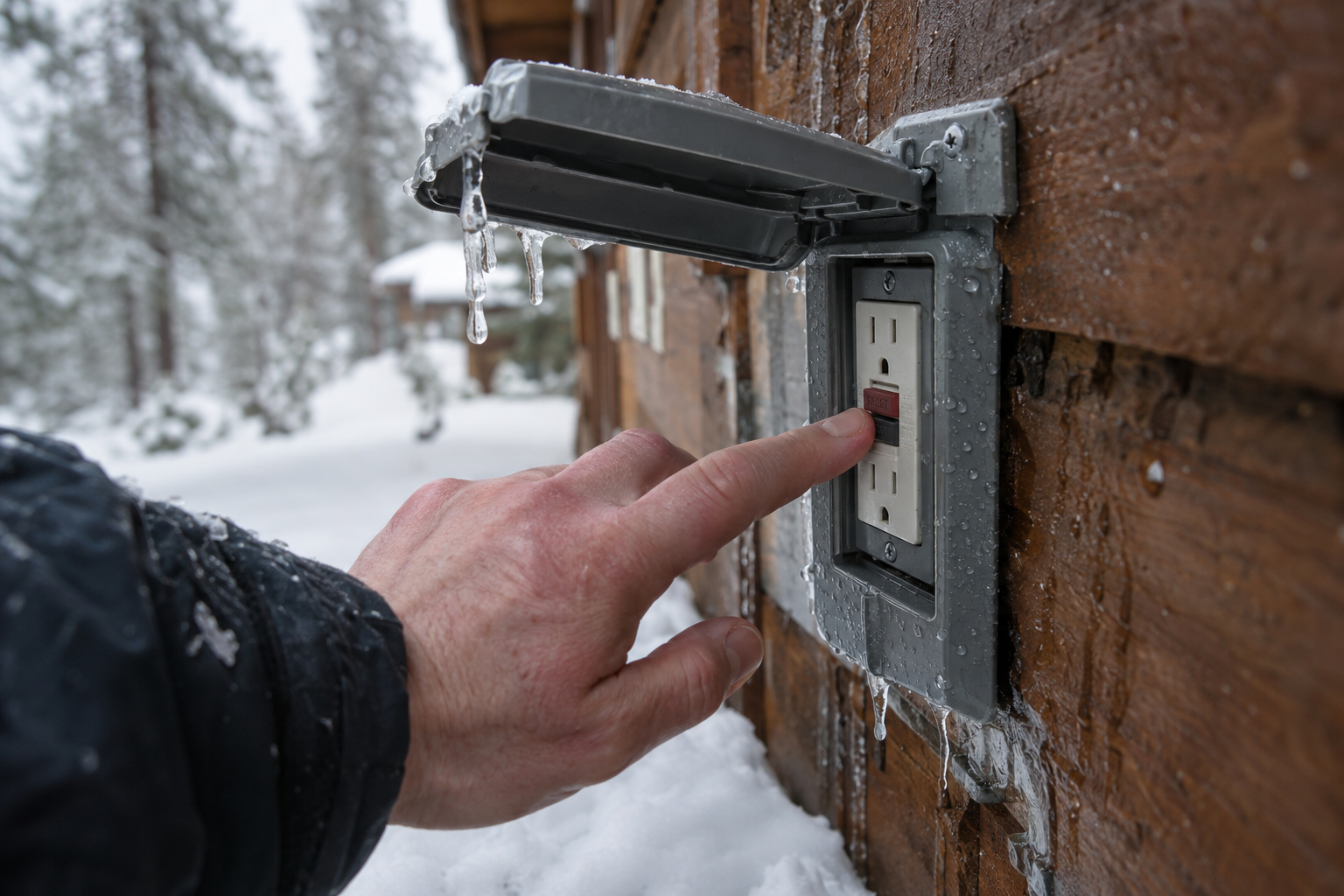
GFCI breaker test. Press the test button on the breaker once a season. The breaker should trip. Reset it. If it doesn't trip, the breaker has failed and needs replacement.
Controller verification. If you have a thermostat or moisture sensor, verify it's still functioning before winter. Sensors die, batteries in remote thermostats run out, and a dead controller means either a cold-stuck system that doesn't run or a stuck-on system that runs all summer.
Cable lifespan. Quality self-regulating cable lasts 10 to 15 years in Big Bear conditions. Constant-wattage cable typically lasts 5 to 8 years. Both shorten significantly without UV-stable jacket material and proper installation. Plan to replace the cable about once per decade as part of regular cabin maintenance.
Roof reroof timing. When you reroof, the heat tape comes off and gets reinstalled. Schedule this with the same electrician who originally installed it (or one familiar with the system) so the cable doesn't get damaged during shingle removal.
Frequently Asked Questions
When should I install heat tape on my Big Bear cabin? The best window is late summer through early fall — August through October. Quality electricians in Big Bear book up fast as cabin owners realize they need it before the first snow. Spring is a secondary install window once the snow is fully gone but before summer wedding-and-tourism schedules tighten up the calendar.
Can I install heat tape myself? California requires a licensed C-10 electrical contractor for the circuit installation. The cable run itself technically doesn't require a license, but the dedicated GFCI-protected circuit, the panel work, and the permit do. Most of the cost-saving fantasies of DIY heat tape end with someone calling an electrician to bring the work up to code at a higher total cost.
Does heat tape damage my roof? Properly installed heat tape with manufacturer-supplied roof clips does not damage the roof or void the shingle warranty. Improperly installed heat tape (nailed or stapled directly to shingles) absolutely damages the roof and voids the warranty. This is one of the main reasons to hire someone who specializes in this work.
Can heat tape be installed on a metal roof? Yes, with appropriate clip systems designed for the specific metal roofing profile. Some metal roofs benefit from snow guards or ice belts in combination with heat tape, since metal roofs shed snow in dangerous slides without proper retention.
What if my cabin already has heat tape that doesn't work? This is common in older Big Bear cabins. Often the existing cable is constant-wattage that's burned out, the GFCI breaker has failed, or the controller is dead. An electrician can evaluate the existing system and tell you whether it's worth restoring or worth replacing entirely. In most cases over 8 years old, replacement is the better economic choice.
Will heat tape work during a power outage? No. Heat tape is electrical equipment that requires power to function. During a multi-day outage in January with continued snowfall, ice dams can form even on cabins with well-functioning heat tape systems. This is one of several reasons cabin owners pair heat tape with a backup generator.
Does insurance cover ice dam damage? Most California homeowner policies cover ice dam damage as a sudden water damage event, but coverage varies. Many policies have limits on water damage from "long-term seepage" that can be invoked if an insurance adjuster determines the dam built up over weeks. Vacation rental policies often have additional exclusions. The cleanest path is preventing the ice dam in the first place.
Is heat tape required by code in Big Bear? No, heat tape is not currently required. It's a homeowner-elected protection system. What is required is that any heat tape system installed be permitted, compliant with NEC, and inspected.
Can heat tape work on flat roofs? Heat tape is designed for sloped roofs where meltwater drains by gravity. Flat roofs in Big Bear (rare but exist) require different solutions — typically improved drainage, increased insulation, and snow management rather than heat tape.
What about heat tape for water lines and pipes? Pipe heat tape is a different product than roof and gutter heat tape, and it's a common need in Big Bear cabins where well lines, water lines, and outdoor plumbing run through unheated areas. Many electricians address both during the same project. If your cabin has frozen-pipe history, mention it during the heat tape consultation — pipe protection is often a small add to the same install.
Get a Free Heat Tape and Roof De-Icing Quote in Big Bear
Big Bear Electric Pros installs roof and gutter de-icing systems throughout Big Bear Lake, Big Bear City, Fawnskin, Sugarloaf, Running Springs, and surrounding San Bernardino Mountain communities. Every project includes self-regulating cable rated for cold-climate operation, dedicated GFCI-protected circuit, roof-clip mounting that doesn't penetrate shingles, ambient thermostat or moisture-sensing controller (your choice), San Bernardino County permit, and inspection.
Call (909) 415-5573 for a free site assessment. We'll measure your roof, evaluate your panel capacity, and give you a written quote that spells out cable footage, controller type, panel work needed (if any), and operating cost estimates.
Late summer and early fall scheduling fills up fast. If you want heat tape installed before the first snow of 2026-2027, getting on the schedule by July or August is the realistic window.
Licensed C-10 electrical contractor. Fully insured. Local to Big Bear.

Big Bear Planned Power Outage Oct. 16–17: BVES's Timeline, Rolling Blackouts, and What to Do Tonight