How to Choose an Electrician in Big Bear, CA: A San Bernardino County Buyer's Guide
July 21, 2026

How to Choose an Electrician in Big Bear, CA: A San Bernardino County Buyer's Guide

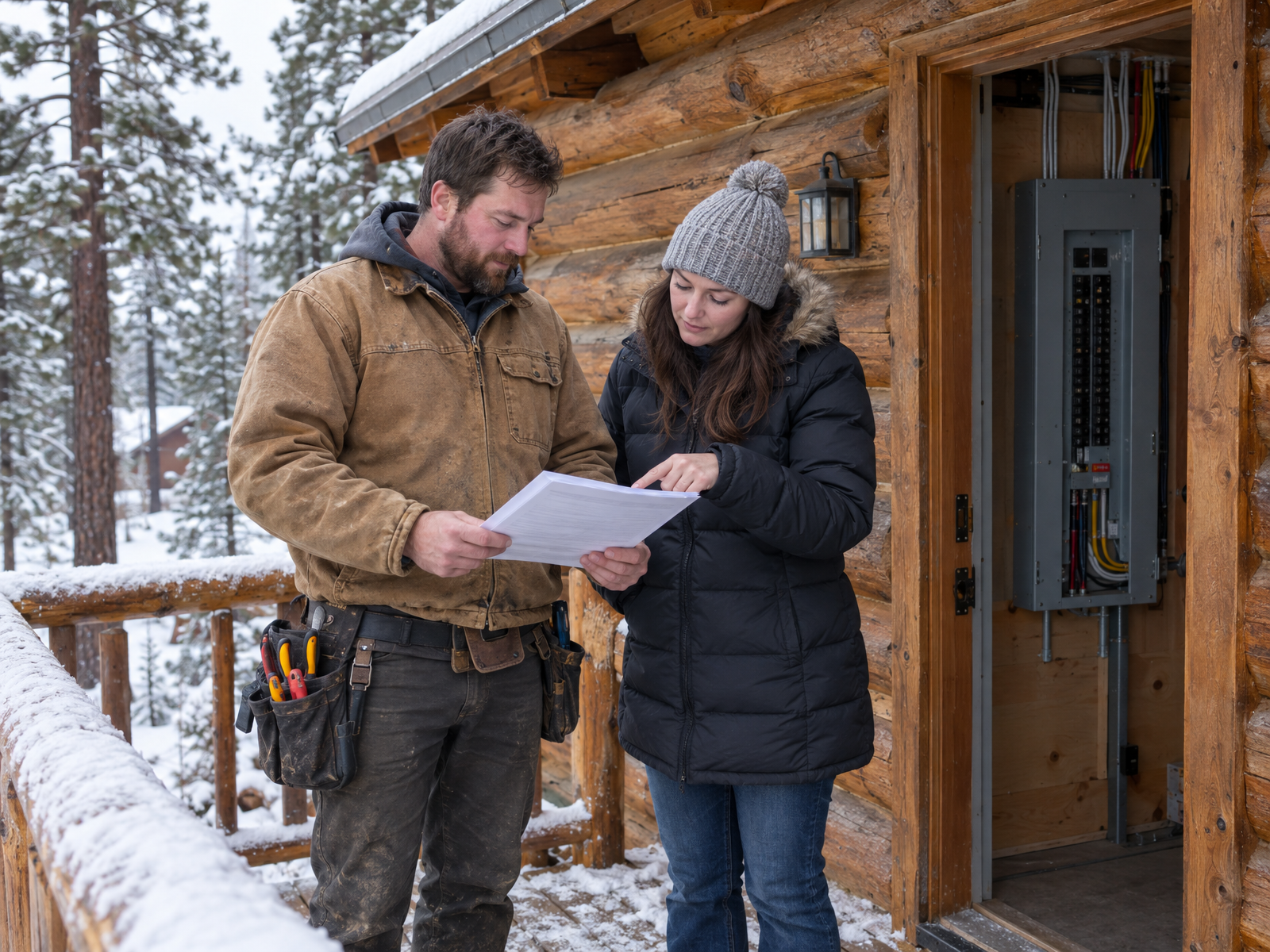
If you're searching for an electrician in Big Bear, CA, you're probably dealing with one of three things: an outlet that stopped working, a panel that's tripping breakers, or a project you don't want to hand to just anyone at 7,000 feet in the San Bernardino Mountains. Big Bear's cabins, vacation rentals, and mountain terrain create electrical challenges that a licensed local electrician is equipped to handle — and a random search-result contractor from the valley usually isn't. Here's what to check before you hire, and what actually separates a qualified Big Bear electrician from a risk.


What Should You Look for When Hiring an Electrician in Big Bear, CA?

The three non-negotiables are a valid C-10 license, current liability insurance, and local experience with mountain-specific conditions. In California, any electrical work beyond simple fixture swaps legally requires a licensed C-10 electrical contractor — unlicensed work can't be permitted, can void manufacturer warranties, and creates liability exposure if something goes wrong later. Beyond licensing, ask how long the company has worked specifically in Big Bear Lake, California or Big Bear City, California — not just "the Inland Empire" broadly. Mountain work is different enough that general experience doesn't always transfer.


Why Does Hiring a Local Big Bear Electrician Matter More Than in the Valley?

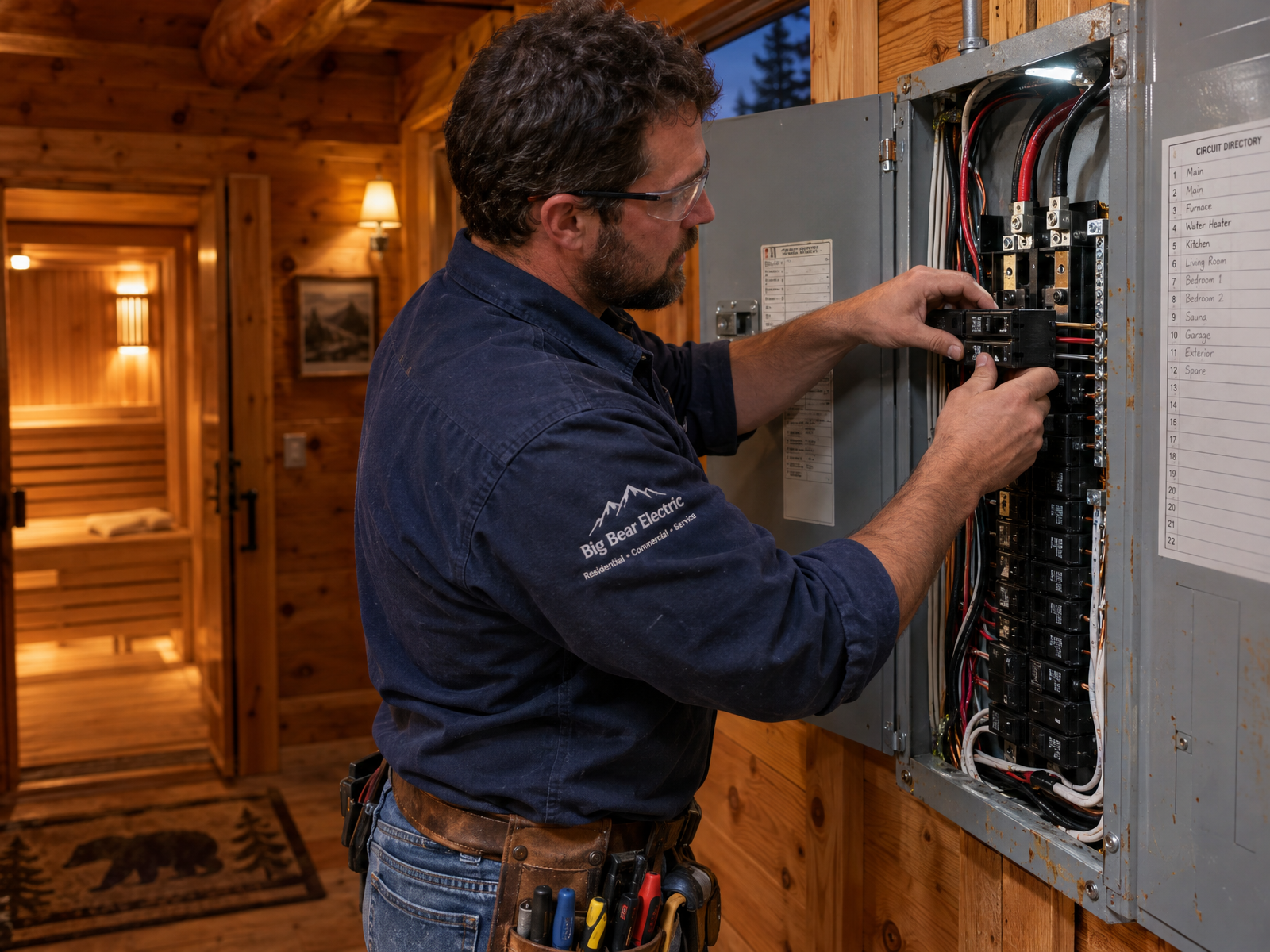
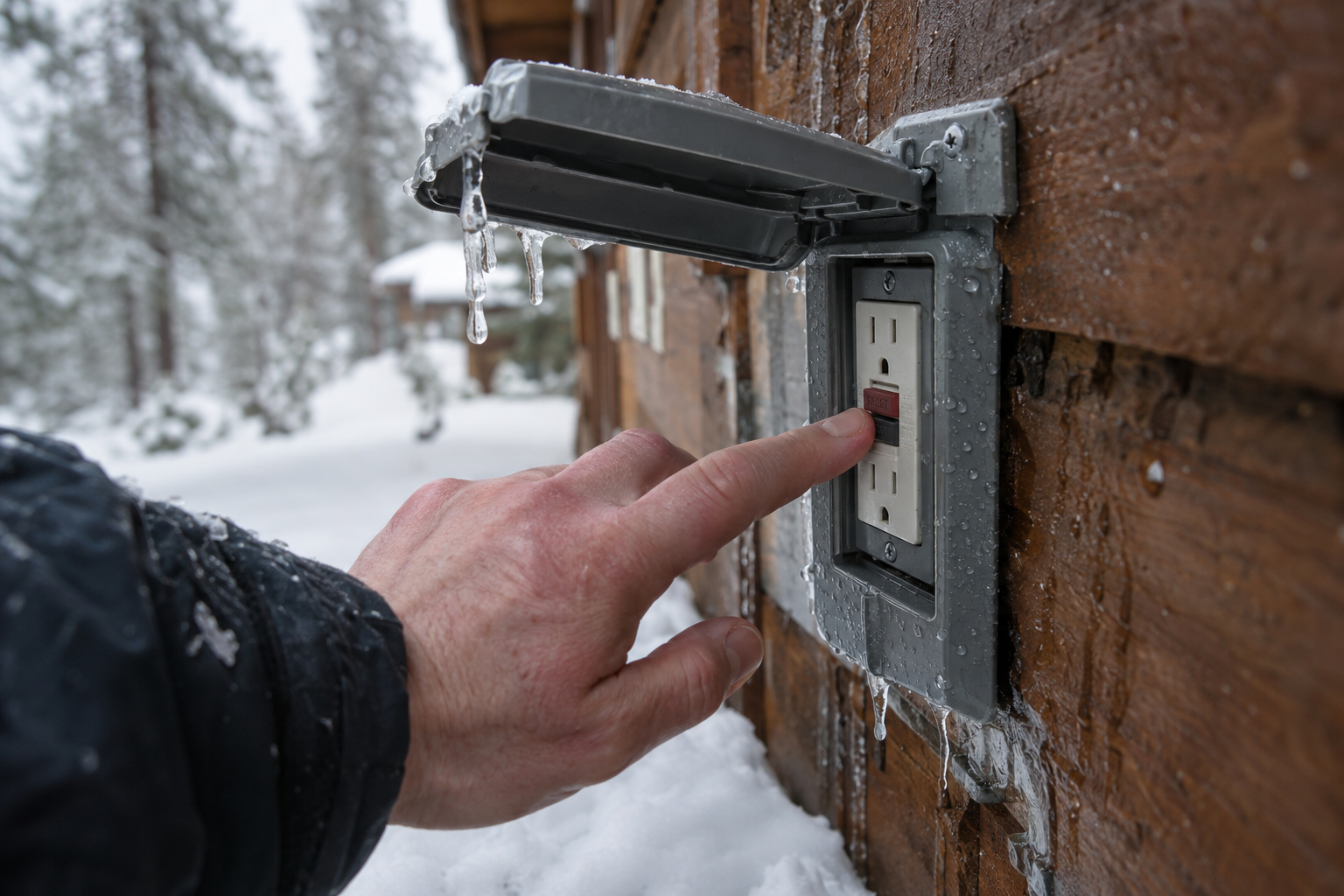
Because Big Bear's elevation, climate, and aging cabin stock create failure points that valley electricians don't routinely deal with. At 7,000 feet, freeze-thaw cycles loosen underground conduit connections and degrade materials faster than in coastal or valley installations. A large share of Big Bear properties were built in the 1960s–1980s with 100-amp panels that are already stretched thin by well pumps, electric heat, and appliances — before anyone adds an EV charger, hot tub, or generator. Local electricians in San Bernardino County also know the utility-specific requirements tied to BVES service territory and the wildfire-hazard rules that apply to mountain communities, which affect everything from panel upgrades to outdoor wiring standards. Properties along the Rim of the World Scenic Byway corridor — the stretch of State Route 18 and State Route 38 that winds past Big Bear Dam into the valley — often have longer service runs and older infrastructure than newer construction closer to the Village.


What Areas of Big Bear Does a Local Electrician Typically Serve?

A Big Bear-based electrician should cover the full lake basin, not just one neighborhood. That includes Big Bear Lake itself and the surrounding city, Big Bear City to the east, and outlying communities like Fawnskin on the north shore near the Big Bear Solar Observatory and Sugarloaf to the southeast. Within the city, that means cabins in Boulder Bay and Fox Farm near the lake, and properties in Moonridge — the neighborhood closest to Snow Summit and Bear Mountain, where high call volume comes from vacation rentals near the resorts and the Big Bear Alpine Zoo. If a company can't speak specifically to which of these areas they service, or only lists a general "San Bernardino Mountains" service area with no local landmarks mentioned, that's usually a sign they're not actually based here.


How Do You Verify a California Electrician's License Before Hiring?

You verify it directly through the Contractors State License Board (CSLB), California's licensing authority for contractors. Any legitimate electrical contractor can give you a license number on request — plug it into the CSLB's free lookup tool and you'll see the license classification (you want C-10), whether it's active, and bond and insurance status. This five-minute check confirms you're working with a properly licensed contractor anywhere in California, not just Big Bear.


What Does an Electrician in Big Bear, CA Typically Charge?

Most licensed Big Bear electricians charge based on the scope of the job rather than a flat hourly rate, since mountain conditions (buried conduit, older panels, elevation-related material requirements) affect labor time more than in the valley. As a general range: simple repairs and troubleshooting calls often run $150–$400, panel upgrades from 100A to 200A typically run $2,500–$4,500, and larger installs like EV chargers or hot tub circuits fall in the $800–$3,500 range depending on panel capacity and conduit run length. Get a written, itemized quote before work starts so there are no surprises once the job is underway.


What Electrical Services Do Big Bear Homeowners Need Most?

The most common calls in Big Bear are panel upgrades, EV charger installs, hot tub wiring, generator and battery backup systems, and pre-purchase electrical inspections. If you're buying a cabin, an electrical inspection before you close can catch outdated panels and unpermitted work before they become your problem. If you're adding a vehicle charger, our guide to EV charger installation in Big Bear covers BVES rebate steps and permit requirements. And if you're near a fire hazard zone — most of the San Bernardino National Forest boundary qualifies — it's worth understanding wildfire-safe electrical upgrades like AFCI breakers and surge protection. You can see our full service list, including lighting, wiring, and heating/AC electrical work, on our services page.


Frequently Asked Questions About Hiring an Electrician in Big Bear, CA


How much does an electrician in Big Bear, CA charge per hour?
Most Big Bear electricians quote by project scope rather than a flat hourly rate. Simple repairs run $150–$400 total, while larger jobs like panel upgrades or EV charger installs are quoted based on panel capacity, conduit length, and permit requirements. Always request a written estimate before work begins.


Do I need a permit for electrical work in Big Bear, CA?
Yes.
San Bernardino County requires a permit for electrical work on existing structures, including panel upgrades, hot tub circuits, and new wiring. A county inspector verifies the work before it's considered complete, which matters for resale and insurance.


How do I check if a California electrician is actually licensed?
Ask for their contractor license number and look it up on the
CSLB's free online tool. You want a C-10 classification and active status. This takes under five minutes and confirms you're working with a properly licensed contractor.


Is Big Bear Electric Pros licensed and insured?
Yes. Big Bear Electric Pros' electrical work is performed by a licensed C-10 contractor, fully insured and local to the Big Bear area, serving Big Bear Lake, Big Bear City, Fawnskin, Sugarloaf, and the Moonridge and Boulder Bay neighborhoods.


What's different about hiring an electrician for a mountain cabin vs. a valley home?
Mountain electricians account for freeze-thaw conduit damage, older 100-amp panels common in 1960s–1980s cabin stock, and wildfire-hazard code requirements — factors valley electricians without local experience often miss on first assessment.


Need an Electrician in Big Bear, CA?

Big Bear Electric Pros handles panel upgrades, EV chargers, hot tub wiring, generators, and full electrical inspections throughout Big Bear Lake, Big Bear City, Fawnskin, Sugarloaf, Moonridge, and Boulder Bay. Licensed C-10 contractor, fully insured, local to the mountain.


Call (909) 415-5573 for a free quote, or contact us here.

Licensed electrician installing home battery backup system in Big Bear Lake cabin after BVES PSPS
June 29, 2026
Just lost power in the BVES PSPS? Here's how Big Bear homeowners are installing home battery backup systems to stay on during the next shutoff. Call (909) 415-5573.
High winds over Big Bear Lake during a BVES Public Safety Power Shutoff warning  SCE PSPS alert June
June 25, 2026
SCE has placed two BVES transmission lines on its Monitored Circuit List for a potential PSPS starting June 26 @12pm. Here's what Big Bear homeowners need to do now.
Level 2 EV charger installed on Big Bear Lake mountain cabin exterior with BVES-compliant submeter
June 24, 2026
Installing an EV charger in Big Bear? Learn BVES Bear Ready rebate steps, permit requirements, and mountain-specific costs. Call (909) 415-5573 for a free quote.
Big Bear Lake vacation rental cabin with professional outdoor landscape lighting at dusk
June 23, 2026
The right outdoor lighting transforms a Big Bear cabin listing — better photos, safer guests, higher nightly rates. Free estimates: (909) 415-5573.
electrician-big-bear-city-ca-local-licensed-panel-upgrade
June 2, 2026
Big Bear City electrical work — panel upgrades, hot tub wiring, generator installs & EV chargers. Local C-10 licensed electrician. Free quotes: (909) 415-5573.
Self-regulating heat tape installed in zigzag pattern along the eave of a Big Bear Lake cabin roof
May 9, 2026
Stop ice dams from destroying your Big Bear cabin roof. Heat tape & gutter de-icing install costs, panel requirements & vacation rental tips. (909) 415-5573.
Licensed electrician inspecting electrical panel inside a Big Bear Lake cabin before purchase
April 13, 2026
Buying a Big Bear cabin? Inspect the electrical first. Panel hazards, unpermitted hot tub wiring & code gaps found before you close. Call (909) 415-5573.
Licensed electrician inspecting outdoor electrical panel at Big Bear Lake cabin in early spring
March 17, 2026
Don't leave your cabin's electrical safety to luck — Big Bear Lake homeowners should check these things before summer arrives.
Big Bear Lake mountain cabin surrounded by pine forest with wildfire glow on the horizon at dusk
March 11, 2026
Big Bear Lake is a CAL FIRE Very High Fire Hazard Zone. AFCI breakers, surge protection, and panel upgrades reduce ignition risk. Free assessments.
March 4, 2026
A hot tub is the single most-searched amenity for Big Bear vacation rentals. Guests filter for it. Hosts charge more for it. And every year, electricians in the San Bernardino Mountains get called out to properties where hot tubs are wired incorrectly — missing GFCI protection, running on undersized circuits, or connected without permits. This isn't a minor compliance issue. Hot tub electrical faults cause electrocutions. If you're installing a new hot tub at your Big Bear cabin or buying a property where one is already installed, here's what you need to know. Why Hot Tub Wiring in Big Bear Isn't a DIY Job Hot tubs require a dedicated 240-volt circuit, a GFCI breaker, a disconnect box, and weatherproof conduit — all installed to National Electrical Code (NEC) standards and inspected by San Bernardino County. California law requires a licensed C-10 electrical contractor for this work, and permits are mandatory. Beyond the legal requirement, Big Bear's environment creates specific installation challenges: Freeze-thaw cycles. At 7,000 feet elevation, buried conduit and underground wiring face repeated freezing and thawing that loosens connections and degrades materials faster than valley installations. Proper conduit depth and materials matter. Snow load on equipment. The disconnect box, conduit runs, and any exposed wiring near a hot tub need to be mounted and protected with mountain weather in mind — not just coastal California specs. Older panels in cabin stock. A significant percentage of Big Bear properties were built in the 1960s–1980s with 100-amp panels. A hot tub draws 50–60 amps. On an already-loaded panel, that's not a circuit you can add without a panel assessment first. Vacation rental liability. If a guest is injured or killed due to a hot tub electrical fault at your Airbnb or VRBO property, and that wiring was unpermitted or non-compliant, your homeowner's insurance may deny the claim. Both Airbnb and VRBO require hosts to certify their properties meet local safety codes. What a Code-Compliant Hot Tub Electrical Installation Actually Requires Here's what every properly wired hot tub in Big Bear needs: Dedicated 240-volt circuit. Hot tubs require their own dedicated circuit — typically 50–60 amps, though some smaller units run on 40 amps. The circuit must be sized to the specific hot tub model. Sharing a circuit with another load is a code violation. GFCI breaker. A Ground Fault Circuit Interrupter (GFCI) breaker on the hot tub's dedicated circuit is non-negotiable. GFCI protection detects dangerous current leakage — the exact failure mode that causes electrocutions in and around water — and cuts power in milliseconds. This is required by the NEC and by California code, and it's the most important safety feature in the entire installation. Disconnect box. A lockable disconnect switch must be installed within line of sight of the hot tub, at least 5 feet away from the water's edge. This allows power to be cut quickly in emergencies and gives service technicians a safe shutoff point. Proper wire gauge and conduit. The circuit requires wire sized appropriately for the amperage (typically 6 AWG for 50-amp circuits) run in weatherproof conduit. In Big Bear, conduit runs should use materials rated for temperature extremes — standard PVC can become brittle in sustained cold. Bonding. The hot tub's metal components — shell, frame, pump motors, heater — must be bonded together and connected to the electrical system's grounding. This equalizes voltage between components and prevents shock. Burial depth. If conduit runs underground (common when the panel is inside and the tub is on a deck or patio), it must be buried to code-required depth. In Big Bear's terrain, this often requires hand-digging around tree roots and through rocky soil. Permits and inspection. San Bernardino County requires an electrical permit for hot tub wiring. A county inspector will verify the installation before you're cleared to use the tub. Without a permit, the work isn't legally complete — and it's a liability that will surface during home sales. Does Your Big Bear Panel Have Room for a Hot Tub Circuit? This is the first question a licensed electrician will ask. A 50-amp hot tub circuit on a 100-amp panel that's already running a well pump, electric heating zones, kitchen appliances, and a washer/dryer is a problem. You're not just adding a breaker — you're adding a load that may push the panel past safe capacity. Before any hot tub installation, a qualified electrician should perform a load calculation to determine whether your current panel can handle the addition. If it can't, you have two options: a panel upgrade, or a load management approach that accounts for simultaneous demand. Panel upgrades for Big Bear cabins typically run $2,500–$4,500 and are often worth doing proactively, especially if you're also considering an EV charger, a generator, or additional circuits for a vacation rental. Combining work in a single project reduces permit fees and labor costs. According to the Consumer Product Safety Commission, there are approximately 33 pool and spa electrocution fatalities in the U.S. annually — nearly all involving improper grounding, bonding, or missing GFCI protection. At Big Bear's elevation, where emergency response times are longer and guests may not know where your breaker box is, that risk calculus matters more. What Hot Tub Wiring Costs in Big Bear Costs vary based on your panel situation, the distance from panel to tub, and whether conduit needs to be buried. Here are realistic ranges for San Bernardino Mountain area installations: Straightforward install, adequate panel, short run: $800–$1,500 Standard install with longer conduit run (30–60 ft): $1,500–$2,500 Install requiring underground conduit burial: $2,000–$3,500 Hot tub install plus panel upgrade (100A to 200A): $4,000–$7,000 San Bernardino County permit and inspection: $75–$150 These are installed costs including labor, materials, disconnect box, GFCI breaker, conduit, and permit. They don't include the hot tub unit itself. If you're buying a property with an existing hot tub, ask when the wiring was done and whether it was permitted. An uninspected hot tub installation is a known liability — budget $150–$300 for an electrician to inspect the existing wiring and give you a written assessment before you use it. Buying a Big Bear Property With an Existing Hot Tub: What to Verify Hot tubs on Big Bear vacation rental properties change hands frequently. Before you close escrow — or before your first guests use the tub — verify these four things: Confirm a GFCI breaker is installed. This is non-negotiable. If the hot tub circuit doesn't have a GFCI breaker at the panel, don't use the tub until one is installed. This is a $200–$400 fix that could prevent a fatality. Verify the disconnect box exists and is code-compliant. It should be within sight of the tub, at least 5 feet from the water, and lockable. Missing or undersized disconnect boxes are among the most common violations found on older Big Bear properties. Ask for permit documentation. A permitted installation will have a San Bernardino County inspection record. If the seller can't produce one, assume the wiring is unpermitted and budget for a compliance inspection. Check the wire gauge and conduit condition. If the conduit running from the panel to the tub is visibly degraded, undersized, or improperly supported, plan for remediation. Big Bear's temperature extremes are hard on materials over time. If any of these items are uncertain, schedule a hot tub electrical inspection before use — not after. Hot Tub Wiring for Vacation Rentals: The Compliance Angle If your Big Bear property is on Airbnb, VRBO, or a similar platform, hot tub electrical compliance isn't just a safety issue — it's an operational one. San Bernardino County's short-term rental permit requirements include compliance with all applicable safety codes. Electrical work, including hot tub wiring, must be permitted and inspected. An STR inspection that turns up unpermitted hot tub wiring creates a compliance problem that can jeopardize your permit. Beyond the county, your STR insurance policy matters. Standard homeowner's policies often don't cover commercial rental use. STR-specific policies typically require that the property meets local safety codes. If a guest is injured in a hot tub with non-compliant wiring, coverage under a non-STR policy is unlikely. A documented, permitted, inspected hot tub electrical installation is your paper trail. It shows due diligence. It satisfies county requirements. And it gives your insurance company what it needs to cover a claim if something goes wrong despite your best precautions. Frequently Asked Questions Can a handyman wire my hot tub in Big Bear? No. California law requires a licensed C-10 electrical contractor for this work. Unlicensed hot tub wiring is illegal, cannot be permitted or inspected, voids the hot tub manufacturer's warranty, and creates serious liability exposure for vacation rental hosts. My hot tub came with an installation manual — can I do it myself? The manufacturer manual describes how the tub should be wired. It doesn't authorize you to perform the electrical work yourself. California requires licensed contractors for 240V circuit installations regardless of what the manual says. How long does hot tub wiring take? A straightforward installation typically takes one day. If a panel upgrade is required or conduit needs to be buried across a long run, plan for 2–3 days. San Bernardino County permit approval adds 1–2 weeks of lead time before installation can begin. What if my hot tub runs on 120V instead of 240V? Plug-and-play 120V hot tubs (often called "soft tubs") plug into a standard outdoor GFCI-protected outlet. They don't require a dedicated circuit, though the outlet must be GFCI-protected and rated for outdoor use. A licensed electrician should verify your outdoor outlet is properly configured before use. Does my hot tub need to be bonded separately from grounding? Yes. Bonding and grounding are different and both are required. Bonding connects metal components together to equalize voltage; grounding provides a fault current path back to the panel. Missing bonding is a common deficiency found on older Big Bear hot tub installations. Ready to Wire Your Big Bear Hot Tub the Right Way? Big Bear Electric Pros handles hot tub wiring throughout Big Bear Lake, Big Bear City, Fawnskin, Sugarloaf, and the surrounding communities. We assess your panel capacity, pull all San Bernardino County permits, install GFCI protection and disconnect boxes to code, and provide documentation you can use for STR compliance and insurance purposes. Call (909) 415-5573 for a free hot tub wiring assessment. We'll walk you through what your installation requires and give you a clear, itemized quote. Licensed C-10 electrical contractor. Fully insured. Local to Big Bear.