Winter Electrical Safety Tips for Big Bear Homes: Preparing Your System for Cold Weather

November 4, 2025

Winter Electrical Safety Tips for Big Bear Homes: Preparing Your System for Cold Weather
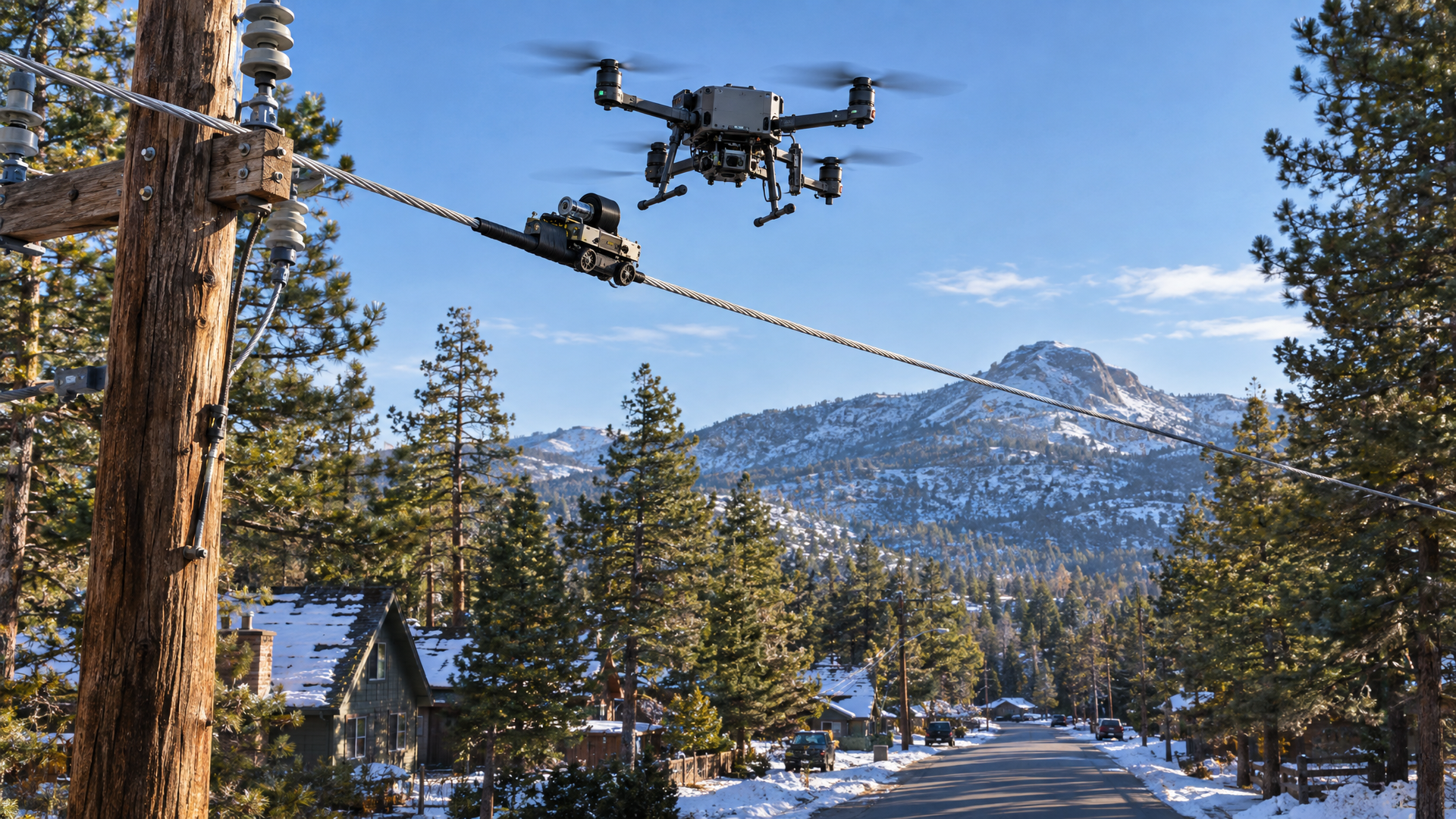
When winter arrives in Big Bear, your home's electrical system faces unique challenges that don't exist in warmer climates. From increased heating demands to freezing temperatures affecting outdoor components, your electrical infrastructure works overtime during the coldest months. Understanding how to prepare and maintain your electrical system can prevent dangerous situations, costly repairs, and unexpected power failures when you need electricity most.

Why Winter Electrical Safety Matters in Big Bear
Big Bear's mountain climate creates the perfect storm for electrical issues. Temperatures regularly drop below freezing, snow accumulation adds weight to power lines, and homes require significantly more electricity for heating, lighting, and comfort during long winter nights. Many Big Bear residents also rely on space heaters, electric blankets, and other supplemental heating sources that can strain electrical systems not designed for the additional load.

According to the National Fire Protection Association, heating equipment is involved in one out of every seven home fires, and electrical failures or malfunctions are the second leading cause of home fires nationwide. In mountain communities like Big Bear, where homes often have older electrical systems and residents depend heavily on heating equipment, these risks multiply during winter months.

Heating System Electrical Safety
Space Heater Precautions
Space heaters are a common sight in Big Bear homes during winter, but they're also one of the leading causes of winter fires. If you use space heaters, follow these critical safety guidelines:
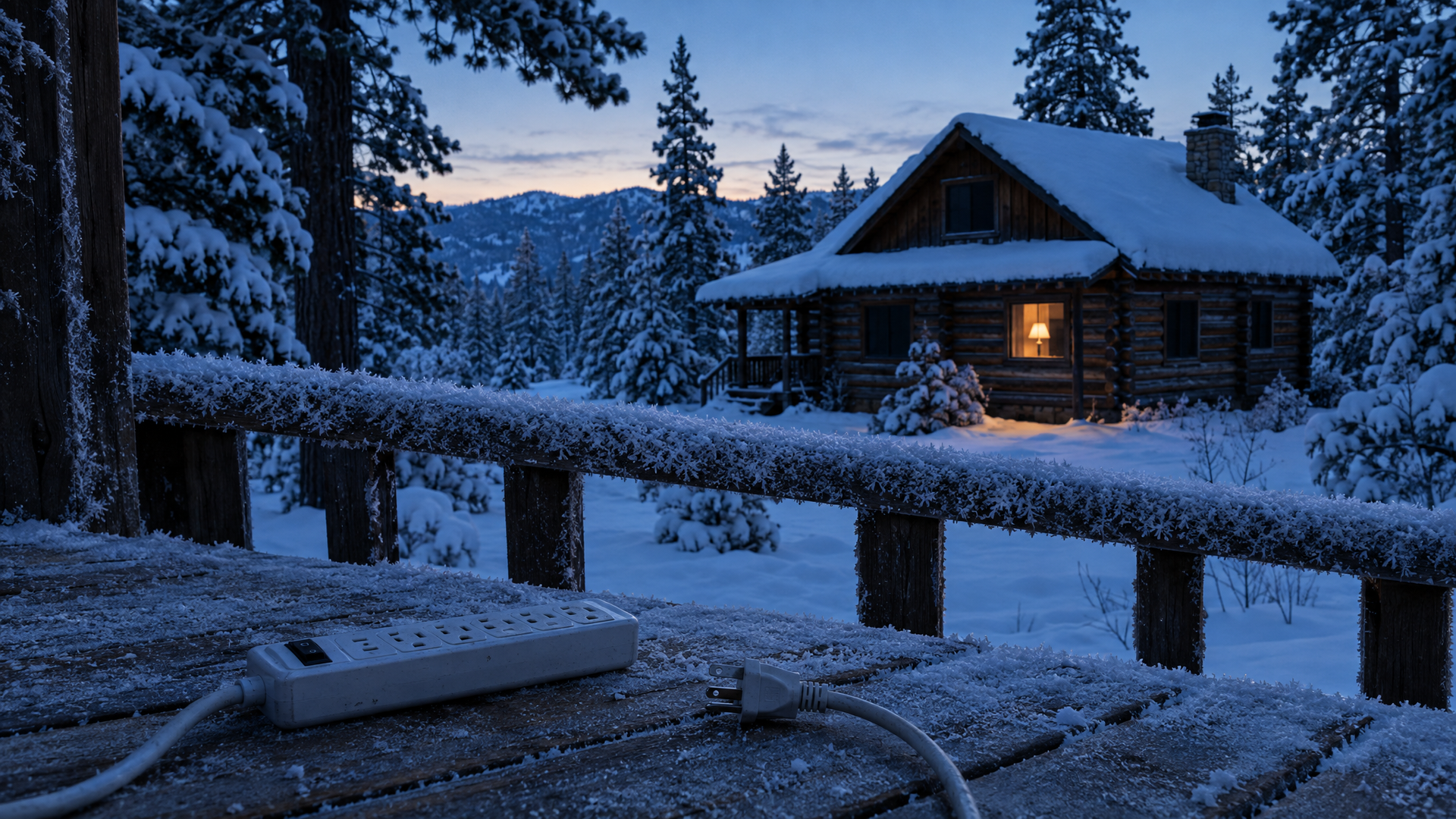
Choose the Right Circuit: Space heaters draw substantial power, typically between 1,200 and 1,500 watts. This means a single space heater on a 15-amp circuit is using nearly 80% of that circuit's capacity. Never plug a space heater into an extension cord or power strip, and avoid running other high-wattage appliances on the same circuit.

Inspect Before Each Use: Check the heater's cord for fraying, exposed wires, or damage. Examine the plug for discoloration or melting, which indicates overheating. If you notice any damage, replace the unit immediately rather than risking a fire.
Maintain Proper Clearance: Keep space heaters at least three feet away from anything flammable, including curtains, furniture, bedding, and papers. Never leave a space heater running unattended or while sleeping.

Electric Furnace and Baseboard Heater Inspections
If your Big Bear home uses electric heating as the primary heat source, your electrical system carries an enormous burden throughout winter. Consider scheduling a professional inspection before the coldest weather arrives.
An electrician should check:

Electrical connections at the furnace or heating units for corrosion or looseness
Circuit breaker capacity and condition
Thermostat wiring and functionality
Signs of overheating at breaker panels or outlets

Homes with electric baseboard heaters should ensure furniture and drapes don't block airflow, as restricted airflow can cause the units to overheat and potentially create fire hazards.

Recognizing Overloaded Circuits
Your home's electrical system has limits, and winter's increased demands can push older systems past their safe capacity. Watch for these warning signs of overloaded circuits:

Flickering or dimming lights when appliances turn on
Frequently tripping circuit breakers
Buzzing sounds from outlets or switches
Warm or discolored outlet plates
Burning smell from outlets or the breaker panel

If you notice any of these signs, contact a licensed electrician immediately. These symptoms indicate your electrical system is struggling and may pose a fire risk.

Outdoor Electrical Winterization
GFCI Outlet Protection
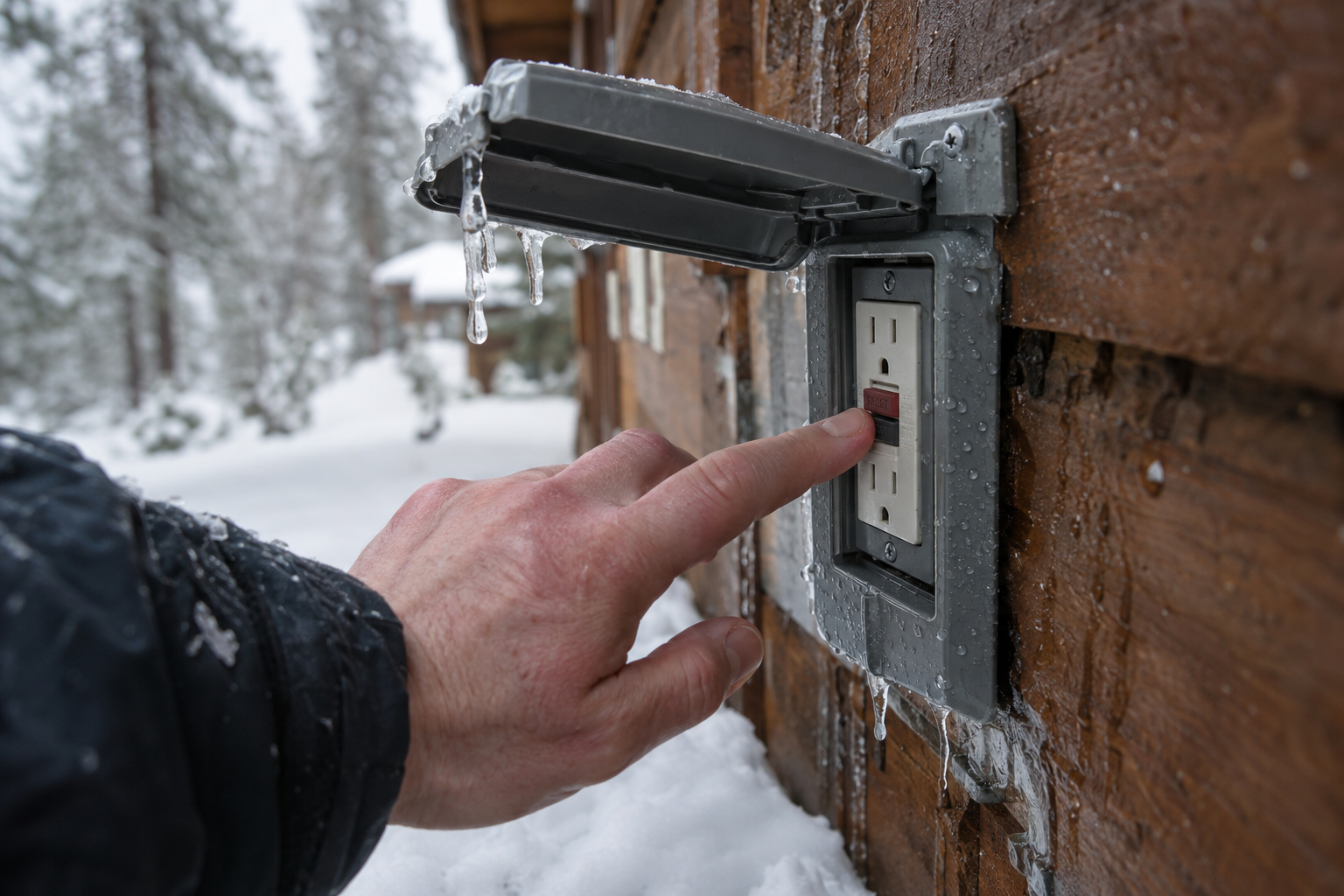
Ground Fault Circuit Interrupter (GFCI) outlets are required by code for outdoor locations because they protect against electrical shock. However, Big Bear's freezing temperatures can cause GFCI outlets to malfunction or trip unnecessarily.
Moisture from snow and ice can infiltrate outdoor outlets, causing shorts or freezing inside the receptacle. To protect your outdoor electrical components:
Install Weather-Resistant Covers: While-in-use covers allow you to plug in devices while keeping snow and moisture out. These covers provide significantly better protection than standard flat covers.
Test GFCI Outlets Monthly: Press the "test" button to ensure the outlet trips, then press "reset" to restore power. If the outlet won't reset or trips without load, it may need replacement.
Consider Outlet Heat Tape: For outlets you use regularly throughout winter (such as for block heaters or outdoor lighting), specialized heat tape can prevent moisture accumulation and freezing.

Exterior Lighting Maintenance
Big Bear's winter means longer nights and more reliance on outdoor lighting for safety and security. Before winter fully sets in:

Replace any cracked or broken light fixtures that could allow moisture infiltration
Verify all exterior fixtures have proper weatherproof gaskets
Switch to LED bulbs, which generate less heat and use less energy
Check that motion sensors and timers function correctly in cold temperatures
Ensure all fixtures are securely mounted to prevent damage from snow accumulation

Generator Hookup Considerations
Power outages during winter storms are a real concern in Big Bear. Many homeowners invest in portable or standby generators for backup power, but improper installation creates serious hazards.
Never Backfeed: Plugging a generator into a regular outlet to power your home, known as "backfeeding," is extremely dangerous. It can electrocute utility workers and damage your electrical system.
Use a Transfer Switch: A properly installed transfer switch isolates your home's electrical system from the utility grid, allowing safe generator operation. This installation requires a licensed electrician and permits.
Calculate Your Load: Ensure your generator can handle your essential electrical loads. Running too many devices can damage both the generator and your appliances.
Maintain Proper Ventilation: Always operate generators outdoors, away from windows and doors. Carbon monoxide poisoning from generators kills multiple people every winter.

Holiday Lighting Safety
Load Calculations for Decorations
Holiday lighting transforms Big Bear into a winter wonderland, but beautiful displays require careful planning to avoid electrical hazards.
Each 15-amp circuit can safely handle approximately 1,440 watts (80% of its 1,800-watt capacity provides a safety margin). Calculate your lighting load:

Traditional incandescent mini lights: 40 watts per 100-light strand
LED mini lights: 4-8 watts per 100-light strand
Large incandescent bulbs (C7/C9): 5-7 watts per bulb

A single 15-amp circuit could theoretically power 36 traditional 100-light strands, but practically should handle far fewer when considering other loads on the circuit. LED lights allow much larger displays on the same circuit.

Extension Cord Best Practices
Extension cords are temporary power solutions, not permanent installations. For holiday lighting and winter needs:
Match Cord to Use: Outdoor-rated cords (marked with a "W") have insulation that withstands cold, moisture, and UV exposure. Indoor cords become brittle and crack in freezing temperatures.
Size Matters: The longer the cord, the larger the wire gauge needed. For runs over 50 feet, use 12-gauge cords. For high-wattage devices like space heaters, 12-gauge cords are essential even for short distances.
Limit Daisy-Chaining: Each connection point creates resistance and heat. Most manufacturers recommend connecting no more than three light strands end-to-end.
Protect Connections: Keep outdoor connections off the ground and away from snow. Specialized cord connection covers prevent moisture infiltration.

Indoor vs. Outdoor Rated Lights
This distinction exists for important safety reasons. Outdoor lights have:

Heavier insulation resistant to weather and temperature extremes
Weatherproof sockets that prevent moisture infiltration
Construction designed to withstand physical stress

Using indoor lights outdoors in Big Bear's harsh winter conditions risks electrical shock, short circuits, and fires. Always verify the rating before decorating.

Emergency Preparedness
Backup Power Options
Beyond generators, several backup power solutions suit different needs:
Portable Power Stations: Modern lithium battery units can power essential devices for hours without gasoline or outdoor operation. They're ideal for powering phones, medical devices, and LED lighting during outages.
Uninterruptible Power Supplies (UPS): These battery backup systems keep sensitive electronics running during brief outages and provide surge protection. They're essential for home offices and medical equipment.
Whole-Home Standby Generators: These permanently installed units automatically activate during outages. They run on natural gas or propane and can power your entire home, but require professional installation and regular maintenance.

Circuit Breaker Panel Knowledge
Every Big Bear homeowner should know where their electrical panel is located and understand basic operation:
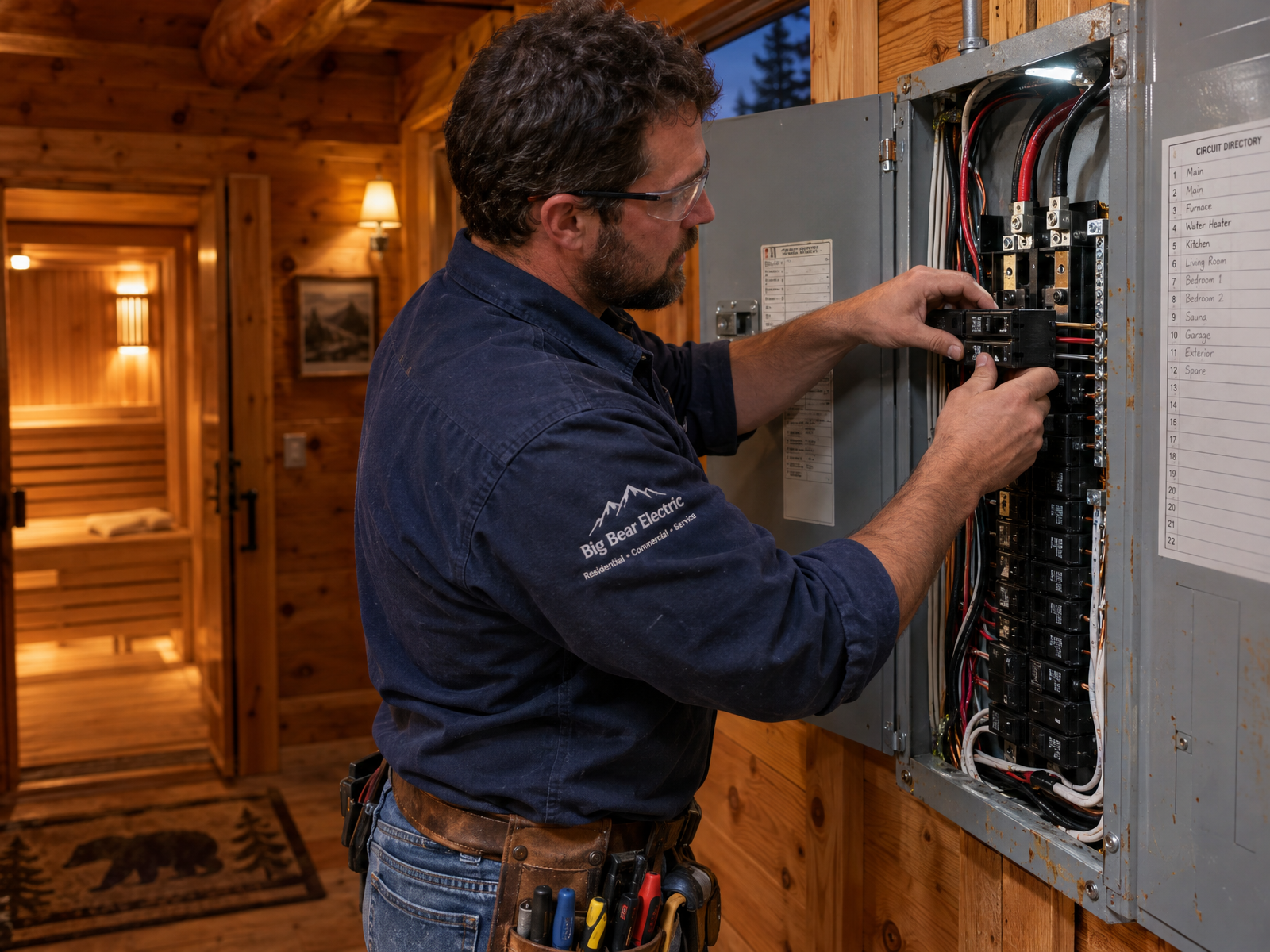
Label Your Breakers: If your panel isn't clearly labeled, create a map showing which breaker controls each area. This knowledge is critical during emergencies.
Test AFCI and GFCI Breakers: Arc Fault Circuit Interrupter (AFCI) breakers protect against electrical fires. Test them monthly using the test button on the breaker.
Know Your Main Disconnect: The main breaker shuts off all power to your home. In an electrical emergency like sparks or the smell of burning wires, shut off the main breaker and call an emergency electrician.
Watch for Rust or Corrosion: Moisture in your electrical panel indicates serious problems. If you notice rust, corrosion, or moisture, have your panel inspected immediately.

When to Call an Emergency Electrician
Some electrical problems demand immediate professional attention:

Outlets or switches that are hot to the touch
Buzzing, sizzling, or crackling sounds from outlets, switches, or the breaker panel
Burning smell anywhere in your home
Visible sparks from outlets, switches, or appliances
Frequent breaker trips on the same circuit
Lights that flicker throughout the house when it's not windy
Any electrical contact with water

Never attempt DIY repairs on your electrical system. Big Bear's challenging winter conditions make electrical work more dangerous, and mistakes can be fatal.

Common Winter Electrical Problems in Big Bear

Frozen Pipes and Water Heater Issues
When temperatures plummet in Big Bear, frozen pipes become a major concern. Many homeowners use heat tape or heat cables to prevent freezing, but these electrical solutions require proper installation:
Choose the Right Heat Tape: Self-regulating heat tape adjusts its temperature based on conditions, making it safer and more energy-efficient than older constant-wattage types.
Follow Manufacturer Instructions: Heat tape must be installed according to specific guidelines. Overlapping heat tape can create hot spots that melt pipes or cause fires.
Inspect Annually: Before each winter, examine heat tape for damage, verify GFCI protection, and ensure proper adhesion to pipes.
Water heaters work harder in winter because incoming water is much colder. If your water heater circuit breaker trips or your water heater isn't providing adequate hot water, have an electrician inspect the unit's electrical components.
Ice Dam Prevention
Ice dams form when heat escaping through your roof melts snow, which then refreezes at the eaves. Roof heating cables prevent ice dams, but they're high-wattage devices requiring dedicated circuits.
Professional installation ensures:

Proper circuit sizing for the cable's electrical load
Correct routing to prevent ice buildup where it matters most
GFCI protection as required by code
Secure mounting that won't damage roofing materials

Never attempt to chip away ice dams yourself, as you could damage your roof and risk electrical shock if heating cables are present.

Cold Weather Impact on Electrical Components
Extreme cold affects electrical systems in ways many homeowners don't consider:
Battery Performance: Batteries in smoke detectors, carbon monoxide detectors, and backup systems lose capacity in cold temperatures. Test these devices monthly during winter.
Wire Insulation: Old wiring with degraded insulation becomes brittle in extreme cold, increasing the risk of shorts and sparks.
Outdoor Receptacles: GFCI outlets may trip more frequently in freezing weather due to moisture and temperature fluctuations.
Circuit Breakers: Breakers in very cold spaces (like unheated garages) may not trip as readily as they should, potentially allowing dangerous overloads.

Protect Your Home This Winter
Winter in Big Bear is beautiful but demanding on your home's electrical system. The combination of increased electrical loads, harsh weather conditions, and aging infrastructure creates risks that proper preparation and maintenance can prevent.
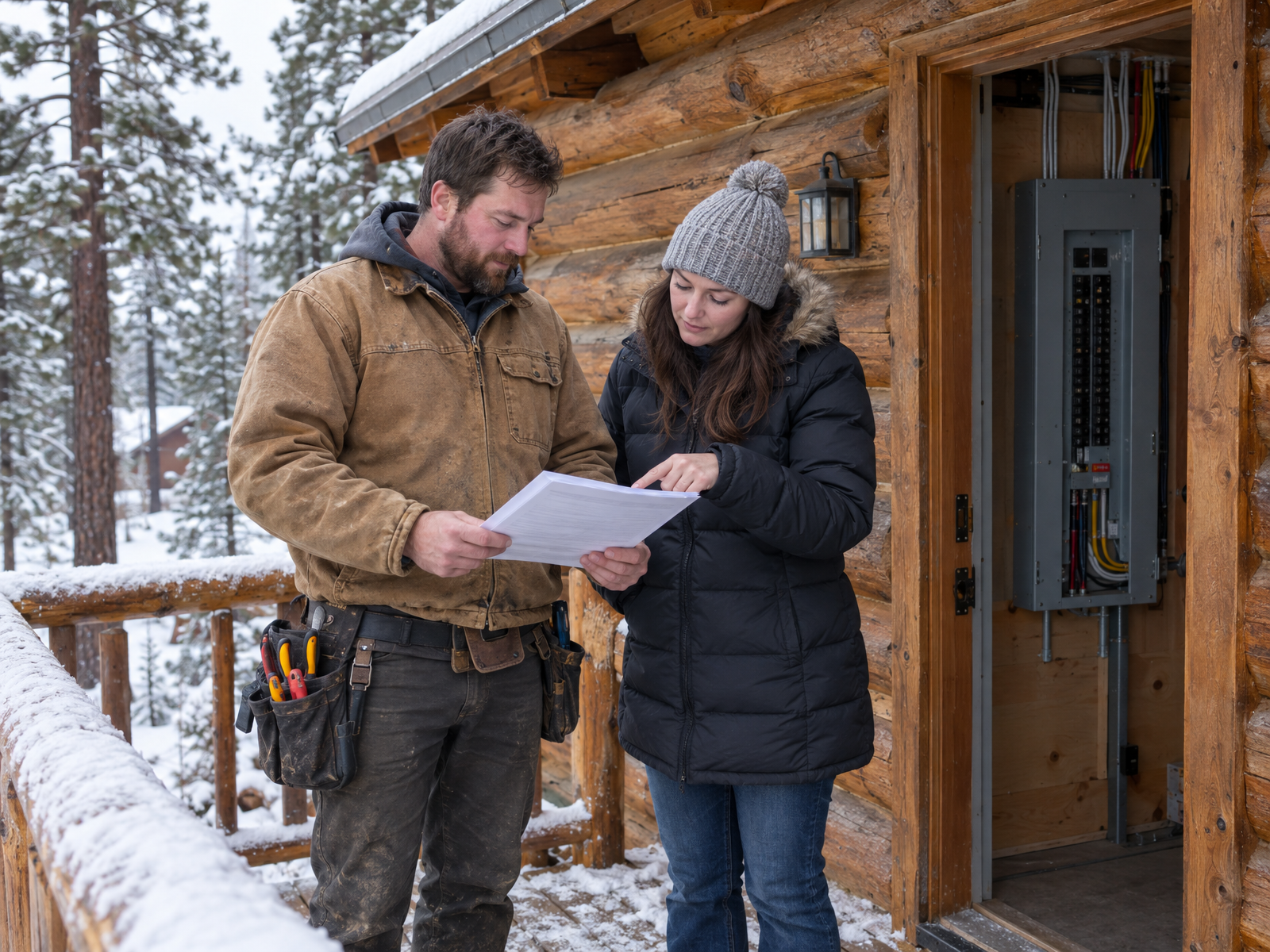
Don't wait until you're dealing with a winter emergency to address your electrical system's needs. A professional electrical inspection before winter fully arrives can identify potential problems, verify your system can handle seasonal demands, and provide peace of mind throughout the coldest months.

Schedule Your Winter Electrical Safety Inspection Today
At Big Bear Electric Pros, we understand the unique electrical challenges that Big Bear homeowners face during winter. Our licensed electricians provide comprehensive electrical safety inspections, emergency repairs, and system upgrades to keep your home safe and comfortable all winter long.

Our winter electrical services include:

Complete electrical system inspections
Circuit load analysis and upgrades
GFCI outlet testing and replacement
Generator installation and transfer switches
Emergency electrical repairs (available 24/7)
Panel upgrades and replacements
Dedicated circuits for high-demand appliances
Outdoor outlet winterization

Don't let electrical problems leave you in the cold this winter. Contact Big Bear Electric Pros today to schedule your winter electrical safety inspection. Our experienced team serves all of Big Bear and surrounding mountain communities with fast, reliable, and professional electrical services.

Call us now or visit our website to schedule your appointment. Your family's safety is our top priority.

Big Bear Electric Pros is a licensed and insured electrical contractor serving Big Bear, Big Bear Lake, and surrounding San Bernardino mountain communities. We provide residential and commercial electrical services with a focus on safety, quality, and customer satisfaction.
Self-regulating heat tape installed in zigzag pattern along the eave of a Big Bear Lake cabin roof
May 9, 2026
Stop ice dams from destroying your Big Bear cabin roof. Heat tape & gutter de-icing install costs, panel requirements & vacation rental tips. (909) 415-5573.
Licensed electrician inspecting electrical panel inside a Big Bear Lake cabin before purchase
April 13, 2026
Buying a Big Bear cabin? Inspect the electrical first. Panel hazards, unpermitted hot tub wiring & code gaps found before you close. Call (909) 415-5573.
Licensed electrician inspecting outdoor electrical panel at Big Bear Lake cabin in early spring
March 17, 2026
Don't leave your cabin's electrical safety to luck — Big Bear Lake homeowners should check these things before summer arrives.
Big Bear Lake mountain cabin surrounded by pine forest with wildfire glow on the horizon at dusk
March 11, 2026
Big Bear Lake is a CAL FIRE Very High Fire Hazard Zone. AFCI breakers, surge protection, and panel upgrades reduce ignition risk. Free assessments.
March 4, 2026
A hot tub is the single most-searched amenity for Big Bear vacation rentals. Guests filter for it. Hosts charge more for it. And every year, electricians in the San Bernardino Mountains get called out to properties where hot tubs are wired incorrectly — missing GFCI protection, running on undersized circuits, or connected without permits. This isn't a minor compliance issue. Hot tub electrical faults cause electrocutions. If you're installing a new hot tub at your Big Bear cabin or buying a property where one is already installed, here's what you need to know. Why Hot Tub Wiring in Big Bear Isn't a DIY Job Hot tubs require a dedicated 240-volt circuit, a GFCI breaker, a disconnect box, and weatherproof conduit — all installed to National Electrical Code (NEC) standards and inspected by San Bernardino County. California law requires a licensed C-10 electrical contractor for this work, and permits are mandatory. Beyond the legal requirement, Big Bear's environment creates specific installation challenges: Freeze-thaw cycles. At 7,000 feet elevation, buried conduit and underground wiring face repeated freezing and thawing that loosens connections and degrades materials faster than valley installations. Proper conduit depth and materials matter. Snow load on equipment. The disconnect box, conduit runs, and any exposed wiring near a hot tub need to be mounted and protected with mountain weather in mind — not just coastal California specs. Older panels in cabin stock. A significant percentage of Big Bear properties were built in the 1960s–1980s with 100-amp panels. A hot tub draws 50–60 amps. On an already-loaded panel, that's not a circuit you can add without a panel assessment first. Vacation rental liability. If a guest is injured or killed due to a hot tub electrical fault at your Airbnb or VRBO property, and that wiring was unpermitted or non-compliant, your homeowner's insurance may deny the claim. Both Airbnb and VRBO require hosts to certify their properties meet local safety codes. What a Code-Compliant Hot Tub Electrical Installation Actually Requires Here's what every properly wired hot tub in Big Bear needs: Dedicated 240-volt circuit. Hot tubs require their own dedicated circuit — typically 50–60 amps, though some smaller units run on 40 amps. The circuit must be sized to the specific hot tub model. Sharing a circuit with another load is a code violation. GFCI breaker. A Ground Fault Circuit Interrupter (GFCI) breaker on the hot tub's dedicated circuit is non-negotiable. GFCI protection detects dangerous current leakage — the exact failure mode that causes electrocutions in and around water — and cuts power in milliseconds. This is required by the NEC and by California code, and it's the most important safety feature in the entire installation. Disconnect box. A lockable disconnect switch must be installed within line of sight of the hot tub, at least 5 feet away from the water's edge. This allows power to be cut quickly in emergencies and gives service technicians a safe shutoff point. Proper wire gauge and conduit. The circuit requires wire sized appropriately for the amperage (typically 6 AWG for 50-amp circuits) run in weatherproof conduit. In Big Bear, conduit runs should use materials rated for temperature extremes — standard PVC can become brittle in sustained cold. Bonding. The hot tub's metal components — shell, frame, pump motors, heater — must be bonded together and connected to the electrical system's grounding. This equalizes voltage between components and prevents shock. Burial depth. If conduit runs underground (common when the panel is inside and the tub is on a deck or patio), it must be buried to code-required depth. In Big Bear's terrain, this often requires hand-digging around tree roots and through rocky soil. Permits and inspection. San Bernardino County requires an electrical permit for hot tub wiring. A county inspector will verify the installation before you're cleared to use the tub. Without a permit, the work isn't legally complete — and it's a liability that will surface during home sales. Does Your Big Bear Panel Have Room for a Hot Tub Circuit? This is the first question a licensed electrician will ask. A 50-amp hot tub circuit on a 100-amp panel that's already running a well pump, electric heating zones, kitchen appliances, and a washer/dryer is a problem. You're not just adding a breaker — you're adding a load that may push the panel past safe capacity. Before any hot tub installation, a qualified electrician should perform a load calculation to determine whether your current panel can handle the addition. If it can't, you have two options: a panel upgrade, or a load management approach that accounts for simultaneous demand. Panel upgrades for Big Bear cabins typically run $2,500–$4,500 and are often worth doing proactively, especially if you're also considering an EV charger, a generator, or additional circuits for a vacation rental. Combining work in a single project reduces permit fees and labor costs. According to the Consumer Product Safety Commission, there are approximately 33 pool and spa electrocution fatalities in the U.S. annually — nearly all involving improper grounding, bonding, or missing GFCI protection. At Big Bear's elevation, where emergency response times are longer and guests may not know where your breaker box is, that risk calculus matters more. What Hot Tub Wiring Costs in Big Bear Costs vary based on your panel situation, the distance from panel to tub, and whether conduit needs to be buried. Here are realistic ranges for San Bernardino Mountain area installations: Straightforward install, adequate panel, short run: $800–$1,500 Standard install with longer conduit run (30–60 ft): $1,500–$2,500 Install requiring underground conduit burial: $2,000–$3,500 Hot tub install plus panel upgrade (100A to 200A): $4,000–$7,000 San Bernardino County permit and inspection: $75–$150 These are installed costs including labor, materials, disconnect box, GFCI breaker, conduit, and permit. They don't include the hot tub unit itself. If you're buying a property with an existing hot tub, ask when the wiring was done and whether it was permitted. An uninspected hot tub installation is a known liability — budget $150–$300 for an electrician to inspect the existing wiring and give you a written assessment before you use it. Buying a Big Bear Property With an Existing Hot Tub: What to Verify Hot tubs on Big Bear vacation rental properties change hands frequently. Before you close escrow — or before your first guests use the tub — verify these four things: Confirm a GFCI breaker is installed. This is non-negotiable. If the hot tub circuit doesn't have a GFCI breaker at the panel, don't use the tub until one is installed. This is a $200–$400 fix that could prevent a fatality. Verify the disconnect box exists and is code-compliant. It should be within sight of the tub, at least 5 feet from the water, and lockable. Missing or undersized disconnect boxes are among the most common violations found on older Big Bear properties. Ask for permit documentation. A permitted installation will have a San Bernardino County inspection record. If the seller can't produce one, assume the wiring is unpermitted and budget for a compliance inspection. Check the wire gauge and conduit condition. If the conduit running from the panel to the tub is visibly degraded, undersized, or improperly supported, plan for remediation. Big Bear's temperature extremes are hard on materials over time. If any of these items are uncertain, schedule a hot tub electrical inspection before use — not after. Hot Tub Wiring for Vacation Rentals: The Compliance Angle If your Big Bear property is on Airbnb, VRBO, or a similar platform, hot tub electrical compliance isn't just a safety issue — it's an operational one. San Bernardino County's short-term rental permit requirements include compliance with all applicable safety codes. Electrical work, including hot tub wiring, must be permitted and inspected. An STR inspection that turns up unpermitted hot tub wiring creates a compliance problem that can jeopardize your permit. Beyond the county, your STR insurance policy matters. Standard homeowner's policies often don't cover commercial rental use. STR-specific policies typically require that the property meets local safety codes. If a guest is injured in a hot tub with non-compliant wiring, coverage under a non-STR policy is unlikely. A documented, permitted, inspected hot tub electrical installation is your paper trail. It shows due diligence. It satisfies county requirements. And it gives your insurance company what it needs to cover a claim if something goes wrong despite your best precautions. Frequently Asked Questions Can a handyman wire my hot tub in Big Bear? No. California law requires a licensed C-10 electrical contractor for this work. Unlicensed hot tub wiring is illegal, cannot be permitted or inspected, voids the hot tub manufacturer's warranty, and creates serious liability exposure for vacation rental hosts. My hot tub came with an installation manual — can I do it myself? The manufacturer manual describes how the tub should be wired. It doesn't authorize you to perform the electrical work yourself. California requires licensed contractors for 240V circuit installations regardless of what the manual says. How long does hot tub wiring take? A straightforward installation typically takes one day. If a panel upgrade is required or conduit needs to be buried across a long run, plan for 2–3 days. San Bernardino County permit approval adds 1–2 weeks of lead time before installation can begin. What if my hot tub runs on 120V instead of 240V? Plug-and-play 120V hot tubs (often called "soft tubs") plug into a standard outdoor GFCI-protected outlet. They don't require a dedicated circuit, though the outlet must be GFCI-protected and rated for outdoor use. A licensed electrician should verify your outdoor outlet is properly configured before use. Does my hot tub need to be bonded separately from grounding? Yes. Bonding and grounding are different and both are required. Bonding connects metal components together to equalize voltage; grounding provides a fault current path back to the panel. Missing bonding is a common deficiency found on older Big Bear hot tub installations. Ready to Wire Your Big Bear Hot Tub the Right Way? Big Bear Electric Pros handles hot tub wiring throughout Big Bear Lake, Big Bear City, Fawnskin, Sugarloaf, and the surrounding communities. We assess your panel capacity, pull all San Bernardino County permits, install GFCI protection and disconnect boxes to code, and provide documentation you can use for STR compliance and insurance purposes. Call (909) 415-5573 for a free hot tub wiring assessment. We'll walk you through what your installation requires and give you a clear, itemized quote. Licensed C-10 electrical contractor. Fully insured. Local to Big Bear.
February 17, 2026
You bought your Big Bear cabin. You listed it on Airbnb. Guests are booking. Five-star reviews are rolling in. Then a guest trips a breaker trying to blow-dry their hair while the coffee maker runs. Someone reports a sparking outlet in the bathroom. Your listing gets flagged. Your insurance company gets involved. This scenario plays out regularly in Big Bear — and it's almost always preventable. Short-term rentals in Big Bear Lake and Big Bear City face a unique intersection of older cabin electrical systems, maximum-capacity guest loads, county permit requirements, and platform liability. If you're operating a vacation rental without verifying electrical compliance, you're carrying risk most hosts don't realize exists. Here's what you actually need to know. The Big Bear Vacation Rental Electrical Reality Big Bear has over 1,500 active short-term rental units. Most are cabins built between the 1960s and 1990s — designed for a family of four, a few lights, a refrigerator, and a TV. Today those same cabins host 8-10 guests simultaneously, each with smartphones, laptops, and hair tools, while the hot tub runs, the oven preheats, and a space heater warms the back bedroom. That's not what the original 100-amp panel was designed for. The result is predictable: tripped breakers, overloaded circuits, warm outlets, and in worst-case scenarios, electrical fires in properties that were never upgraded for commercial-level use. San Bernardino County Short-Term Rental Requirements San Bernardino County requires short-term rental operators to obtain a Short-Term Rental Permit and comply with all applicable safety codes — including electrical. Key requirements that affect electrical systems: Working smoke detectors in every bedroom and on every level. California law mandates this regardless of rental status, but county enforcement for STRs is stricter. Inspectors verify placement, function, and manufacturing dates (alarms must be replaced after 10 years). Carbon monoxide detectors within 15 feet of every sleeping area. Big Bear's cabin stock uses propane furnaces, wood stoves, and gas appliances — all CO sources. Backup generators during outages compound the risk. CO detectors aren't optional. GFCI protection in all bathrooms, kitchens, outdoor outlets, and wet areas. Code-required since the 1970s-90s depending on location, but many older Big Bear cabins predate these requirements and have never been updated. No unpermitted electrical work. If previous owners or contractors added circuits, outlets, hot tub wiring, or panel work without permits, that's a liability issue that follows the property — and you as the operator. Ask: "When was the last time this property had a licensed electrical inspection?" If the answer is "never" or "I don't know," schedule one before your next guest checks in. Why Guest Loads Exceed What Old Cabins Were Built For This is the technical root of most vacation rental electrical problems, and it's worth understanding clearly. A 1970s Big Bear cabin with a 100-amp service panel was designed to handle roughly 24,000 watts of simultaneous load — in theory. In practice, that panel was sized for a vacation family using maybe 30-40% of that capacity on a normal evening. A fully booked vacation rental with 8-10 guests might simultaneously draw: Electric range or oven: 4,000-5,000 watts Refrigerator: 800 watts Coffee maker: 1,200 watts Hot tub heater (if on the main panel): 4,000-6,000 watts 3-4 bathroom hair dryers: 1,500-1,800 watts each Space heaters in bedrooms: 1,500 watts each EV charger (increasingly common): 3,800-7,200 watts Lighting, TVs, chargers: 1,000-2,000 watts Add that up and you're well past what a 100-amp panel can safely sustain. The breakers trip. Guests get frustrated. Reviews mention "electrical problems." Your listing rating drops. The fix is a 200-amp panel upgrade — a one-day job that permanently solves capacity issues, adds modern AFCI and GFCI breaker protection, and makes your property suitable for the actual demand it faces as a commercial rental. Hot Tub and Spa Wiring: The Most Overlooked Liability Hot tubs are the #1 amenity Big Bear guests search for. They're also the #1 source of electrical non-compliance on vacation rental properties. A properly wired hot tub requires: A dedicated 240V circuit sized to the specific unit (typically 50-60 amps) A GFCI breaker on that circuit — non-negotiable, code-required, life-saving A disconnect box within sight of the spa but at least 5 feet away Wiring run in weatherproof conduit, buried to code depth if underground Permits pulled and work inspected by San Bernardino County What we actually find on many Big Bear rental properties: hot tubs wired by the previous owner, a handyman, or the hot tub installer without permits. Extension cords. Missing GFCI protection. Undersized wire. Circuits shared with other loads. GFCI protection on hot tubs isn't a technicality — it's the difference between a guest getting out of the spa safely and a drowning-related electrocution. If you can't confirm your hot tub has a dedicated circuit with a GFCI breaker, stop using it as an amenity until a licensed electrician verifies the installation. A single insurance claim or lawsuit from a hot tub electrical incident will cost you far more than the $800-2,000 it takes to wire it correctly. EV Charging: The Amenity Guests Are Starting to Expect Electric vehicles are arriving in Big Bear in significant numbers. Guests with EVs are actively filtering for rentals that offer charging — and they're willing to pay more for properties that have it. A properly installed Level 2 EV charger: Requires a dedicated 240V, 40-50 amp circuit Must be installed in a NEMA 4-rated outdoor enclosure for Big Bear's snow and cold Needs a permit from San Bernardino County Should be mounted high enough to remain accessible during winter snowpack Smart hosts are adding EV chargers now, before guests start leaving negative reviews about the lack of charging options. A professionally installed Level 2 charger costs $1,500-3,000 all-in and earns back its cost quickly through higher nightly rates and improved occupancy. Airbnb and VRBO Platform Liability — What Most Hosts Miss Both Airbnb and VRBO require hosts to certify that their properties meet local safety standards and applicable codes. When you accept a booking, you're representing that your property is safe. If a guest is injured due to an electrical fault — a faulty outlet, an improperly wired hot tub, inadequate GFCI protection — platform host protection programs have limits. Your homeowner's or landlord's insurance policy may deny claims for properties operated as commercial short-term rentals without proper STR coverage. What actually protects you: STR-specific insurance policy (not standard homeowner's) Documented electrical compliance — a licensed electrician's written inspection report Permitted work on all electrical additions and upgrades Working GFCI and AFCI protection throughout the property Functioning smoke and CO detectors in all required locations An electrical inspection from a licensed Big Bear electrician, documented in writing, is evidence of due diligence. It doesn't just protect guests — it protects you when something goes wrong. Signs Your Rental Property Needs an Electrical Upgrade You don't need to wait for a problem to know your cabin's electrical system isn't keeping up. Watch for: Breakers tripping during guest stays — the most common complaint, and a sign of an overloaded system Warm outlets or switch plates — indicates circuits running near or above capacity Lights that dim when appliances start — voltage drop caused by insufficient panel capacity Outlet or switch discoloration — scorch marks from overheating No GFCI outlets in bathrooms, kitchen, or outdoor areas — non-compliant and a liability 100-amp panel — almost always inadequate for modern rental demands Unpermitted hot tub, sauna, or outbuilding wiring — common in Big Bear cabins that have been renovated informally over decades Any one of these is worth addressing before the next guest checks in. How Big Bear Electric Pros Helps Vacation Rental Hosts We work with Big Bear vacation rental operators throughout Big Bear Lake, Big Bear City, Fawnskin, and Sugarloaf to bring properties into full electrical compliance and optimize them for the demands of short-term rental use. Our vacation rental services include: Electrical compliance inspections with written documentation 200-amp panel upgrades for properties with capacity issues GFCI and AFCI protection installation throughout the property Hot tub and spa wiring — permitted, code-compliant, GFCI-protected Level 2 EV charger installation — outdoor-rated for mountain conditions Smoke and CO detector installation and certification Circuit additions for kitchens, bedrooms, outdoor spaces Generator installation for uninterrupted guest experience during outages We're local. We live on the mountain. We understand what Big Bear cabins actually need — and we pull all required permits so your work is documented, inspectable, and legally defensible. Call (909) 415-5573 for a free vacation rental electrical assessment. We serve Big Bear Lake, Big Bear City, Fawnskin, Sugarloaf, Running Springs, and all San Bernardino Mountain communities. Protect your guests. Protect your reviews. Protect your investment.
February 13, 2026
It's 9 PM. Your lights just flickered, went dark, and now there's a faint burning smell near your breaker box. This is the moment every Big Bear homeowner dreads. You're wondering: Is this an emergency? Can it wait until morning? Should I try to fix it myself? Here's the truth: some electrical problems demand immediate professional attention, while others can safely wait. But knowing the difference could literally save your cabin—and your family. Call an Emergency Electrician in Big Bear RIGHT NOW If You Experience: 🔥 Burning Smell or Smoke If you smell burning plastic or see smoke coming from outlets, switches, or your electrical panel, shut off your main breaker and call immediately. This isn't just an inconvenience—it's an active fire hazard. Electrical fires account for 13% of home fires nationally, and in Big Bear's dry mountain climate with older cabins, that risk multiplies. ⚡ Sparking Outlets or Visible Arcing Small sparks when plugging in devices might be normal. But repeated sparking, visible arcing, or outlets that char or scorch walls? That's dangerous fault current that can ignite surrounding materials. Don't wait—this gets worse, not better. 🌊 Water and Electricity Contact Water intrusion from Big Bear's heavy snowmelt, frozen pipe bursts, or roof leaks that reach electrical systems creates immediate shock and fire danger. If water has contacted your electrical panel, outlets, or wiring, do not attempt to dry it yourself. Call a licensed electrician equipped to handle wet electrical emergencies safely. 💥 Tripped Main Breaker That Won't Reset Individual circuit breakers trip occasionally—that's normal. But if your main breaker trips and refuses to stay on, or trips repeatedly, you have a serious short circuit or ground fault. Operating a damaged system risks catastrophic failure or fire. 🔊 Buzzing, Humming, or Sizzling Sounds Electrical systems should operate silently. Audible buzzing from panels, outlets, or switches indicates loose connections arcing under load. These connections generate extreme heat—hundreds of degrees—that ignites surrounding materials. These Can Probably Wait Until Normal Business Hours: Single outlet stopped working (with no burning smell or visible damage) Light fixture needs replacement GFCI outlet tripped but resets normally Dimmer switch acting up Ceiling fan running slow or making noise These are annoying, but not dangerous. Schedule service during normal hours and save the emergency service premium for actual emergencies. The Big Bear Difference: Why Location Matters Big Bear isn't Los Angeles. When electrical emergencies strike at 7,000 feet elevation, you face unique challenges: Slower Response Times: Many "Big Bear electricians" are actually based in the valley, meaning 60-90 minute response times during your emergency. Winter Access Issues: Heavy snow, chain requirements, and road closures can delay outside contractors for hours—or days. Older Cabin Electrical Systems: Big Bear's charming vintage cabins often have outdated wiring, overloaded panels, and aluminum wiring that increases fire risk. You need an electrician who actually lives and works in Big Bear. Someone who understands mountain electrical challenges. Someone who can respond fast because they're already here. What to Do While Waiting for Emergency Service If you've called for emergency electrical service, protect your property and family while waiting: Shut off the main breaker if it's safe to access Evacuate if you see flames or heavy smoke—property can be replaced, you cannot Keep a fire extinguisher nearby (but never use water on electrical fires) Don't attempt DIY repairs in emergency situations Turn on exterior lights so emergency responders can locate your cabin quickly Why Choose a Local Big Bear Emergency Electrician? When your electrical system fails at the worst possible moment—during a winter storm, holiday weekend, or late at night—you need someone who: Responds from Big Bear, not San Bernardino (30-45 minutes faster) Knows Big Bear's older cabin electrical systems inside and out Stocks parts and equipment specifically for mountain homes Is licensed, insured, and experienced with high-elevation electrical work Can navigate winter road conditions safely and legally Big Bear Electric Pros provides true emergency electrical service 7 days a week, 365 days a year. We live here. We work here. When you call, we're already on the mountain—not stuck in valley traffic calculating whether chain requirements will delay our arrival. The Bottom Line Electrical emergencies don't wait for convenient business hours. And in Big Bear's mountain environment with limited resources and challenging access, having a trusted local electrician's number saved in your phone isn't optional—it's essential. Burning smell? Sparks? Smoke? Don't wait. Don't guess. Don't risk it. Call Big Bear Electric Pros 24/7 Emergency Service: (909) 415-5573 We're here. We're ready. We're local. Serving Big Bear Lake, Big Bear City, Fawnskin, Sugarloaf, and all San Bernardino Mountain communities with professional emergency and scheduled electrical services. Licensed, bonded, and insured California electrical contractor.
January 23, 2026
Your Big Bear cabin faces electrical challenges that homes at lower elevations never encounter. Between heavy snowmelt, morning frost, and sudden temperature swings that create condensation, moisture finds its way into places it shouldn't—including your electrical outlets. That's where GFCI (Ground Fault Circuit Interrupter) outlets become critical safety devices. In Big Bear's wet mountain environment, they're not just a code requirement— they're potentially life-saving protection against electrical shock. What Makes Big Bear Properties Different Mountain properties deal with moisture issues year-round. Snow accumulation around foundations, ice damming on roofs, and rapid freeze-thaw cycles create constant challenges. When water meets electricity, the results can be deadly. GFCI outlets detect dangerous ground faults and cut power in milliseconds—fast enough to prevent serious injury or death. In bathrooms, kitchens, outdoor areas, and anywhere moisture is present, they're your first line of defense. Where Big Bear Homes Need GFCI Protection California electrical code requires GFCI outlets in specific locations, but many older Big Bear cabins built before these requirements haven't been updated. Here's where you need them: Bathrooms – All outlets, without exception Kitchens – Countertop outlets within 6 feet of sinks Outdoor outlets – Every single one, including deck and patio areas Garages – All outlets, especially in unheated spaces Laundry areas – Within 6 feet of sinks or washing machines Crawl spaces and basements – Where moisture accumulates Common GFCI Problems in Mountain Cabins We see the same issues repeatedly in Big Bear properties: Nuisance Tripping: GFCI outlets that trip constantly often indicate moisture infiltration in outlet boxes, deteriorated wiring insulation, or incorrectly wired circuits. This isn't normal and requires professional diagnosis. Missing Protection: Older cabins frequently lack GFCI outlets where code requires them. This creates dangerous situations—especially in vacation rentals where unfamiliar guests use outlets near water. Expired Outlets: GFCI outlets have a 15-20 year lifespan. The internal components degrade over time, and they should be replaced even if they appear to work. Check the manufacturing date stamped on each outlet. Frozen Outdoor Outlets: Water intrusion in outdoor outlet boxes can freeze, damaging the GFCI mechanism. Weatherproof covers protect against snow and rain, but proper installation is critical. The Vacation Rental Factor If you rent your Big Bear property, GFCI protection isn't optional—it's essential liability protection. Guests unfamiliar with your cabin might use hair dryers near sinks, operate space heaters in bathrooms, or plug devices into outdoor outlets during snowstorms. One electrical accident could result in injury, lawsuits, and devastating reviews. GFCI outlets provide critical protection against the most common electrical hazards in vacation rentals. When to Call a Big Bear Electrician Schedule an electrical safety inspection if your cabin shows these warning signs: GFCI outlets tripping frequently, especially the same outlet repeatedly Outdoor or bathroom outlets that aren't GFCI-protected GFCI outlets more than 15 years old (check the manufacturing date) "Test" button on GFCI outlets doesn't trip the outlet when pressed Visible moisture, rust, or corrosion around outlet boxes Outlets that feel warm or show discoloration You're preparing your cabin for sale or vacation rental operation Professional Installation vs. DIY While GFCI outlets are available at hardware stores, proper installation in Big Bear's mountain environment requires expertise. Licensed electricians ensure: Correct wiring connections that prevent nuisance tripping Proper outdoor weatherproofing for Big Bear's snow and ice Code-compliant installation for real estate transactions Full circuit testing to identify underlying electrical problems Improper GFCI installation can create false security—the outlet appears to work but won't protect you during a ground fault. For safety-critical devices like GFCIs, professional installation is worth the investment. Protect Your Family and Property GFCI outlets are simple devices with an important job: keeping your family safe from electrical shock in Big Bear's challenging mountain environment. Whether you're upgrading an older cabin, preparing for vacation rental operation, or addressing electrical problems, proper GFCI protection should be a priority. Big Bear's combination of moisture, cold temperatures, and older electrical systems creates unique challenges that require local expertise. Don't trust your family's safety to guesswork or outdated electrical protection. Need GFCI Outlet Installation or Inspection in Big Bear? Big Bear Electric Pros provides expert GFCI outlet installation, testing, and electrical safety inspections throughout Big Bear Lake, Big Bear City, Fawnskin, and Sugarloaf. Our services include: Complete GFCI outlet installation and upgrades Electrical safety inspections for vacation rentals Troubleshooting nuisance tripping problems Weatherproof outdoor outlet installation Real estate transaction electrical certifications Call (909) 415-5573 today for a free electrical safety consultation. Serving Big Bear Lake, Big Bear City, Fawnskin, Sugarloaf, Running Springs, and all San Bernardino Mountain communities with professional electrical services.
January 4, 2026
Your Big Bear cabin is your mountain retreat—a place to escape, relax, and enjoy everything the San Bernardino Mountains have to offer. But while you're enjoying modern conveniences like high-speed internet, multiple TVs, electric vehicle chargers, and sophisticated heating systems, there's a critical component working overtime behind the scenes: your electrical panel. Many Big Bear homes were built in the 1960s through 1980s when electrical demands were drastically different. The 100-amp electrical panels that were perfectly adequate for a few lights, a refrigerator, and a television simply can't handle today's power-hungry lifestyle. If your breakers trip frequently, lights dim when appliances start, or you're planning to add an EV charger or hot tub, it might be time for an electrical panel upgrade. This comprehensive guide explains everything Big Bear homeowners need to know about electrical panel upgrades—from recognizing warning signs to understanding costs and navigating the upgrade process in our unique mountain environment. ## What Is an Electrical Panel and Why Does It Matter? Your electrical panel (also called a breaker box, service panel, or distribution board) is the heart of your home's electrical system. It receives electricity from the utility company and distributes it throughout your cabin via individual circuits controlled by circuit breakers. The panel serves three critical functions: **Power Distribution**: It divides incoming electrical power into separate circuits for different areas of your home—dedicated circuits for kitchen appliances, bedroom outlets, heating systems, and more. **Overcurrent Protection**: Circuit breakers automatically shut off power to individual circuits when they detect overloads or short circuits, preventing electrical fires and equipment damage. **Central Control**: The main breaker allows you to shut off all power to your home during emergencies, maintenance, or evacuations (critical in Big Bear's wildfire-prone environment). The panel's amperage rating (typically 100, 150, or 200 amps) determines how much total electrical current your home can safely use at one time. As electrical demands have grown exponentially over the decades, older 100-amp panels have become serious bottlenecks. ## Warning Signs Your Big Bear Home Needs a Panel Upgrade Not sure if your cabin needs an electrical panel upgrade? Watch for these telltale signs: ### 1. Frequent Circuit Breaker Trips Occasional breaker trips are normal—they're doing their job protecting your circuits. But if you're constantly resetting the same breaker, or multiple breakers trip when you use certain appliance combinations, your panel is struggling to meet demand. Big Bear-specific scenario: You turn on the space heater in the bedroom, start the coffee maker, and suddenly the breaker trips. You reset it, but 20 minutes later when someone uses the hair dryer, it trips again. This constant juggling act means your circuits are maxed out. ### 2. Dimming or Flickering Lights Lights that dim momentarily when high-draw appliances like your furnace, well pump, or microwave kick on indicate voltage drops caused by insufficient electrical capacity. While some minimal dimming can be normal, consistent or dramatic flickering signals an overtaxed system. ### 3. Burning Smell or Discolored Panel Any burning odor near your electrical panel is a serious fire hazard requiring immediate attention. Similarly, scorch marks, discoloration, or melted components on the panel itself indicate dangerous overheating. ### 4. Warm or Hot Breakers Breakers should never feel hot to the touch. Warmth indicates they're working near maximum capacity consistently. Hot breakers can fail catastrophically and are a fire risk. ### 5. Outdated Fuse Box If your Big Bear cabin still has an old-style fuse box instead of circuit breakers, an upgrade is overdue. Fuse boxes lack modern safety features and can't accommodate today's electrical loads. ### 6. Insufficient Circuits for Your Needs Are you constantly unplugging devices to plug in others? Running multiple extension cords and power strips throughout your cabin? These workarounds indicate you simply don't have enough circuits to safely power your lifestyle. ### 7. Planning Major Electrical Additions If you're adding an EV charger, hot tub, workshop with power tools, additional living space, or upgrading to central air conditioning, your current panel probably can't support these additions without a capacity upgrade. ### 8. Home Sale or Refinance Requirements Real estate transactions, insurance renewals, or refinancing sometimes reveal that your electrical panel doesn't meet current safety codes. Upgrading becomes mandatory to complete the transaction. ### 9. Rust, Corrosion, or Physical Damage Big Bear's mountain environment—with temperature swings, occasional moisture intrusion, and potential rodent activity—can damage panels over time. Visible corrosion or physical damage compromises safety and requires replacement. ### 10. Federal Pacific or Zinsco Panel These brands, common in homes built between 1950-1980, have known safety defects. Breakers often fail to trip during overloads, creating fire hazards. If your cabin has one of these panels, replacement isn't optional—it's a critical safety upgrade. ## Common Electrical Panel Sizes: What's Right for Your Big Bear Home? Electrical panels are rated by their maximum amperage capacity. Here's how different sizes meet varying needs: ### 100-Amp Service **Typical in**: Big Bear cabins built before 1980 **Adequate for**: Basic living with minimal appliances **Limitations**: Struggles with modern demands—multiple TVs, computers, kitchen appliances, electric heating, well pumps Most Big Bear homeowners quickly outgrow 100-amp service, especially in vacation rentals where multiple guests use power simultaneously. ### 150-Amp Service **Typical in**: Homes built in the 1980s-1990s **Adequate for**: Moderate electrical use **Limitations**: May struggle with EV chargers, hot tubs, or major workshop additions 150-amp service works well for smaller Big Bear cabins with gas heating and moderate electrical demands, but offers limited headroom for future expansion. ### 200-Amp Service **Typical in**: Modern homes and upgraded properties **Adequate for**: Comprehensive modern living **Supports**: All standard appliances plus EV charger, hot tub, workshop, multiple heating zones, vacation rental demands This is the gold standard for Big Bear homes today. It provides ample capacity for current needs plus room for future expansion without requiring another upgrade. ### 400-Amp Service **Typical in**: Large luxury homes or properties with separate structures **Adequate for**: Extensive electrical systems across multiple buildings **Supports**: Main house plus detached guest house, large workshops, multiple EV chargers Only necessary for very large Big Bear properties or those with multiple electrical-intensive outbuildings. ## Benefits of Upgrading to 200-Amp Service in Big Bear Beyond solving immediate electrical problems, panel upgrades deliver long-term benefits: ### Improved Safety Modern panels include updated circuit breakers with superior arc-fault and ground-fault protection. They respond faster to dangerous electrical conditions, significantly reducing fire risk—especially critical in Big Bear's wildfire-prone environment where electrical fires can have devastating consequences. ### Accommodation of Modern Lifestyle A 200-amp panel effortlessly handles today's power demands: multiple bathrooms with heated floors, kitchen with commercial-grade appliances, home office equipment, entertainment systems, EV charging, hot tub, and robust HVAC systems—all running simultaneously without concern. ### Increased Home Value Electrical panel upgrades add tangible value to Big Bear properties. Buyers recognize that a modern 200-amp system eliminates a major upgrade expense they'd otherwise face. Many buyers specifically seek properties with updated electrical systems. ### Support for Future Additions Planning a room addition? Want to add a workshop? Considering solar panels or battery backup? A 200-amp panel provides the foundation for these expansions without requiring yet another costly electrical upgrade. ### Vacation Rental Advantages If you rent your Big Bear property on Airbnb or VRBO, a robust electrical system prevents guest complaints about tripped breakers, supports multiple simultaneous users, and demonstrates your commitment to property quality—translating to better reviews and higher rental rates. ### Lower Insurance Costs Some insurance providers offer discounts for homes with modern electrical systems. Outdated panels can even trigger insurance non-renewals or significantly higher premiums due to fire risk. ### Peace of Mind Stop playing "electrical tetris" by calculating which appliances you can run simultaneously. Modern panels eliminate the constant worry about overloads, allowing you to use your cabin comfortably. ## The Electrical Panel Upgrade Process in Big Bear Understanding what's involved in a panel upgrade helps you plan appropriately. Here's the typical process: ### 1. Initial Assessment and Load Calculation A licensed Big Bear electrician visits your property to: - Inspect your current panel and electrical system - Calculate your total electrical load (current and anticipated) - Assess the condition of existing wiring - Evaluate your main service entrance - Determine if utility company upgrades are needed - Identify code violations or safety concerns - Provide written recommendations and cost estimates This assessment typically takes 1-2 hours and results in a detailed proposal. ### 2. Permit Application Electrical panel upgrades require permits from San Bernardino County building department. Your electrician handles this process, submitting detailed plans showing: - New panel specifications - Circuit layout - Grounding improvements - Service entrance modifications - Any related electrical work Permit approval typically takes 1-2 weeks, though timelines vary. ### 3. Utility Coordination (If Needed) If your upgrade requires increased service from the utility company—for example, going from 100-amp to 200-amp service—the electrician coordinates with Bear Valley Electric Service or Southern California Edison. The utility must upgrade their equipment (meter base, service drop, etc.) before the electrician can complete the panel installation. Utility work timelines vary from 2-8 weeks depending on their workload and weather conditions. Winter storms can delay outdoor utility work in Big Bear. ### 4. Installation Day Panel replacement typically takes 6-12 hours depending on complexity. Here's what happens: **Morning**: The electrician arrives and confirms the utility has disconnected power at the meter. Your entire cabin will be without electricity during installation. **Panel Removal**: The old panel is carefully disconnected and removed. The electrician inspects all existing wiring for damage or code violations. **New Panel Installation**: The 200-amp panel is mounted (typically in the same location, though sometimes relocated for code compliance or accessibility). Main service wires are connected. Grounding and bonding are upgraded to current code. **Circuit Transfer**: All existing circuits are moved to the new panel. Circuits are organized logically and labeled clearly. The electrician may consolidate or redistribute loads for optimal balance. **Testing**: Every circuit is tested for proper operation, correct voltage, and grounding. The electrician verifies all breakers function correctly. **Afternoon/Evening**: Power is restored. The electrician walks you through the new panel, explaining circuit organization and main breaker operation. ### 5. Inspection San Bernardino County building inspectors review the completed work to ensure code compliance. The electrician schedules the inspection and addresses any findings (rare with quality installations). Inspection approval typically occurs within 1-2 weeks of completion. ### 6. Final Documentation You receive: - Electrical permit sign-off - Circuit directory showing what each breaker controls - Warranty information - Maintenance recommendations - Updated homeowner documentation for insurance and resale ## Big Bear-Specific Panel Upgrade Considerations Mountain electrical work differs from urban installations in important ways: ### Elevation and Temperature Extremes Big Bear's 6,750-foot elevation and temperature swings (from -10°F to 90°F+) stress electrical components. Quality panels rated for these conditions last longer and perform more reliably. Cheaper residential-grade panels designed for mild climates may fail prematurely in Big Bear's environment. ### Snow Load and Panel Placement Panel locations must consider snow accumulation and drainage. Exterior panels need weather-resistant enclosures. Panels installed in unheated garages or crawl spaces require consideration for extreme cold conditions. ### Propane and Well Pump Systems Many Big Bear homes depend on well pumps and propane appliances that create unique electrical demands. Panel upgrades must account for well pump starting loads (significant) and ensure sufficient capacity for backup heating if propane systems fail. ### Vacation Rental Demands Short-term rentals create peak electrical loads when multiple guests shower, cook, and use entertainment systems simultaneously—far exceeding typical occupancy patterns. Panel sizing must accommodate these surges. ### Emergency Preparedness Big Bear faces wildfire, heavy snow, and wind events that cause extended power outages. Panel upgrades often coordinate with backup generator installations, requiring specific transfer switch accommodations and circuit prioritization. ### Seasonal Access Winter weather can delay electrical work. Schedule panel upgrades during spring, summer, or fall when weather is predictable and material delivery to the mountain is reliable. Emergency upgrades during winter storms may be possible but involve premium costs and scheduling challenges. ## Electrical Panel Upgrade Costs in Big Bear Cost is always a consideration for homeowners. Here's what to expect: ### Basic Panel Replacement (Like-for-Like) **Scenario**: Replacing a failed 100-amp panel with another 100-amp panel, no service upgrade **Cost Range**: $1,500-$2,500 **Includes**: New panel, permit, labor, basic testing **Timeline**: 1 day installation + inspection ### Panel Upgrade (100-Amp to 200-Amp) **Scenario**: Standard upgrade for typical Big Bear cabin, utility service already adequate **Cost Range**: $2,500-$4,500 **Includes**: 200-amp panel, permit, labor, circuit reorganization, grounding upgrades **Timeline**: 1 day installation + inspection ### Complete Service Upgrade (100-Amp to 200-Amp) **Scenario**: Requires utility company service upgrade, new meter base, service entrance modifications **Cost Range**: $4,500-$8,000 **Includes**: 200-amp panel, new meter base, service entrance work, utility coordination, permits, labor **Timeline**: 2-8 weeks (depending on utility scheduling) + 1-2 days electrician work ### Premium Upgrades with Additional Work **Scenario**: Panel upgrade plus circuit additions, subpanel installation, extensive rewiring, or smart home integration **Cost Range**: $6,000-$12,000+ **Includes**: All standard upgrade components plus additional circuits, specialized equipment, extended labor **Timeline**: 2-5 days electrician work + inspections ### Factors Affecting Cost Costs vary based on: - Current panel location and accessibility - Distance from utility service connection - Need for utility company service upgrade - Number of circuits being transferred - Extent of code violations requiring correction - Additional circuits or subpanels needed - Coordination with generator installation - Travel time to Big Bear location - Seasonal weather affecting scheduling - Permit fees and inspection requirements ### Return on Investment While panel upgrades represent significant upfront investment, consider: - Prevented electrical fires (insurance deductibles + property loss) - Avoided emergency repairs during failures ($3,000-5,000 for emergency service) - Increased home value ($5,000-8,000 in Big Bear market) - Insurance savings over time - Support for value-adding improvements (EV charger, hot tub, etc.) - Peace of mind and daily convenience The investment pays for itself through prevented disasters, improved usability, and property value enhancement. ## Choosing the Right Big Bear Electrician for Panel Upgrades Panel replacement is sophisticated electrical work requiring expertise, proper licensing, and familiarity with Big Bear's unique challenges. Here's what to look for: ### Essential Qualifications **California C-10 Electrical Contractor License**: Non-negotiable. Unlicensed work is illegal, voids equipment warranties, prevents permits, and creates liability if problems arise. **General Liability Insurance**: Protects you if accidents occur during installation. **Workers Compensation Insurance**: Protects workers injured on your property. **Big Bear Experience**: Mountain electrical work differs from urban installations. Choose electricians familiar with altitude, temperature extremes, snow considerations, and local permit processes. **Manufacturer Certifications**: Quality electricians maintain relationships with panel manufacturers (Square D, Siemens, Cutler-Hammer) and stay current on latest products and installation requirements. ### Critical Questions to Ask Before hiring an electrician for your panel upgrade, ask: 1. **Are you licensed and insured for electrical work in California?** Request proof of current licensing and insurance. 2. **How many panel upgrades have you completed in Big Bear?** Experience with mountain installations matters. 3. **Will you handle all permit applications and inspections?** Professional electricians manage the entire process. 4. **What panel brands do you recommend and why?** Quality installers can explain advantages of different manufacturers. 5. **Do you perform load calculations to properly size my new panel?** Proper sizing requires detailed analysis, not guesswork. 6. **What warranty do you provide on installation labor?** Typical warranties cover 1-2 years. 7. **Will you coordinate with the utility company if service upgrades are needed?** Streamlines the process and prevents delays. 8. **Can you provide references from other Big Bear homeowners?** Speaking with previous customers reveals work quality. 9. **What is the complete timeline from consultation to final inspection?** Allows you to plan accordingly, especially for vacation rentals. 10. **What payment terms do you require?** Typical arrangements: deposit at contract signing, progress payments, final payment after inspection. Avoid contractors demanding full payment upfront. ### Red Flags to Avoid - Unlicensed contractors or "handymen" - Refusal to pull permits - Pressure tactics or "today only" pricing - Prices dramatically lower than other quotes (cutting corners) - No written contract or vague scope of work - Poor communication or difficulty scheduling - Negative reviews mentioning incomplete work or code violations ## Maintaining Your Upgraded Electrical Panel After investing in a new panel, basic maintenance ensures decades of reliable service: ### Annual Visual Inspection Once per year, examine your panel for: - Rust, corrosion, or moisture intrusion - Loose breakers or burned areas - Unusual sounds (buzzing, humming) - Burning odors - Pest damage or nesting Address any concerns immediately with your electrician. ### Keep Circuit Directory Updated When circuits are added or modified, update your circuit directory so you (and future owners or electricians) know what each breaker controls. ### Test GFCI and AFCI Breakers Modern panels include ground-fault and arc-fault breakers that should be tested monthly using their test buttons. This verifies they'll protect you when needed. ### Maintain Clearance Keep the area around your panel clear of stored items. Code requires 36 inches of clearance in front of panels for safe access during emergencies. ### Professional Inspection Every 3-5 Years Consider having a licensed electrician inspect your panel every 3-5 years, especially if you've made significant electrical additions or experienced electrical issues. ## Beyond the Panel: Related Electrical Upgrades to Consider Panel upgrades often coordinate with complementary electrical improvements: ### Whole-Home Surge Protection Upgrading your panel is the ideal time to install whole-home surge protection. This defends your electronics, appliances, and smart home systems against voltage spikes from lightning, utility fluctuations, or generator operation—common in Big Bear's mountain environment. **Cost**: $300-600 installed **Benefit**: Prevents thousands in damaged electronics ### Backup Generator Integration Many Big Bear homeowners pair panel upgrades with automatic standby generator installations. The new panel accommodates the transfer switch and circuit prioritization needed for seamless backup power during frequent mountain outages. **Cost**: $6,000-15,000 for complete generator system **Benefit**: Automatic power during outages (critical in Big Bear) ### Subpanel Addition For detached garages, workshops, guest houses, or second-floor additions, subpanels fed from your main panel provide convenient circuit control without running individual circuits long distances. **Cost**: $800-2,000 per subpanel **Benefit**: Organized power distribution for outbuildings ### GFCI and AFCI Protection Upgrades Modern electrical code requires extensive ground-fault and arc-fault protection throughout homes. Panel upgrades allow replacing standard breakers with GFCI/AFCI versions, dramatically improving safety. **Cost**: $40-80 per specialty breaker **Benefit**: Superior protection against shocks and electrical fires ### Smart Home Integration New panels can accommodate smart breaker systems that monitor individual circuit power consumption, allow remote breaker control, and send alerts if problems develop. **Cost**: $150-300 per smart breaker **Benefit**: Real-time monitoring and control via smartphone ## Preparing for Your Panel Upgrade Maximize efficiency and minimize disruption by preparing appropriately: ### Before Installation Day - **Clear Access**: Remove stored items from around your current panel location - **Plan for Outage**: Your power will be off 6-12 hours. Plan meals accordingly (restaurants, food that doesn't require cooking) - **Inform Occupants**: Family members or vacation rental guests need advance notice - **Refrigerator Prep**: Avoid opening refrigerator/freezer during outage to maintain temperature - **Backup Power**: If you have critical medical equipment, arrange battery backup or alternative accommodations - **Secure Valuables**: While unlikely to be an issue, better safe than sorry - **Pet Arrangements**: Keep pets away from work area ### During Installation - Stay available for electrician questions - Keep children and pets away from work area - Expect noise from power tools and panel work - Don't plan activities requiring electricity - Be patient—quality work takes time ### After Installation - Walk through the new panel with your electrician - Understand circuit organization and labeling - Know where your main breaker is located - Keep circuit directory and warranty paperwork - Test all circuits to verify everything works - Document completion date for future reference ## Frequently Asked Questions About Panel Upgrades ### Can I just add circuits without upgrading the panel? Only if your existing panel has: - Available breaker spaces - Sufficient amperage capacity - Capacity to handle additional load Most 100-amp panels are already maxed out and can't safely support additional circuits. ### How long does a panel upgrade take? Installation: 6-12 hours Total project timeline (including permits, utility coordination, inspection): 2-8 weeks ### Will I need to upgrade my entire electrical system? Not necessarily. If your existing wiring is in good condition and meets code, it can usually be transferred to the new panel. However, electricians often discover code violations during upgrades that require correction. ### Can I do a panel upgrade myself to save money? No. Panel upgrades require: - Licensed electrical contractor - Building permits - Utility coordination - Professional inspection DIY panel work is illegal, dangerous, voids homeowners insurance, and prevents future home sales. ### What happens if my panel fails? Failed panels require emergency replacement. Without power, you face: - Frozen pipes in winter - Spoiled food - No heating or cooling - Security system failure - Well pump failure (no water) Emergency replacements cost 2-3x normal rates and may require temporary portable generators. Prevention through proactive upgrades saves money and stress. ### Do all Big Bear homes need 200-amp service? Most modern Big Bear homes benefit from 200-amp service. Very small cabins with minimal electrical use might function adequately with 150-amp service, but 200-amp provides headroom for future needs at minimal additional cost. ## Protect Your Big Bear Investment with Professional Panel Upgrades Your electrical panel works silently behind the scenes, distributing power that enables your mountain lifestyle. When it's undersized, outdated, or failing, the consequences range from daily inconvenience to catastrophic fires. If your Big Bear cabin struggles with frequent breaker trips, can't support modern appliances, or has an aging panel approaching its lifespan, don't wait for disaster. Proactive electrical panel upgrades provide safety, capability, and peace of mind that enhance both your daily enjoyment and long-term property value. ## Ready to Upgrade Your Big Bear Home's Electrical Panel? Big Bear Electric Pros specializes in electrical panel upgrades throughout the San Bernardino Mountains. Our licensed electricians provide: - Comprehensive electrical load analysis and panel sizing recommendations - Professional installation of 200-amp service panels - Complete permit handling and inspection coordination - Utility company coordination for service upgrades - Circuit reorganization and labeling - Integration with generator systems and surge protection - Expertise with Big Bear's unique mountain electrical challenges We understand the specific demands of mountain properties—from well pumps and propane systems to vacation rental loads and emergency preparedness requirements. **Call (909) 415-5573 today for a free electrical panel assessment and upgrade consultation.** Don't let an outdated electrical panel limit your Big Bear lifestyle or put your property at risk. Professional panel upgrades from Big Bear Electric Pros provide the foundation for safe, reliable electrical service for decades to come. **Serving Big Bear Lake, Big Bear City, Fawnskin, Sugarloaf, Running Springs, and all San Bernardino Mountain communities.**
December 9, 2025
Electric vehicles have arrived in Big Bear. As more mountain homeowners trade in their gas-guzzlers for Teslas, Rivians, and other EVs, one critical question keeps coming up: how do you charge an electric vehicle at 7,000 feet elevation when the nearest public fast charger is 30+ miles down the mountain? The answer is simple but requires planning: a professionally installed Level 2 home EV charger. Unlike your neighbor who might get away with a standard outlet in the city, Big Bear's unique challenges—extreme cold, aging electrical panels, steep driveways, and limited contractor availability—make proper EV charger installation absolutely essential. This comprehensive guide covers everything Big Bear homeowners need to know about installing an EV charger at your mountain property, from understanding the unique challenges of high-altitude charging to navigating HOA requirements, choosing the right equipment, and finding a qualified electrician who understands mountain electrical systems. Why Big Bear EV Owners Can't Rely on Public Charging Before we dive into installation details, let's address why a home charger isn't optional for Big Bear EV owners—it's essential. The Nearest Fast Chargers Are 30-45 Minutes Away The closest Tesla Superchargers and fast charging networks are located in San Bernardino, Redlands, and along the I-10 corridor. That's a 60-90 minute round trip down the mountain just to charge your vehicle—hardly convenient when you need a quick top-up before running errands in Big Bear City. During winter storms when Highway 18 and 330 require chains or are periodically closed, those chargers become effectively inaccessible. You're stuck with whatever charge you have until roads clear. Cold Weather Destroys EV Range Lithium-ion batteries hate the cold, and Big Bear winters regularly drop below freezing. Your EV's rated range can decrease by 30-50% in these temperatures. That 300-mile range vehicle? It's now a 150-200 mile vehicle when it's 15°F outside and you're running the heater. Factor in steep mountain roads with constant elevation changes, and your actual usable range shrinks even further. Starting each day with a full charge from your home Level 2 charger isn't a luxury—it's how you avoid being stranded. Elevation Affects Charging Efficiency At Big Bear's elevation (approximately 6,750-7,000 feet), electrical systems face unique challenges. Lower air density affects electrical component cooling, and voltage fluctuations from the mountain power grid can impact charging speeds and equipment longevity. Professional installation that accounts for these factors ensures your charging equipment operates reliably year-round rather than failing during the first winter cold snap. Limited Service Infrastructure If something goes wrong with a poorly installed charger, getting it fixed in Big Bear takes time. Parts must be ordered and shipped to the mountain. Qualified electricians who understand both EV charging systems and mountain electrical challenges are limited. Cutting corners during installation just creates expensive headaches down the road. Understanding EV Charging Levels: What Big Bear Homeowners Need Not all EV chargers are created equal. Understanding the three charging levels helps you choose the right system for your Big Bear property. Level 1 Charging (120V Standard Outlet) What it is: Plugging your EV into a regular household outlet using the charging cable that came with your vehicle. Charging speed: 3-5 miles of range per hour Time to full charge: 40-60 hours for most EVs Pros: - No installation required - Uses existing outlets - Free (if you already have an outdoor outlet) Cons: - Painfully slow charging - Inadequate for daily driving needs in Big Bear - Circuit sharing can trip breakers - Not viable for cold weather range loss Big Bear reality check: Level 1 charging might work for someone who drives 10 miles per week in Los Angeles. In Big Bear, where you're driving up and down the mountain regularly, running errands across the valley, and fighting cold-weather range loss, Level 1 charging is frustratingly inadequate. You'll constantly be playing catch-up on charging. Level 2 Charging (240V Dedicated Circuit) What it is: A dedicated 240-volt circuit (like your dryer or oven) powering a wall-mounted EV charger. Charging speed: 15-50 miles of range per hour (depending on circuit amperage and vehicle capabilities) Time to full charge: 4-8 hours for most EVs Pros: - Fast enough for overnight charging - Handles daily driving needs easily - Multiple amperage options (32A, 40A, 48A) - Can add significant home value - Weather-resistant outdoor units available - Smart features (scheduling, WiFi monitoring, etc.) Cons: - Requires professional installation ($1,000-$3,000) - May need electrical panel upgrade - Permits required - Equipment costs ($400-$1,500) Big Bear recommendation: This is what you need. Period. Level 2 charging gives you a full charge overnight, handles the range loss from cold weather and mountain driving, and ensures you're never stuck waiting days to charge. The upfront investment pays for itself in convenience and peace of mind. Level 3 DC Fast Charging (Commercial) What it is: High-powered commercial charging stations like Tesla Superchargers. Charging speed: 150-300+ miles in 15-30 minutes Big Bear reality: These systems cost $50,000-$150,000 and require commercial three-phase power. They're not practical for home installation and not necessary when you have Level 2 charging available overnight. Unique Challenges of Big Bear EV Charger Installation Installing an EV charger in Big Bear isn't the same as installation in urban California. Mountain properties present unique challenges that require experienced electricians. Challenge #1: Aging Electrical Panels Many Big Bear cabins were built in the 1960s-1980s with 100-amp electrical panels designed for simpler times. Adding a 40-50 amp EV charger circuit to a panel that's already maxed out requires a panel upgrade to 200 amps. Signs your panel needs upgrading: - Frequent breaker trips, especially when running multiple appliances - Lights dimming when the furnace or well pump kicks on - Currently using a 100-amp main panel - Fuse box instead of breakers (definitely needs replacement) - Visible rust or corrosion on the panel Panel upgrades add $2,000-$4,000 to your project but solve the root capacity problem and increase your home's value and safety. Challenge #2: Distance from Panel to Garage/Parking Many Big Bear properties have detached garages or parking areas located 50-100+ feet from the main electrical panel. Running new 240V circuits over these distances requires: - Larger gauge wire to prevent voltage drop (often 6 AWG or larger) - Conduit running along or under buildings - Potential trenching if crossing driveways or yards - Additional protection from snow load and wildlife Long wire runs significantly increase installation costs but are unavoidable for many Big Bear properties. Budget accordingly. Challenge #3: Outdoor Installation Requirements Most Big Bear homes don't have attached, heated garages. Your EV charger will likely be installed outdoors on an exterior wall or post, exposing it to: - Subfreezing temperatures (potentially -10°F or colder) - Heavy snow accumulation - Ice buildup - UV exposure at high altitude - Wind-blown debris and pine needles You need a charger rated for outdoor use with appropriate NEMA enclosure ratings (NEMA 3R minimum, NEMA 4 preferred for Big Bear conditions). Cheaper indoor-only units will fail within months when exposed to mountain weather. Challenge #4: Snow and Ice Management Big Bear gets serious snow—sometimes 3-6 feet in a single storm. Your EV charger installation must consider: - Mounting height: Chargers should be mounted high enough to remain accessible during heavy snow (typically 4-5 feet off the ground) - Cable management: Charging cables must stay off the ground where they'll be buried in snow or frozen in ice - Roof avalanche zones: Avoid mounting chargers in areas where snow sliding off roofs will bury or damage them - Drainage: Ensure conduit and junction boxes drain properly so water doesn't freeze inside Electricians unfamiliar with Big Bear conditions often mount chargers too low or in poor locations that create problems during winter. Challenge #5: Well Pumps and Propane Compatibility Many Big Bear homes rely on well pumps (high electrical draw) and propane appliances. Adding an EV charger requires calculating total electrical load carefully: - Well pumps: 15-30 amps when running - Electric water heaters: 20-30 amps - HVAC systems: 15-30 amps - Electric ranges: 40-50 amps - EV charger: 32-50 amps If your panel can't support all these loads simultaneously, you need either a panel upgrade or a smart load management system that prevents overloading. Challenge #6: HOA and Building Department Requirements If your Big Bear property is in an HOA community or a condo association, you may face additional hurdles: - Architectural approval for visible equipment - Specific mounting location restrictions - Color/finish requirements for aesthetic consistency - Shared electrical panel complications in condos San Bernardino County building department also requires electrical permits for EV charger installations. Professional electricians handle permitting, but plan for inspections and associated timeline delays. Choosing the Right EV Charger for Your Big Bear Home Dozens of EV chargers flood the market, ranging from $300 to $1,500+. Here's what matters for Big Bear installations. Critical Features for Mountain Properties 1. Cold Weather Rating Your charger must be rated for operation in subfreezing temperatures. Look for specifications listing operation down to -22°F (-30°C) or colder. Many budget chargers fail below 20°F. 2. Weather Resistance (NEMA Rating) - NEMA 3R: Minimum acceptable for Big Bear (rain and snow resistant) - NEMA 4: Better choice (water and ice resistant, sealed from dust) - NEMA 4X: Premium option (adds corrosion resistance for coastal or harsh environments) 3. Hardwired vs. Plug-In Hardwired: Electrician connects charger directly to the dedicated circuit. More permanent, cleaner installation, less expensive (no need for a 240V outlet). Plug-in (NEMA 14-50): Charger plugs into a 240V outlet, allowing you to unplug and take it with you if you move. Adds cost for outlet installation but provides flexibility. Big Bear recommendation: Hardwired installations are more common and cost-effective unless you plan to move soon. 4. Amperage and Charging Speed EV chargers come in various amperages: - 32-amp chargers: Deliver about 7.7 kW (25-30 miles of range per hour) - 40-amp chargers: Deliver about 9.6 kW (30-35 miles per hour) - 48-amp chargers: Deliver about 11.5 kW (35-40 miles per hour) Your vehicle's onboard charger limits actual charging speed. A 32-amp charger works fine for most EVs. Larger chargers require proportionally larger wire and circuit breakers, increasing costs. 5. Cable Length Standard cables are 18-20 feet. If your parking area requires longer reach, look for chargers with 25-foot cables. You can't extend charging cables with ordinary extension cords—this creates safety hazards. 6. Smart Features Modern EV chargers offer WiFi connectivity, smartphone apps, scheduling, energy monitoring, and usage tracking. These features add $100-300 to the cost but provide valuable capabilities: - Schedule charging during off-peak hours (if you have time-of-use electricity rates) - Monitor charging progress remotely - Receive notifications when charging completes - Track energy usage and costs If you rent your Big Bear property as a vacation rental, smart chargers allow you to control access and potentially charge guests for electricity usage. Recommended EV Chargers for Big Bear Budget-Friendly Option: ChargePoint Home Flex ($599-699) - Up to 50 amps - NEMA 4 rated (excellent weather resistance) - Cold weather rated to -22°F - 23-foot cable - WiFi enabled with app - Hardwired or plug-in options Mid-Range Choice: JuiceBox 40 ($629-699) - 40 amp capacity - NEMA 4 rated - 24-foot cable - WiFi and app control - Voice assistant compatibility - Load sharing capability Premium Pick: Tesla Wall Connector ($475-550) - Up to 48 amps - NEMA 3R rated (adequate for most Big Bear installations) - 24-foot cable - WiFi enabled - Optimized for Tesla vehicles but works with all EVs using J1772 adapter - Sleek, minimalist design Universal Option: Grizzl-E Classic ($399-469) - 40 amp capacity - NEMA 4 rated - Operates -40°F to 140°F (exceptional cold weather performance) - 24-foot cable - No WiFi (simple, reliable, affordable) - Canadian-made for harsh weather For Big Bear's extreme weather, the Grizzl-E offers unbeatable cold-weather performance at an affordable price, while ChargePoint and Tesla provide smart features for those who value connectivity. EV Charger Installation Process in Big Bear Understanding the installation process helps you set realistic expectations and timelines. Step 1: Site Assessment and Load Calculation A licensed electrician visits your Big Bear property to: - Inspect your electrical panel and determine capacity - Calculate your home's total electrical load - Assess the distance from panel to charging location - Identify the best mounting location considering weather, snow, accessibility - Determine if panel upgrade is necessary - Evaluate existing wiring and conduit routes Expect this assessment to take 30-60 minutes. Qualified electricians provide written quotes detailing equipment, labor, permits, and timelines. Step 2: Equipment Selection and Permitting Once you've chosen your charger, the electrician orders equipment and submits permit applications to San Bernardino County building department. Permit approval typically takes 1-2 weeks, though timelines vary. Required permits: - Electrical permit for new circuit installation - Potential building permit if trenching or significant structural modifications are needed Licensed electricians handle all permitting—this is included in professional installation services. Step 3: Panel Upgrade (if needed) If your electrical panel requires upgrading from 100 to 200 amps, this happens first. Panel upgrades take 1-2 days and include: - Installing new 200-amp main panel - Upgrading main service wiring from utility connection - Transferring existing circuits to new panel - Adding necessary circuit positions for EV charger - Inspection by county building department This adds $2,500-$5,000 to your project but solves capacity issues permanently and benefits your entire home. Step 4: Circuit Installation The electrician installs the dedicated 240V circuit from your panel to the charging location: - Running appropriately sized wire (typically 6 AWG or 8 AWG) - Installing conduit for protection (required for outdoor runs) - Adding required junction boxes - Mounting the charger at the designated location - Making all electrical connections For straightforward installations (panel near garage, minimal obstacles), this takes 4-6 hours. Complex jobs involving long wire runs or difficult routing can take 1-2 days. Step 5: Charger Installation and Configuration Once the circuit is complete, the electrician: - Mounts the EV charger securely to the wall or post - Connects the charger to the circuit - Tests all connections and verifies proper operation - Configures amperage settings (if adjustable) - Connects to WiFi and helps set up the app (for smart chargers) Step 6: Inspection and Final Approval San Bernardino County building inspector reviews the installation to verify code compliance. This typically occurs within 1-2 weeks of completion. The electrician coordinates the inspection and addresses any findings. Once the inspection passes, you're cleared to start using your new EV charger. Total Timeline - Without panel upgrade: 2-4 weeks from initial consultation to charging your car - With panel upgrade: 3-6 weeks Winter weather can extend timelines if heavy snow delays outdoor work. Schedule your installation during fall or early winter for best results. Cost of EV Charger Installation in Big Bear Let's talk real numbers for Big Bear installations. Equipment Costs - Level 2 EV charger: $400-$1,500 depending on features and brand - Mounting hardware: Usually included with charger Installation Labor Costs - Basic installation (panel near garage, simple run): $800-$1,500 - Standard installation (moderate wire run, some complexity): $1,500-$2,500 - Complex installation (long wire runs, multiple obstacles): $2,500-$4,000 Additional Costs - Electrical panel upgrade (100A to 200A): $2,500-$5,000 - Trenching (if crossing driveways or yards): $500-$2,000 - Permits: $200-$400 (typically included in electrician quotes) - Concrete pad or mounting post: $200-$600 if needed Total Project Cost Ranges - Simple installation, no panel upgrade: $1,500-$3,000 - Standard installation, no panel upgrade: $2,500-$4,000 - Complex installation, no panel upgrade: $3,500-$5,500 - Installation requiring panel upgrade: Add $2,500-$5,000 to above figures Yes, these numbers seem high compared to what you might pay in Los Angeles or San Diego. But remember—you're hiring qualified electricians to travel to Big Bear, work in mountain weather conditions, deal with limited access to supplies, and handle permitting in San Bernardino County. The peace of mind from proper professional installation is worth every dollar. Federal Tax Credits and Incentives The good news? You can recoup some costs through federal tax incentives: Federal Tax Credit (30% up to $1,000): The Inflation Reduction Act provides a 30% tax credit on EV charger equipment and installation costs, capped at $1,000. This applies to installations completed between 2023-2032. California Clean Fuel Reward: Some utility companies offer additional rebates for EV charger installations. Check with Bear Valley Electric Service (BVES) for current programs. Energy Company Rebates: Occasionally, California utilities offer time-of-use rates or special programs for EV owners. Ask your installer about current incentive programs. These incentives can reduce your net cost by $500-$1,500, making professional installation more affordable. Choosing a Qualified Big Bear Electrician for EV Charger Installation Not all electricians are qualified to install EV chargers, and even fewer understand the unique challenges of Big Bear mountain properties. Here's what to look for. Essential Qualifications 1. California C-10 Electrical Contractor License This is non-negotiable. Unlicensed "handymen" cannot legally perform EV charger installations. Verify current licensing through the California Contractors State License Board. 2. Big Bear Experience Electricians who regularly work in Big Bear understand: - Snow load and weather considerations - Aging electrical systems common in mountain cabins - San Bernardino County permitting processes - Local building codes and requirements - Challenges of outdoor installations at altitude 3. EV Charger Installation Experience Installing an EV charger involves specific knowledge beyond general electrical work. Ask how many EV chargers the electrician has installed and request references. 4. Proper Insurance Verify the electrician carries: - General liability insurance - Workers compensation insurance - Bonding meeting California requirements Questions to Ask Before Hiring 1. Are you licensed and insured for electrical work in California? Request proof. 2. How many EV chargers have you installed in Big Bear? Look for specific mountain experience. 3. Will you handle all permit applications and inspections? Professional installers manage this entirely. 4. Do I need a panel upgrade, and what will that cost? Upfront clarity prevents surprises. 5. What equipment do you recommend for Big Bear's climate? They should mention cold ratings and weather resistance. 6. What warranty do you provide on installation labor? Typical warranties cover 1-2 years. 7. What's the complete timeline from consultation to charging? Set realistic expectations. 8. Can you provide references from other Big Bear installations? Speaking with previous customers reveals quality and professionalism. Red Flags to Avoid - Unlicensed contractors: Illegal, unsafe, voids equipment warranties, and can't pull permits - "Cash only" deals: Legitimate contractors accept standard payment methods - Pressure tactics: Professional electricians provide quotes and allow you to decide - Unusually low bids: Quality installation requires quality materials and skilled labor—rock-bottom prices mean corners are being cut - No written contract: Always get detailed written agreements specifying equipment, costs, timeline, and warranty Maintaining Your Big Bear EV Charger Proper maintenance ensures your charger operates reliably through years of mountain weather. Monthly Checks - Inspect charger exterior for damage or corrosion - Check cable for cracks, fraying, or damage - Verify charging connector is clean and free of debris - Clear snow, ice, and pine needles from around the unit - Test charging function Seasonal Maintenance Before winter: - Verify mounting security (freeze/thaw cycles loosen hardware) - Check that conduit drains properly - Apply dielectric grease to connections (prevents corrosion) - Update charger firmware if applicable After winter: - Inspect for winter weather damage - Clean dust and pollen from vents - Check for signs of water intrusion - Test all smart features and WiFi connection Common Issues and Solutions Charger won't start: - Check circuit breaker (may have tripped) - Verify vehicle is in "Park" - Inspect connector for debris or damage - Reset charger per manufacturer instructions Slow charging speeds: - Verify vehicle's charging settings (some have adjustable rates) - Check for voltage drop (could indicate electrical issues) - Cold batteries charge slower (this is normal) - Inspect cable and connections for damage WiFi connectivity problems: - Check WiFi signal strength at charger location - Verify correct network password - Update charger firmware - Consider WiFi range extender if signal is weak EV Chargers and Big Bear Vacation Rentals If you rent your Big Bear property on Airbnb or VRBO, adding an EV charger provides competitive advantages and additional revenue. Marketing Benefits - Stand out in search results (searchable amenity filter) - Appeal to environmentally conscious travelers - Justify premium nightly rates - Attract repeat guests who own EVs - Generate positive reviews mentioning the amenity Revenue Opportunities Option 1: Include charging as a premium amenity Add $10-25/night to your rental rate. Most EV owners gladly pay this since they're saving on gas and gaining convenience. Option 2: Charge per use Install a smart charger with payment capability. Guests pay $15-30 per charging session. This works well for occasional use without inflating your base rate. Option 3: Include free charging Use free charging as a marketing differentiator. Electricity costs $5-15 per full charge—minimal compared to nightly rental income. Guest Management Considerations - Include charger instructions in your rental agreement - Provide clear usage guidelines (don't leave vehicles charging indefinitely) - Install smart chargers allowing remote access control - Consider requiring guests to notify you before use - Add liability language to rental agreements Tax Deductions for Rental Properties EV charger installation for vacation rentals may qualify as a business expense, making the equipment and installation costs tax-deductible. Consult your tax professional about Section 179 deductions or depreciation schedules. Future-Proofing Your Big Bear EV Charging Setup EV adoption is accelerating. Planning ahead ensures your installation remains relevant for years. Consider Multiple Charging Ports If you have multiple EVs or anticipate buying another in the future, discuss dual-charger installations with your electrician. Running conduit for two chargers during initial installation costs far less than adding a second charger later. Plan for Higher Amperage Future EVs will support faster charging. Installing 60-amp circuits now (even if your current charger only needs 40 amps) provides headroom for upgrades without rewiring. Smart Home Integration Modern EV chargers integrate with smart home systems, solar panels, and battery storage. If you're planning solar installation, coordinate with your EV charger setup for optimal energy management. Load Management Systems Load management systems automatically balance electrical loads, preventing circuit overloads when multiple high-draw appliances operate simultaneously. These systems allow you to add EV charging without panel upgrades in some cases. Drive Electric in Big Bear with Confidence Electric vehicles and Big Bear mountain living are a perfect match—when you have the right charging infrastructure. A professionally installed Level 2 EV charger transforms your mountain property into a fully functional EV base, ensuring you wake up every morning with a full charge ready to tackle mountain roads, cold weather, and long drives down to the city. The upfront investment pays dividends in convenience, safety, and property value. Whether you're a full-time Big Bear resident, weekend cabin owner, or vacation rental operator, proper EV charging infrastructure is no longer optional—it's essential. Don't trust your $50,000+ electric vehicle to unlicensed contractors or DIY experiments. Big Bear's unique challenges—extreme weather, aging electrical systems, and remote location—demand professional expertise from electricians who understand both EV charging technology and mountain electrical systems. Ready to Install Your Big Bear EV Charger? Big Bear Electric Pros specializes in EV charger installations throughout the San Bernardino Mountains. Our licensed electricians understand: - Big Bear's extreme weather and altitude challenges - Proper outdoor installation techniques for mountain conditions - Electrical panel capacity assessment and upgrades - San Bernardino County permitting and inspection processes - Smart charger setup and configuration - Load management systems for older homes We handle everything from initial site assessment through final inspection, providing complete turnkey EV charger installation that's built to last in Big Bear's demanding mountain environment. Call (909) 415-5573 today for a free EV charger installation consultation and quote. Drive electric. Live mountain. Charge confidently. Big Bear Electric Pros makes it happen. Serving Big Bear Lake, Big Bear City, Fawnskin, Sugarloaf, Running Springs, and all San Bernardino Mountain communities with professional EV charger installation services.