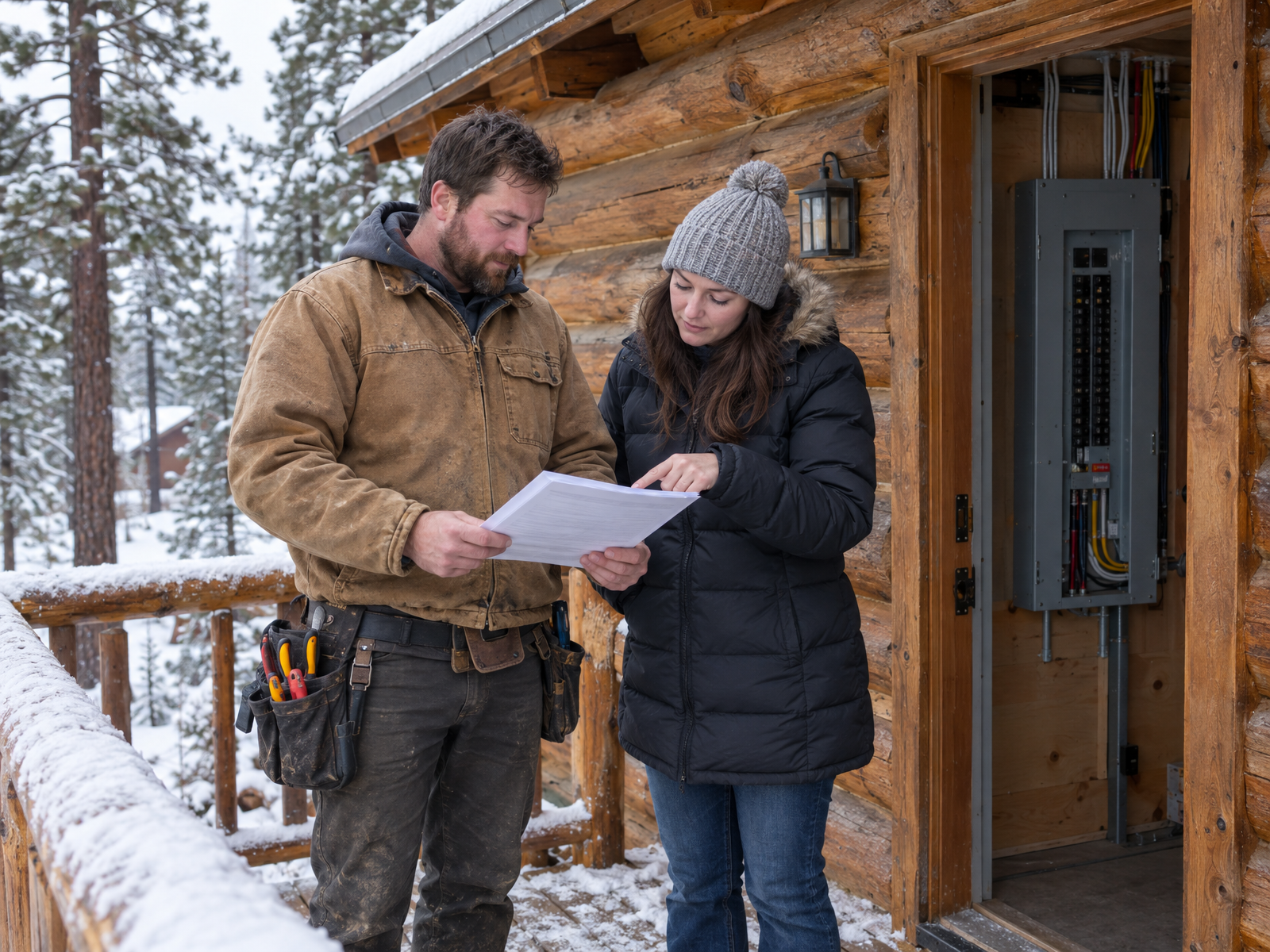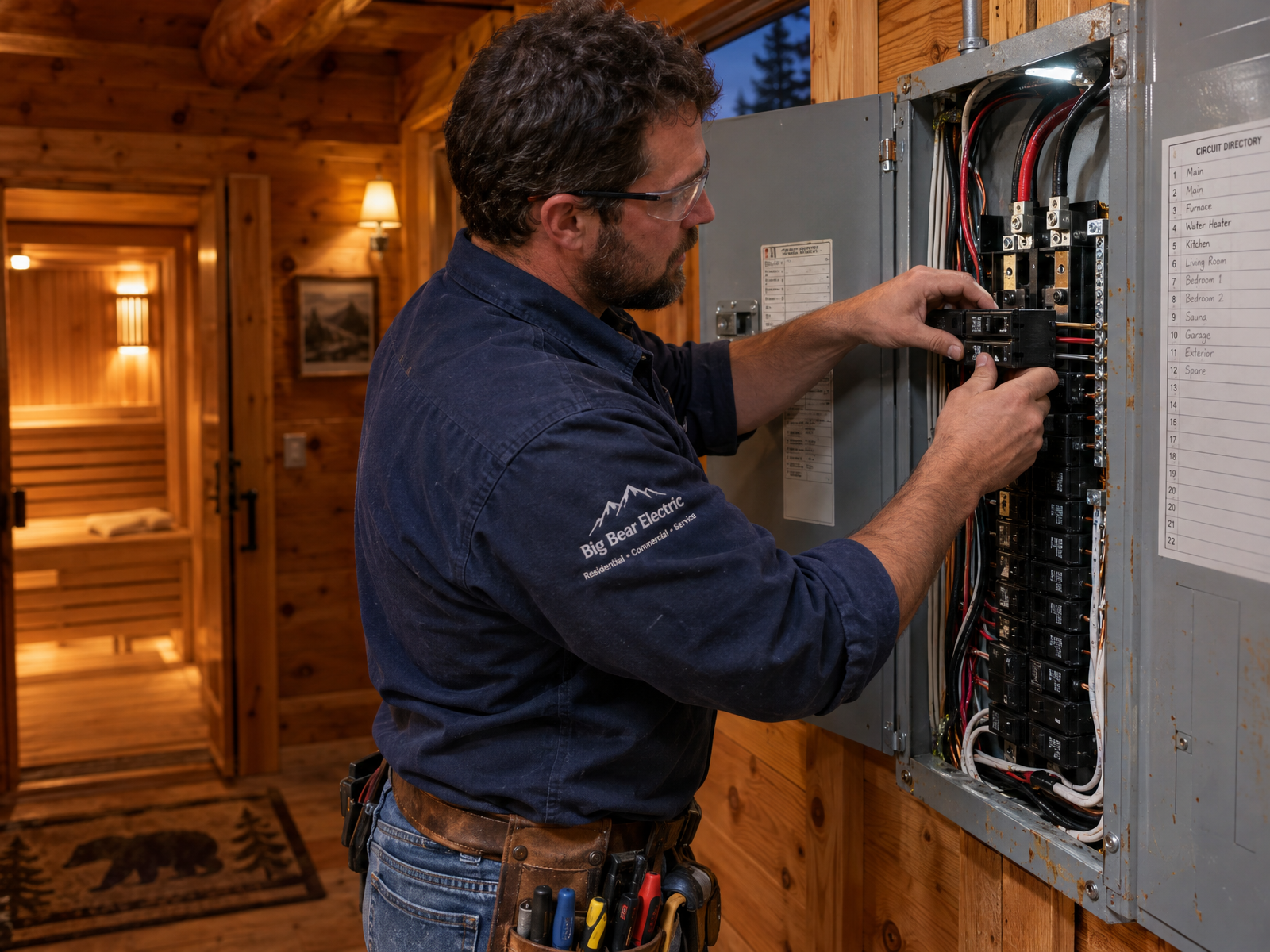
Thanksgiving Electrical Safety for Big Bear Homes: Keep Your Holiday Bright and Safe
November 26, 2025
Thanksgiving Electrical Safety for Big Bear Homes: Keep Your Holiday Bright and Safe
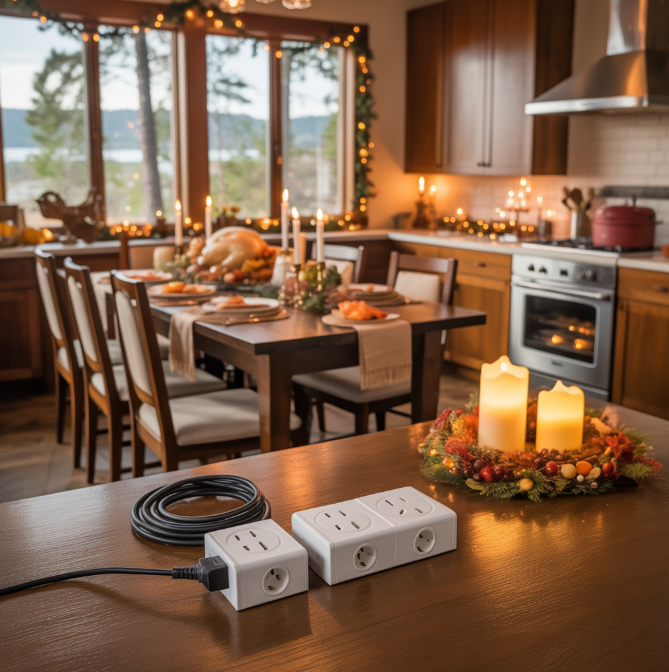
Between cooking marathons, space heaters working overtime, extra guests plugging in devices, and early holiday decorations, Thanksgiving puts unprecedented strain on your electrical circuits. For Big Bear homeowners—especially those with older cabins—this combination can lead to tripped breakers, power outages, or worse: electrical fires that destroy your holiday and endanger your family.
Let's make sure your Thanksgiving stays safe, warm, and fully powered.
Why Thanksgiving Creates Perfect Storm Conditions for Electrical Problems
Your electrical system handles normal daily use without complaint. But Thanksgiving isn't normal. Here's what your circuits are dealing with in Big Bear homes this week:
Kitchen Appliances Running Simultaneously: That 25-pound turkey requires hours in the oven. Add your stovetop, microwave, coffee maker, instant pot, slow cooker, stand mixer, and warming trays—all running at once. Most kitchens have two 20-amp circuits, which sounds like plenty until you calculate the actual load.
Heating System Overload: Big Bear temperatures on Thanksgiving often hover around freezing. Your furnace cycles frequently. Guests arrive cold and immediately request space heaters for bedrooms. Electric blankets come out of storage. Suddenly, you're drawing maximum power on circuits that normally cruise along comfortably.
Vacation Rental Considerations: If you rent your Big Bear property on Airbnb or VRBO, Thanksgiving week is prime season. Renters often bring every cooking gadget imaginable and have zero knowledge of your electrical system's limitations.
Older Cabin Electrical Systems: Many Big Bear cabins were built in the 1960s-1980s with 100-amp service panels designed for simpler times. Modern Thanksgiving demands often exceed what these systems can safely provide.
The result? Breakers trip during critical cooking moments. Lights flicker when heaters kick on. Or worst case—circuits overheat and create fire hazards.
Turkey Fryer Safety: Don't Burn Down Your Cabin
Deep-fried turkey has become a Thanksgiving tradition, and for good reason—it's delicious. But turkey fryers, especially electric models, pose serious risks if used improperly at your Big Bear property.
Electric Turkey Fryer Power Requirements: These appliances draw 1,500-1,800 watts continuously. That maxes out a standard 15-amp circuit completely. If anything else on that circuit is running—even a porch light—you'll trip the breaker.
Never Use Extension Cords: The single most dangerous mistake is plugging turkey fryers into extension cords. The high amperage draws cause extension cords to overheat rapidly, melting insulation and starting fires. Always plug directly into a dedicated outlet.
Outdoor GFCI Outlets Required: Turkey fryers should only be used outdoors, plugged into GFCI-protected outlets. Big Bear's cold and potentially wet weather makes GFCI protection absolutely essential to prevent electrical shock.
Propane Alternative: Honestly? Propane turkey fryers are safer and more practical for Big Bear conditions. They eliminate electrical concerns entirely, heat oil faster, and work even during power outages.
If you're committed to electric frying, verify your outdoor outlets can handle the load and have proper GFCI protection. Better yet, call an electrician to install a dedicated 20-amp circuit specifically for outdoor cooking equipment.
Managing Kitchen Circuit Loads During Holiday Cooking
Your Thanksgiving feast requires strategic electrical planning, especially in older Big Bear cabins where kitchen circuits are limited.
Identify Your Kitchen Circuits: Most kitchens have at least two separate 20-amp circuits for countertop outlets. Some newer homes have three or four. Grab a circuit tester from the hardware store and map out which outlets connect to which breakers. This knowledge prevents overloads before they happen.
Calculate Appliance Wattage:
Microwave: 1,000-1,500 watts
Coffee maker: 800-1,200 watts
Instant Pot: 1,000-1,200 watts
Slow cooker: 200-300 watts
Stand mixer: 300-500 watts
Toaster: 800-1,500 watts
Electric griddle: 1,200-1,500 watts
A 20-amp circuit at 120 volts provides 2,400 watts safely. Run your microwave and coffee maker together? You're already over budget if you add anything else.
Strategic Cooking Schedule: Avoid running multiple high-draw appliances simultaneously. Make coffee first, then unplug it before starting the microwave. Use slow cookers overnight when other appliances are off. Coordinate your cooking timeline around electrical capacity, not just oven space.
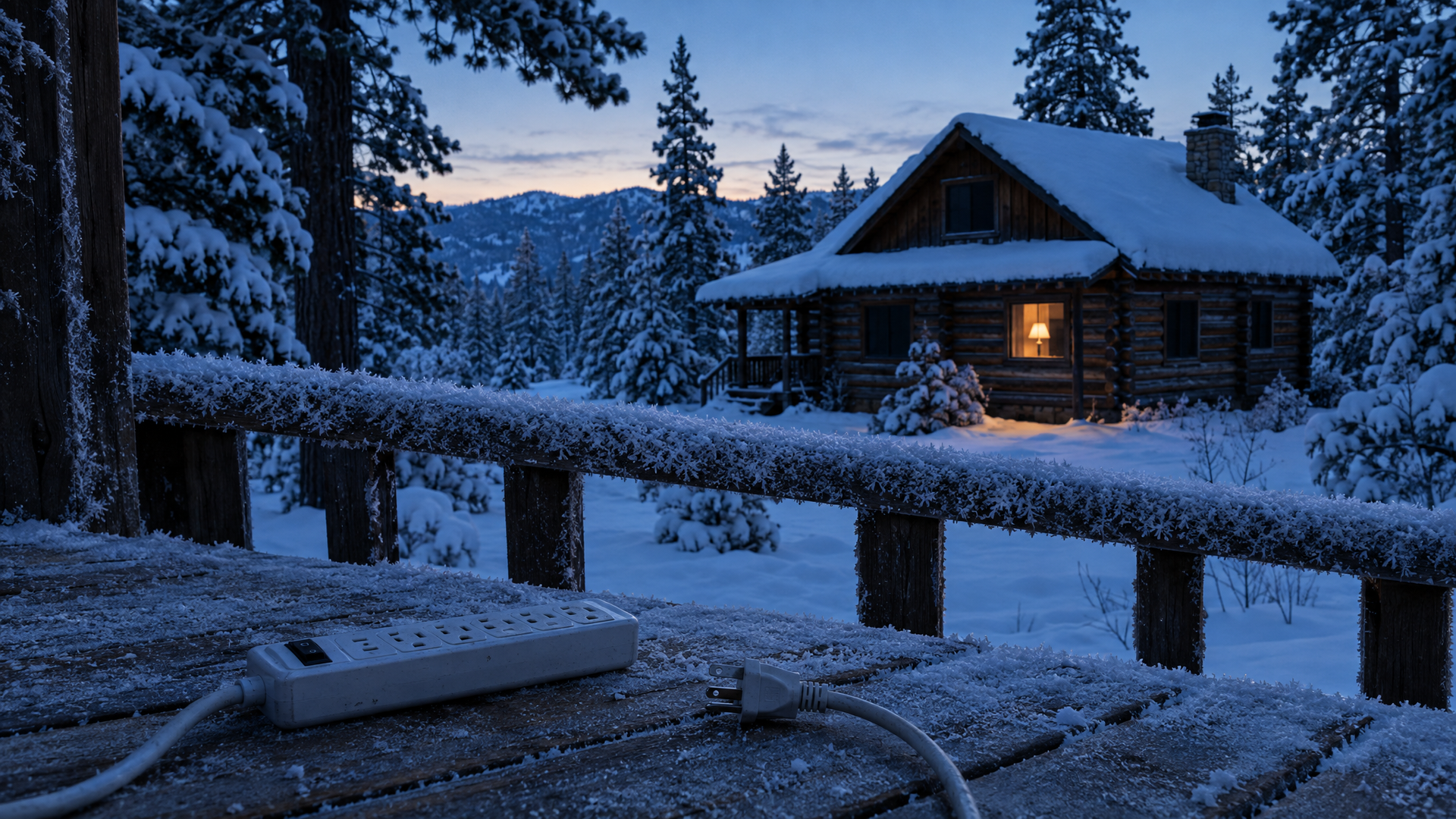
Avoid Power Strips in Kitchens: Never plug cooking appliances into power strips or multi-outlet adapters. These aren't designed for high-amperage loads and create fire hazards. If you need more outlets, have a licensed electrician install them properly.
Watch for Warning Signs: Lights dimming when appliances turn on, warm outlets, or burning smells all indicate overloaded circuits. Redistribute your load immediately if you notice these symptoms.
Many Big Bear cabin owners eventually upgrade to 200-amp service panels with additional kitchen circuits. If Thanksgiving cooking feels like an electrical juggling act every year, it's time to consider a panel upgrade.
Space Heater Safety for Big Bear's Cold Weather
Thanksgiving temperatures in Big Bear often require supplemental heating, especially in bedrooms and bathrooms that don't get adequate warmth from central systems. But space heaters are the leading cause of winter electrical fires.
One Heater Per Circuit Rule: Space heaters draw 1,500 watts—the maximum safe continuous load for a 15-amp circuit. Never run two space heaters on the same circuit. Never plug anything else into outlets on the same circuit as a running space heater.
Direct Plug-In Only: Space heaters should plug directly into wall outlets—never extension cords, never power strips, never multi-outlet adapters. The sustained high amperage causes these accessories to overheat and ignite.
Keep Clearance Around Heaters: Maintain at least three feet of clearance around all space heaters. No curtains, furniture, bedding, or decorations nearby. This is especially challenging in cozy Big Bear cabins with limited floor space, but it's non-negotiable for safety.
Modern Safety Features: If your space heaters are more than five years old, consider upgrading to models with tip-over protection, overheat shutoff, and cool-touch exteriors. These features prevent common accident scenarios.
Never Leave Unattended: Turn off space heaters when leaving rooms and especially when sleeping. Yes, this means some rooms will be cold in the morning. That's far preferable to house fires.
Permanent Heating Solutions: If you're constantly battling cold spots in your Big Bear cabin, explore permanent solutions like electric baseboard heaters, wall-mounted electric panels, or additional ductwork for your central system. These are safer and more efficient than portable space heaters.
For vacation rentals, clearly communicate space heater safety rules to guests and consider installing permanent heating solutions in commonly cold rooms.
Backup Generator Readiness for Thanksgiving Power Outages
Power outages are common in Big Bear during late November. Heavy snow loads on power lines, ice accumulation, and strong winds regularly disrupt electrical service. Losing power on Thanksgiving Day when your turkey is half-cooked is more than inconvenient—it's a disaster.
Portable Generator Safety: If you're relying on a portable generator for backup power, test it before Thanksgiving. Generators that sat unused all year often fail to start when you need them. Check oil levels, test the battery, and verify fuel quality.
Never Run Generators Indoors: This bears repeating because people die every year ignoring this rule. Generators produce carbon monoxide that kills quickly in enclosed spaces. Run generators at least 20 feet from your cabin, away from windows and doors.
Proper Load Management: Don't attempt to power your entire cabin with a portable generator. Prioritize your refrigerator, a few lights, and potentially a small space heater. Trying to run your oven, microwave, and multiple heaters will overload the generator.
Extension Cord Safety: Use heavy-duty, outdoor-rated extension cords (12-gauge minimum) to connect appliances to your generator. Lightweight indoor extension cords will overheat under generator loads.
Transfer Switch Installation: If you use a generator regularly, invest in a transfer switch installed by a licensed electrician. This allows you to safely connect your generator to your home's electrical panel, powering multiple circuits without dangerous backfeeding.
Whole-Home Standby Generators: For Big Bear homeowners who want reliable, automatic backup power, whole-home generators are worth every penny. These permanently installed units detect power outages and start automatically within seconds. Your Thanksgiving dinner continues cooking without missing a beat.
Standby generators are especially valuable for vacation rentals, ensuring guests have uninterrupted service even during mountain storms.
Holiday Lighting Safety in Big Bear's Snow and Cold
Many Big Bear homeowners start holiday decorating before Thanksgiving, creating beautiful displays that welcome guests and spread seasonal cheer. But outdoor lighting in mountain conditions requires extra safety precautions.
Outdoor-Rated Equipment Only: Indoor light strings and extension cords fail quickly when exposed to Big Bear's snow, ice, and temperature fluctuations. Only use lights and cords specifically rated for outdoor use.
GFCI Protection Essential: All outdoor outlets must have GFCI protection. Snow melt, rain, and moisture create shock hazards that standard outlets don't protect against. If your outdoor outlets lack GFCI protection, hire an electrician to upgrade them before hanging lights.
Calculate Maximum Connections: LED lights allow many more connections per circuit than incandescent bulbs, but limits still exist. Check manufacturer guidelines and never exceed recommended maximum connections. Overloading creates fire risks.
Secure Connections from Weather: Keep all plug connections off the ground, away from snow accumulation. Use weatherproof outlet covers that protect connections even while plugged in. Moisture infiltrating connections causes ground faults and shock hazards.
Inspect Before Hanging: Check every light string for damaged wires, broken bulbs, or cracked sockets. Throw away damaged sets rather than attempting repairs with electrical tape—not worth the fire risk.
Don't Overload Circuits: Outdoor holiday lights share circuits with other exterior outlets and sometimes interior rooms. Calculate your total load and ensure you're not exceeding circuit capacity.
Use Timers: Plug outdoor lights into timers rather than leaving them on 24/7. This reduces fire risk, saves energy, and extends bulb life.
Big Bear's beautiful winter weather makes holiday lighting spectacular, but safety comes first. A licensed electrician can install additional outdoor circuits and GFCI outlets if your current setup is insufficient for your display.
Carbon Monoxide Safety During Thanksgiving
Carbon monoxide poisoning sends thousands of people to hospitals every holiday season, with Thanksgiving being particularly high-risk in mountain communities like Big Bear.
Install CO Detectors: California law requires carbon monoxide detectors in all homes with fuel-burning appliances or attached garages. Install detectors on every level of your cabin and outside all sleeping areas.
Test Your Detectors: Replace batteries before Thanksgiving and test all units. Carbon monoxide detectors have limited lifespans (typically 5-7 years). Replace units that have reached expiration.
Recognize Symptoms: Early CO poisoning mimics the flu—headache, dizziness, nausea, confusion. If multiple people feel sick simultaneously, especially when indoors, evacuate immediately and call 911.
Proper Ventilation: Never use ovens or stovetops to heat your home. Ensure fireplace flues are open before lighting fires. Keep exhaust vents clear of snow.
Generator Dangers: We've mentioned this before but it's worth repeating—running generators in garages, even with doors open, creates lethal carbon monoxide concentrations. Always operate generators outdoors.
For vacation rentals, ensure you have working carbon monoxide detectors in guest-accessible locations and include CO safety information in your rental guidelines.
Extension Cord Safety for Thanksgiving Guests
Extra guests mean extra devices—phone chargers, laptops, hair dryers, curling irons, electric razors. Suddenly you need outlets that don't exist, and extension cords become essential.
Choose Correct Gauge: Cord thickness (gauge) determines safe amperage. Lamps and phone chargers can use 16-gauge cords. Hair dryers and space heaters require 12-gauge or heavier. Using undersized cords causes overheating and fires.
Limit Length: Longer extension cords have higher resistance and more voltage drop. Use the shortest cord that reaches rather than the longest cord you own.
Keep Visible and Protected: Never run extension cords under rugs, through doorways, or behind furniture where they can be damaged. Physical damage to insulation creates shock and fire hazards.
Don't Daisy-Chain: Connecting multiple extension cords together (daisy-chaining) or plugging power strips into extension cords creates dangerous resistance and overheating. If you can't reach with one cord, you need a longer cord or additional outlets.
Inspect Regularly: Check extension cords for frayed insulation, exposed wires, or damaged plugs. Discard damaged cords rather than repairing them with electrical tape.
Temporary Use Only: Extension cords are designed for temporary use, not permanent solutions. If you're constantly using extension cords in guest rooms or specific areas, have an electrician install additional outlets.
Many older Big Bear cabins have inadequate outlets for modern needs. Adding strategically placed outlets improves safety and convenience for Thanksgiving hosting and year-round living.
Warning Signs You Need Emergency Electrical Service
Most electrical problems can wait until after Thanksgiving. Some require immediate professional attention. Call an emergency electrician if you experience:
Burning Smell: Any burning odor from outlets, switches, or your electrical panel indicates serious problems. Shut off the breaker and get professional help immediately.
Visible Sparks: Outlets or switches that spark when used are fire hazards requiring immediate repair. Small occasional sparks when plugging in appliances might be normal, but visible arcing or repeated sparking is dangerous.
Hot Outlets or Switches: Outlets and switches should never feel hot. Warm to the touch indicates overloading or faulty wiring creating fire risk.
Frequent Breaker Trips: If you're constantly resetting the same breaker, you have either overloaded circuits or underlying electrical faults that need professional diagnosis.
Flickering Lights Throughout Your Cabin: One flickering light might be a bad bulb. Multiple lights flickering, especially when appliances cycle on, suggests problems with your main electrical service.
Smoke from Electrical Components: Any visible smoke requires immediate action. Shut off your main breaker if safe to do so, evacuate your cabin, and call 911 followed by an emergency electrician.
Buzzing Sounds: Electrical panels and outlets should operate silently. Buzzing or humming sounds indicate loose connections or failing components.
Don't gamble with electrical safety trying to "make it through" Thanksgiving. Emergency electricians understand that holiday electrical issues often can't wait. Big Bear Electric Pros provides emergency service 7 days a week for situations that put your family at risk.
Preventing Electrical Fires in Older Big Bear Cabins
Many Big Bear properties are charming older cabins with character, history, and unfortunately, outdated electrical systems that weren't designed for modern appliance loads.
Common Issues in Older Cabins:
60-100 amp service panels inadequate for current demands
Aluminum wiring that poses fire risks
Outdated two-prong outlets without grounding
Insufficient GFCI and AFCI protection
Overloaded circuits from decades of additions
Warning Signs Your Cabin Needs Electrical Upgrades:
Frequently tripped breakers, especially during Thanksgiving cooking
Lights that dim when appliances start
Outlets that feel warm or show scorch marks
Insufficient outlets leading to extension cord dependence
Fuse boxes instead of circuit breakers
Post-Thanksgiving Electrical Assessment:
After your guests leave and the holiday chaos ends, schedule a comprehensive electrical safety inspection. A licensed Big Bear electrician can identify hazards, recommend necessary upgrades, and create a plan for modernizing your electrical system before next year's holidays.
Panel Upgrades: Upgrading from 100-amp to 200-amp service transforms your cabin's electrical capacity, eliminating the constant circuit management Thanksgiving currently requires. This upgrade typically takes one day and provides lasting benefits.
Additional Circuits: Adding dedicated 20-amp circuits for kitchen appliances, plus separate circuits for guest bedrooms and bathrooms, distributes loads appropriately and reduces fire risks.
AFCI and GFCI Protection: Modern safety devices detect dangerous electrical conditions before they become fires or shocks. Upgrading your panel to include these protections is one of the most valuable safety improvements you can make.
Post-Thanksgiving Electrical Checklist
After Thanksgiving guests depart and normal life resumes, take time to assess how your electrical system performed and identify needed improvements:
Document Problems: Note which breakers tripped, which circuits seemed overloaded, and which appliances caused issues. This information helps electricians diagnose problems and recommend solutions.
Inspect for Damage: Check all outlets and switches used during Thanksgiving for scorch marks, warmth, or loose connections. These indicate problems that need professional attention.
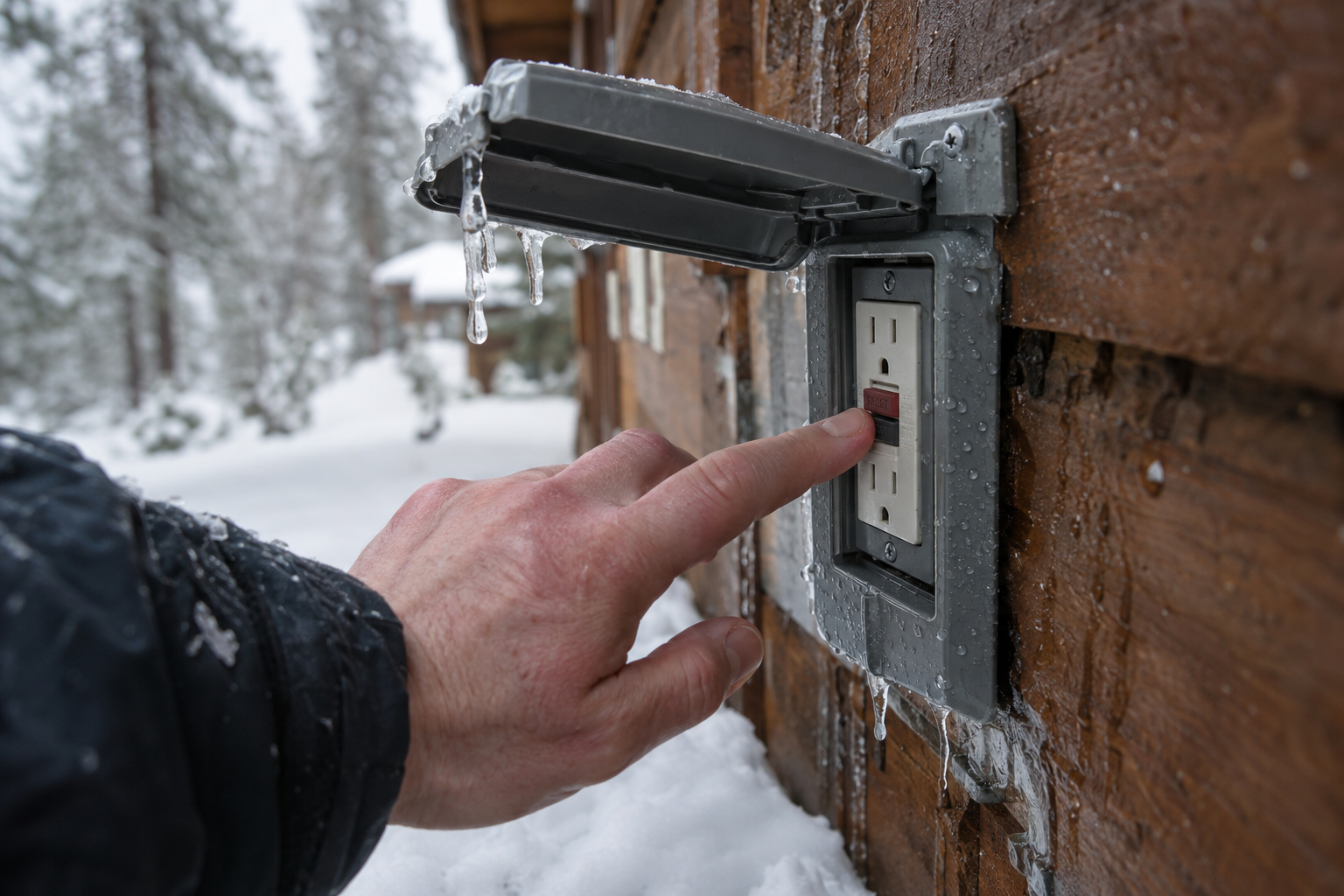
Test GFCI Outlets: Press the "test" and "reset" buttons on all GFCI outlets to verify they're functioning properly. Replace any that don't trip and reset correctly.
Evaluate Your Electrical Needs: If Thanksgiving felt like an electrical juggling act, it's time to upgrade. Modern homes need electrical systems that support modern lifestyles.
Schedule Electrical Inspection: A professional inspection identifies hidden problems and provides recommendations for improvements that will make next year's Thanksgiving safer and easier.
Preparing for Future Holidays
Use this Thanksgiving experience to plan electrical improvements that will benefit your Big Bear cabin year-round:
Electrical Panel Upgrade: Solves the root cause of most capacity problems and adds modern safety features.
Additional Kitchen Circuits: Eliminates the appliance juggling act and makes holiday cooking enjoyable rather than stressful.
Whole-Home Generator Installation: Provides automatic backup power that keeps your Thanksgiving cooking uninterrupted during mountain storms.
Dedicated Outdoor Circuits: Supports holiday lighting, outdoor cooking equipment, and summer entertainment without overloading indoor circuits.
Smart Home Integration: Modern electrical systems can include smart switches, outlets, and energy monitoring that help manage loads intelligently.
Vacation Rental Upgrades: If you rent your property, electrical improvements increase safety, reduce liability, and create better guest experiences that lead to positive reviews.
A Safe and Bright Big Bear Thanksgiving
Thanksgiving in Big Bear should be about gratitude, family, and making memories in the mountains—not worrying about tripped breakers, overloaded circuits, or electrical fires.
By understanding your home's electrical limitations, managing appliance loads thoughtfully, and following basic safety practices, you can cook your feast, stay warm, and enjoy your holiday without electrical stress.
And if problems do arise, remember that emergency electrical service is available even on holidays. Don't hesitate to call for help if something doesn't seem safe.
Need a Big Bear Electrician This Holiday Season?
Big Bear Electric Pros
provides expert electrical services throughout Big Bear Lake, Big Bear City, Fawnskin, Sugarloaf, and Running Springs.
We specialize in:
Emergency electrical repairs (available 7 days a week)
Electrical panel upgrades and replacements
Whole-home backup generator installation
Kitchen circuit additions
GFCI and AFCI protection upgrades
Electrical safety inspections
Vacation rental electrical compliance
Call (909) 415-5573
for emergency service or to schedule a post-holiday electrical safety inspection.
Happy Thanksgiving from everyone at Big Bear Electric Pros. Stay safe, stay warm, and enjoy this beautiful mountain holiday with the people you love.

Your Big Bear cabin is your mountain retreat—a place to escape, relax, and enjoy everything the San Bernardino Mountains have to offer. But while you're enjoying modern conveniences like high-speed internet, multiple TVs, electric vehicle chargers, and sophisticated heating systems, there's a critical component working overtime behind the scenes: your electrical panel. Many Big Bear homes were built in the 1960s through 1980s when electrical demands were drastically different. The 100-amp electrical panels that were perfectly adequate for a few lights, a refrigerator, and a television simply can't handle today's power-hungry lifestyle. If your breakers trip frequently, lights dim when appliances start, or you're planning to add an EV charger or hot tub, it might be time for an electrical panel upgrade. This comprehensive guide explains everything Big Bear homeowners need to know about electrical panel upgrades—from recognizing warning signs to understanding costs and navigating the upgrade process in our unique mountain environment. ## What Is an Electrical Panel and Why Does It Matter? Your electrical panel (also called a breaker box, service panel, or distribution board) is the heart of your home's electrical system. It receives electricity from the utility company and distributes it throughout your cabin via individual circuits controlled by circuit breakers. The panel serves three critical functions: **Power Distribution**: It divides incoming electrical power into separate circuits for different areas of your home—dedicated circuits for kitchen appliances, bedroom outlets, heating systems, and more. **Overcurrent Protection**: Circuit breakers automatically shut off power to individual circuits when they detect overloads or short circuits, preventing electrical fires and equipment damage. **Central Control**: The main breaker allows you to shut off all power to your home during emergencies, maintenance, or evacuations (critical in Big Bear's wildfire-prone environment). The panel's amperage rating (typically 100, 150, or 200 amps) determines how much total electrical current your home can safely use at one time. As electrical demands have grown exponentially over the decades, older 100-amp panels have become serious bottlenecks. ## Warning Signs Your Big Bear Home Needs a Panel Upgrade Not sure if your cabin needs an electrical panel upgrade? Watch for these telltale signs: ### 1. Frequent Circuit Breaker Trips Occasional breaker trips are normal—they're doing their job protecting your circuits. But if you're constantly resetting the same breaker, or multiple breakers trip when you use certain appliance combinations, your panel is struggling to meet demand. Big Bear-specific scenario: You turn on the space heater in the bedroom, start the coffee maker, and suddenly the breaker trips. You reset it, but 20 minutes later when someone uses the hair dryer, it trips again. This constant juggling act means your circuits are maxed out. ### 2. Dimming or Flickering Lights Lights that dim momentarily when high-draw appliances like your furnace, well pump, or microwave kick on indicate voltage drops caused by insufficient electrical capacity. While some minimal dimming can be normal, consistent or dramatic flickering signals an overtaxed system. ### 3. Burning Smell or Discolored Panel Any burning odor near your electrical panel is a serious fire hazard requiring immediate attention. Similarly, scorch marks, discoloration, or melted components on the panel itself indicate dangerous overheating. ### 4. Warm or Hot Breakers Breakers should never feel hot to the touch. Warmth indicates they're working near maximum capacity consistently. Hot breakers can fail catastrophically and are a fire risk. ### 5. Outdated Fuse Box If your Big Bear cabin still has an old-style fuse box instead of circuit breakers, an upgrade is overdue. Fuse boxes lack modern safety features and can't accommodate today's electrical loads. ### 6. Insufficient Circuits for Your Needs Are you constantly unplugging devices to plug in others? Running multiple extension cords and power strips throughout your cabin? These workarounds indicate you simply don't have enough circuits to safely power your lifestyle. ### 7. Planning Major Electrical Additions If you're adding an EV charger, hot tub, workshop with power tools, additional living space, or upgrading to central air conditioning, your current panel probably can't support these additions without a capacity upgrade. ### 8. Home Sale or Refinance Requirements Real estate transactions, insurance renewals, or refinancing sometimes reveal that your electrical panel doesn't meet current safety codes. Upgrading becomes mandatory to complete the transaction. ### 9. Rust, Corrosion, or Physical Damage Big Bear's mountain environment—with temperature swings, occasional moisture intrusion, and potential rodent activity—can damage panels over time. Visible corrosion or physical damage compromises safety and requires replacement. ### 10. Federal Pacific or Zinsco Panel These brands, common in homes built between 1950-1980, have known safety defects. Breakers often fail to trip during overloads, creating fire hazards. If your cabin has one of these panels, replacement isn't optional—it's a critical safety upgrade. ## Common Electrical Panel Sizes: What's Right for Your Big Bear Home? Electrical panels are rated by their maximum amperage capacity. Here's how different sizes meet varying needs: ### 100-Amp Service **Typical in**: Big Bear cabins built before 1980 **Adequate for**: Basic living with minimal appliances **Limitations**: Struggles with modern demands—multiple TVs, computers, kitchen appliances, electric heating, well pumps Most Big Bear homeowners quickly outgrow 100-amp service, especially in vacation rentals where multiple guests use power simultaneously. ### 150-Amp Service **Typical in**: Homes built in the 1980s-1990s **Adequate for**: Moderate electrical use **Limitations**: May struggle with EV chargers, hot tubs, or major workshop additions 150-amp service works well for smaller Big Bear cabins with gas heating and moderate electrical demands, but offers limited headroom for future expansion. ### 200-Amp Service **Typical in**: Modern homes and upgraded properties **Adequate for**: Comprehensive modern living **Supports**: All standard appliances plus EV charger, hot tub, workshop, multiple heating zones, vacation rental demands This is the gold standard for Big Bear homes today. It provides ample capacity for current needs plus room for future expansion without requiring another upgrade. ### 400-Amp Service **Typical in**: Large luxury homes or properties with separate structures **Adequate for**: Extensive electrical systems across multiple buildings **Supports**: Main house plus detached guest house, large workshops, multiple EV chargers Only necessary for very large Big Bear properties or those with multiple electrical-intensive outbuildings. ## Benefits of Upgrading to 200-Amp Service in Big Bear Beyond solving immediate electrical problems, panel upgrades deliver long-term benefits: ### Improved Safety Modern panels include updated circuit breakers with superior arc-fault and ground-fault protection. They respond faster to dangerous electrical conditions, significantly reducing fire risk—especially critical in Big Bear's wildfire-prone environment where electrical fires can have devastating consequences. ### Accommodation of Modern Lifestyle A 200-amp panel effortlessly handles today's power demands: multiple bathrooms with heated floors, kitchen with commercial-grade appliances, home office equipment, entertainment systems, EV charging, hot tub, and robust HVAC systems—all running simultaneously without concern. ### Increased Home Value Electrical panel upgrades add tangible value to Big Bear properties. Buyers recognize that a modern 200-amp system eliminates a major upgrade expense they'd otherwise face. Many buyers specifically seek properties with updated electrical systems. ### Support for Future Additions Planning a room addition? Want to add a workshop? Considering solar panels or battery backup? A 200-amp panel provides the foundation for these expansions without requiring yet another costly electrical upgrade. ### Vacation Rental Advantages If you rent your Big Bear property on Airbnb or VRBO, a robust electrical system prevents guest complaints about tripped breakers, supports multiple simultaneous users, and demonstrates your commitment to property quality—translating to better reviews and higher rental rates. ### Lower Insurance Costs Some insurance providers offer discounts for homes with modern electrical systems. Outdated panels can even trigger insurance non-renewals or significantly higher premiums due to fire risk. ### Peace of Mind Stop playing "electrical tetris" by calculating which appliances you can run simultaneously. Modern panels eliminate the constant worry about overloads, allowing you to use your cabin comfortably. ## The Electrical Panel Upgrade Process in Big Bear Understanding what's involved in a panel upgrade helps you plan appropriately. Here's the typical process: ### 1. Initial Assessment and Load Calculation A licensed Big Bear electrician visits your property to: - Inspect your current panel and electrical system - Calculate your total electrical load (current and anticipated) - Assess the condition of existing wiring - Evaluate your main service entrance - Determine if utility company upgrades are needed - Identify code violations or safety concerns - Provide written recommendations and cost estimates This assessment typically takes 1-2 hours and results in a detailed proposal. ### 2. Permit Application Electrical panel upgrades require permits from San Bernardino County building department. Your electrician handles this process, submitting detailed plans showing: - New panel specifications - Circuit layout - Grounding improvements - Service entrance modifications - Any related electrical work Permit approval typically takes 1-2 weeks, though timelines vary. ### 3. Utility Coordination (If Needed) If your upgrade requires increased service from the utility company—for example, going from 100-amp to 200-amp service—the electrician coordinates with Bear Valley Electric Service or Southern California Edison. The utility must upgrade their equipment (meter base, service drop, etc.) before the electrician can complete the panel installation. Utility work timelines vary from 2-8 weeks depending on their workload and weather conditions. Winter storms can delay outdoor utility work in Big Bear. ### 4. Installation Day Panel replacement typically takes 6-12 hours depending on complexity. Here's what happens: **Morning**: The electrician arrives and confirms the utility has disconnected power at the meter. Your entire cabin will be without electricity during installation. **Panel Removal**: The old panel is carefully disconnected and removed. The electrician inspects all existing wiring for damage or code violations. **New Panel Installation**: The 200-amp panel is mounted (typically in the same location, though sometimes relocated for code compliance or accessibility). Main service wires are connected. Grounding and bonding are upgraded to current code. **Circuit Transfer**: All existing circuits are moved to the new panel. Circuits are organized logically and labeled clearly. The electrician may consolidate or redistribute loads for optimal balance. **Testing**: Every circuit is tested for proper operation, correct voltage, and grounding. The electrician verifies all breakers function correctly. **Afternoon/Evening**: Power is restored. The electrician walks you through the new panel, explaining circuit organization and main breaker operation. ### 5. Inspection San Bernardino County building inspectors review the completed work to ensure code compliance. The electrician schedules the inspection and addresses any findings (rare with quality installations). Inspection approval typically occurs within 1-2 weeks of completion. ### 6. Final Documentation You receive: - Electrical permit sign-off - Circuit directory showing what each breaker controls - Warranty information - Maintenance recommendations - Updated homeowner documentation for insurance and resale ## Big Bear-Specific Panel Upgrade Considerations Mountain electrical work differs from urban installations in important ways: ### Elevation and Temperature Extremes Big Bear's 6,750-foot elevation and temperature swings (from -10°F to 90°F+) stress electrical components. Quality panels rated for these conditions last longer and perform more reliably. Cheaper residential-grade panels designed for mild climates may fail prematurely in Big Bear's environment. ### Snow Load and Panel Placement Panel locations must consider snow accumulation and drainage. Exterior panels need weather-resistant enclosures. Panels installed in unheated garages or crawl spaces require consideration for extreme cold conditions. ### Propane and Well Pump Systems Many Big Bear homes depend on well pumps and propane appliances that create unique electrical demands. Panel upgrades must account for well pump starting loads (significant) and ensure sufficient capacity for backup heating if propane systems fail. ### Vacation Rental Demands Short-term rentals create peak electrical loads when multiple guests shower, cook, and use entertainment systems simultaneously—far exceeding typical occupancy patterns. Panel sizing must accommodate these surges. ### Emergency Preparedness Big Bear faces wildfire, heavy snow, and wind events that cause extended power outages. Panel upgrades often coordinate with backup generator installations, requiring specific transfer switch accommodations and circuit prioritization. ### Seasonal Access Winter weather can delay electrical work. Schedule panel upgrades during spring, summer, or fall when weather is predictable and material delivery to the mountain is reliable. Emergency upgrades during winter storms may be possible but involve premium costs and scheduling challenges. ## Electrical Panel Upgrade Costs in Big Bear Cost is always a consideration for homeowners. Here's what to expect: ### Basic Panel Replacement (Like-for-Like) **Scenario**: Replacing a failed 100-amp panel with another 100-amp panel, no service upgrade **Cost Range**: $1,500-$2,500 **Includes**: New panel, permit, labor, basic testing **Timeline**: 1 day installation + inspection ### Panel Upgrade (100-Amp to 200-Amp) **Scenario**: Standard upgrade for typical Big Bear cabin, utility service already adequate **Cost Range**: $2,500-$4,500 **Includes**: 200-amp panel, permit, labor, circuit reorganization, grounding upgrades **Timeline**: 1 day installation + inspection ### Complete Service Upgrade (100-Amp to 200-Amp) **Scenario**: Requires utility company service upgrade, new meter base, service entrance modifications **Cost Range**: $4,500-$8,000 **Includes**: 200-amp panel, new meter base, service entrance work, utility coordination, permits, labor **Timeline**: 2-8 weeks (depending on utility scheduling) + 1-2 days electrician work ### Premium Upgrades with Additional Work **Scenario**: Panel upgrade plus circuit additions, subpanel installation, extensive rewiring, or smart home integration **Cost Range**: $6,000-$12,000+ **Includes**: All standard upgrade components plus additional circuits, specialized equipment, extended labor **Timeline**: 2-5 days electrician work + inspections ### Factors Affecting Cost Costs vary based on: - Current panel location and accessibility - Distance from utility service connection - Need for utility company service upgrade - Number of circuits being transferred - Extent of code violations requiring correction - Additional circuits or subpanels needed - Coordination with generator installation - Travel time to Big Bear location - Seasonal weather affecting scheduling - Permit fees and inspection requirements ### Return on Investment While panel upgrades represent significant upfront investment, consider: - Prevented electrical fires (insurance deductibles + property loss) - Avoided emergency repairs during failures ($3,000-5,000 for emergency service) - Increased home value ($5,000-8,000 in Big Bear market) - Insurance savings over time - Support for value-adding improvements (EV charger, hot tub, etc.) - Peace of mind and daily convenience The investment pays for itself through prevented disasters, improved usability, and property value enhancement. ## Choosing the Right Big Bear Electrician for Panel Upgrades Panel replacement is sophisticated electrical work requiring expertise, proper licensing, and familiarity with Big Bear's unique challenges. Here's what to look for: ### Essential Qualifications **California C-10 Electrical Contractor License**: Non-negotiable. Unlicensed work is illegal, voids equipment warranties, prevents permits, and creates liability if problems arise. **General Liability Insurance**: Protects you if accidents occur during installation. **Workers Compensation Insurance**: Protects workers injured on your property. **Big Bear Experience**: Mountain electrical work differs from urban installations. Choose electricians familiar with altitude, temperature extremes, snow considerations, and local permit processes. **Manufacturer Certifications**: Quality electricians maintain relationships with panel manufacturers (Square D, Siemens, Cutler-Hammer) and stay current on latest products and installation requirements. ### Critical Questions to Ask Before hiring an electrician for your panel upgrade, ask: 1. **Are you licensed and insured for electrical work in California?** Request proof of current licensing and insurance. 2. **How many panel upgrades have you completed in Big Bear?** Experience with mountain installations matters. 3. **Will you handle all permit applications and inspections?** Professional electricians manage the entire process. 4. **What panel brands do you recommend and why?** Quality installers can explain advantages of different manufacturers. 5. **Do you perform load calculations to properly size my new panel?** Proper sizing requires detailed analysis, not guesswork. 6. **What warranty do you provide on installation labor?** Typical warranties cover 1-2 years. 7. **Will you coordinate with the utility company if service upgrades are needed?** Streamlines the process and prevents delays. 8. **Can you provide references from other Big Bear homeowners?** Speaking with previous customers reveals work quality. 9. **What is the complete timeline from consultation to final inspection?** Allows you to plan accordingly, especially for vacation rentals. 10. **What payment terms do you require?** Typical arrangements: deposit at contract signing, progress payments, final payment after inspection. Avoid contractors demanding full payment upfront. ### Red Flags to Avoid - Unlicensed contractors or "handymen" - Refusal to pull permits - Pressure tactics or "today only" pricing - Prices dramatically lower than other quotes (cutting corners) - No written contract or vague scope of work - Poor communication or difficulty scheduling - Negative reviews mentioning incomplete work or code violations ## Maintaining Your Upgraded Electrical Panel After investing in a new panel, basic maintenance ensures decades of reliable service: ### Annual Visual Inspection Once per year, examine your panel for: - Rust, corrosion, or moisture intrusion - Loose breakers or burned areas - Unusual sounds (buzzing, humming) - Burning odors - Pest damage or nesting Address any concerns immediately with your electrician. ### Keep Circuit Directory Updated When circuits are added or modified, update your circuit directory so you (and future owners or electricians) know what each breaker controls. ### Test GFCI and AFCI Breakers Modern panels include ground-fault and arc-fault breakers that should be tested monthly using their test buttons. This verifies they'll protect you when needed. ### Maintain Clearance Keep the area around your panel clear of stored items. Code requires 36 inches of clearance in front of panels for safe access during emergencies. ### Professional Inspection Every 3-5 Years Consider having a licensed electrician inspect your panel every 3-5 years, especially if you've made significant electrical additions or experienced electrical issues. ## Beyond the Panel: Related Electrical Upgrades to Consider Panel upgrades often coordinate with complementary electrical improvements: ### Whole-Home Surge Protection Upgrading your panel is the ideal time to install whole-home surge protection. This defends your electronics, appliances, and smart home systems against voltage spikes from lightning, utility fluctuations, or generator operation—common in Big Bear's mountain environment. **Cost**: $300-600 installed **Benefit**: Prevents thousands in damaged electronics ### Backup Generator Integration Many Big Bear homeowners pair panel upgrades with automatic standby generator installations. The new panel accommodates the transfer switch and circuit prioritization needed for seamless backup power during frequent mountain outages. **Cost**: $6,000-15,000 for complete generator system **Benefit**: Automatic power during outages (critical in Big Bear) ### Subpanel Addition For detached garages, workshops, guest houses, or second-floor additions, subpanels fed from your main panel provide convenient circuit control without running individual circuits long distances. **Cost**: $800-2,000 per subpanel **Benefit**: Organized power distribution for outbuildings ### GFCI and AFCI Protection Upgrades Modern electrical code requires extensive ground-fault and arc-fault protection throughout homes. Panel upgrades allow replacing standard breakers with GFCI/AFCI versions, dramatically improving safety. **Cost**: $40-80 per specialty breaker **Benefit**: Superior protection against shocks and electrical fires ### Smart Home Integration New panels can accommodate smart breaker systems that monitor individual circuit power consumption, allow remote breaker control, and send alerts if problems develop. **Cost**: $150-300 per smart breaker **Benefit**: Real-time monitoring and control via smartphone ## Preparing for Your Panel Upgrade Maximize efficiency and minimize disruption by preparing appropriately: ### Before Installation Day - **Clear Access**: Remove stored items from around your current panel location - **Plan for Outage**: Your power will be off 6-12 hours. Plan meals accordingly (restaurants, food that doesn't require cooking) - **Inform Occupants**: Family members or vacation rental guests need advance notice - **Refrigerator Prep**: Avoid opening refrigerator/freezer during outage to maintain temperature - **Backup Power**: If you have critical medical equipment, arrange battery backup or alternative accommodations - **Secure Valuables**: While unlikely to be an issue, better safe than sorry - **Pet Arrangements**: Keep pets away from work area ### During Installation - Stay available for electrician questions - Keep children and pets away from work area - Expect noise from power tools and panel work - Don't plan activities requiring electricity - Be patient—quality work takes time ### After Installation - Walk through the new panel with your electrician - Understand circuit organization and labeling - Know where your main breaker is located - Keep circuit directory and warranty paperwork - Test all circuits to verify everything works - Document completion date for future reference ## Frequently Asked Questions About Panel Upgrades ### Can I just add circuits without upgrading the panel? Only if your existing panel has: - Available breaker spaces - Sufficient amperage capacity - Capacity to handle additional load Most 100-amp panels are already maxed out and can't safely support additional circuits. ### How long does a panel upgrade take? Installation: 6-12 hours Total project timeline (including permits, utility coordination, inspection): 2-8 weeks ### Will I need to upgrade my entire electrical system? Not necessarily. If your existing wiring is in good condition and meets code, it can usually be transferred to the new panel. However, electricians often discover code violations during upgrades that require correction. ### Can I do a panel upgrade myself to save money? No. Panel upgrades require: - Licensed electrical contractor - Building permits - Utility coordination - Professional inspection DIY panel work is illegal, dangerous, voids homeowners insurance, and prevents future home sales. ### What happens if my panel fails? Failed panels require emergency replacement. Without power, you face: - Frozen pipes in winter - Spoiled food - No heating or cooling - Security system failure - Well pump failure (no water) Emergency replacements cost 2-3x normal rates and may require temporary portable generators. Prevention through proactive upgrades saves money and stress. ### Do all Big Bear homes need 200-amp service? Most modern Big Bear homes benefit from 200-amp service. Very small cabins with minimal electrical use might function adequately with 150-amp service, but 200-amp provides headroom for future needs at minimal additional cost. ## Protect Your Big Bear Investment with Professional Panel Upgrades Your electrical panel works silently behind the scenes, distributing power that enables your mountain lifestyle. When it's undersized, outdated, or failing, the consequences range from daily inconvenience to catastrophic fires. If your Big Bear cabin struggles with frequent breaker trips, can't support modern appliances, or has an aging panel approaching its lifespan, don't wait for disaster. Proactive electrical panel upgrades provide safety, capability, and peace of mind that enhance both your daily enjoyment and long-term property value. ## Ready to Upgrade Your Big Bear Home's Electrical Panel? Big Bear Electric Pros specializes in electrical panel upgrades throughout the San Bernardino Mountains. Our licensed electricians provide: - Comprehensive electrical load analysis and panel sizing recommendations - Professional installation of 200-amp service panels - Complete permit handling and inspection coordination - Utility company coordination for service upgrades - Circuit reorganization and labeling - Integration with generator systems and surge protection - Expertise with Big Bear's unique mountain electrical challenges We understand the specific demands of mountain properties—from well pumps and propane systems to vacation rental loads and emergency preparedness requirements. **Call (909) 415-5573 today for a free electrical panel assessment and upgrade consultation.** Don't let an outdated electrical panel limit your Big Bear lifestyle or put your property at risk. Professional panel upgrades from Big Bear Electric Pros provide the foundation for safe, reliable electrical service for decades to come. **Serving Big Bear Lake, Big Bear City, Fawnskin, Sugarloaf, Running Springs, and all San Bernardino Mountain communities.**

Electric vehicles have arrived in Big Bear. As more mountain homeowners trade in their gas-guzzlers for Teslas, Rivians, and other EVs, one critical question keeps coming up: how do you charge an electric vehicle at 7,000 feet elevation when the nearest public fast charger is 30+ miles down the mountain? The answer is simple but requires planning: a professionally installed Level 2 home EV charger. Unlike your neighbor who might get away with a standard outlet in the city, Big Bear's unique challenges—extreme cold, aging electrical panels, steep driveways, and limited contractor availability—make proper EV charger installation absolutely essential. This comprehensive guide covers everything Big Bear homeowners need to know about installing an EV charger at your mountain property, from understanding the unique challenges of high-altitude charging to navigating HOA requirements, choosing the right equipment, and finding a qualified electrician who understands mountain electrical systems. Why Big Bear EV Owners Can't Rely on Public Charging Before we dive into installation details, let's address why a home charger isn't optional for Big Bear EV owners—it's essential. The Nearest Fast Chargers Are 30-45 Minutes Away The closest Tesla Superchargers and fast charging networks are located in San Bernardino, Redlands, and along the I-10 corridor. That's a 60-90 minute round trip down the mountain just to charge your vehicle—hardly convenient when you need a quick top-up before running errands in Big Bear City. During winter storms when Highway 18 and 330 require chains or are periodically closed, those chargers become effectively inaccessible. You're stuck with whatever charge you have until roads clear. Cold Weather Destroys EV Range Lithium-ion batteries hate the cold, and Big Bear winters regularly drop below freezing. Your EV's rated range can decrease by 30-50% in these temperatures. That 300-mile range vehicle? It's now a 150-200 mile vehicle when it's 15°F outside and you're running the heater. Factor in steep mountain roads with constant elevation changes, and your actual usable range shrinks even further. Starting each day with a full charge from your home Level 2 charger isn't a luxury—it's how you avoid being stranded. Elevation Affects Charging Efficiency At Big Bear's elevation (approximately 6,750-7,000 feet), electrical systems face unique challenges. Lower air density affects electrical component cooling, and voltage fluctuations from the mountain power grid can impact charging speeds and equipment longevity. Professional installation that accounts for these factors ensures your charging equipment operates reliably year-round rather than failing during the first winter cold snap. Limited Service Infrastructure If something goes wrong with a poorly installed charger, getting it fixed in Big Bear takes time. Parts must be ordered and shipped to the mountain. Qualified electricians who understand both EV charging systems and mountain electrical challenges are limited. Cutting corners during installation just creates expensive headaches down the road. Understanding EV Charging Levels: What Big Bear Homeowners Need Not all EV chargers are created equal. Understanding the three charging levels helps you choose the right system for your Big Bear property. Level 1 Charging (120V Standard Outlet) What it is: Plugging your EV into a regular household outlet using the charging cable that came with your vehicle. Charging speed: 3-5 miles of range per hour Time to full charge: 40-60 hours for most EVs Pros: - No installation required - Uses existing outlets - Free (if you already have an outdoor outlet) Cons: - Painfully slow charging - Inadequate for daily driving needs in Big Bear - Circuit sharing can trip breakers - Not viable for cold weather range loss Big Bear reality check: Level 1 charging might work for someone who drives 10 miles per week in Los Angeles. In Big Bear, where you're driving up and down the mountain regularly, running errands across the valley, and fighting cold-weather range loss, Level 1 charging is frustratingly inadequate. You'll constantly be playing catch-up on charging. Level 2 Charging (240V Dedicated Circuit) What it is: A dedicated 240-volt circuit (like your dryer or oven) powering a wall-mounted EV charger. Charging speed: 15-50 miles of range per hour (depending on circuit amperage and vehicle capabilities) Time to full charge: 4-8 hours for most EVs Pros: - Fast enough for overnight charging - Handles daily driving needs easily - Multiple amperage options (32A, 40A, 48A) - Can add significant home value - Weather-resistant outdoor units available - Smart features (scheduling, WiFi monitoring, etc.) Cons: - Requires professional installation ($1,000-$3,000) - May need electrical panel upgrade - Permits required - Equipment costs ($400-$1,500) Big Bear recommendation: This is what you need. Period. Level 2 charging gives you a full charge overnight, handles the range loss from cold weather and mountain driving, and ensures you're never stuck waiting days to charge. The upfront investment pays for itself in convenience and peace of mind. Level 3 DC Fast Charging (Commercial) What it is: High-powered commercial charging stations like Tesla Superchargers. Charging speed: 150-300+ miles in 15-30 minutes Big Bear reality: These systems cost $50,000-$150,000 and require commercial three-phase power. They're not practical for home installation and not necessary when you have Level 2 charging available overnight. Unique Challenges of Big Bear EV Charger Installation Installing an EV charger in Big Bear isn't the same as installation in urban California. Mountain properties present unique challenges that require experienced electricians. Challenge #1: Aging Electrical Panels Many Big Bear cabins were built in the 1960s-1980s with 100-amp electrical panels designed for simpler times. Adding a 40-50 amp EV charger circuit to a panel that's already maxed out requires a panel upgrade to 200 amps. Signs your panel needs upgrading: - Frequent breaker trips, especially when running multiple appliances - Lights dimming when the furnace or well pump kicks on - Currently using a 100-amp main panel - Fuse box instead of breakers (definitely needs replacement) - Visible rust or corrosion on the panel Panel upgrades add $2,000-$4,000 to your project but solve the root capacity problem and increase your home's value and safety. Challenge #2: Distance from Panel to Garage/Parking Many Big Bear properties have detached garages or parking areas located 50-100+ feet from the main electrical panel. Running new 240V circuits over these distances requires: - Larger gauge wire to prevent voltage drop (often 6 AWG or larger) - Conduit running along or under buildings - Potential trenching if crossing driveways or yards - Additional protection from snow load and wildlife Long wire runs significantly increase installation costs but are unavoidable for many Big Bear properties. Budget accordingly. Challenge #3: Outdoor Installation Requirements Most Big Bear homes don't have attached, heated garages. Your EV charger will likely be installed outdoors on an exterior wall or post, exposing it to: - Subfreezing temperatures (potentially -10°F or colder) - Heavy snow accumulation - Ice buildup - UV exposure at high altitude - Wind-blown debris and pine needles You need a charger rated for outdoor use with appropriate NEMA enclosure ratings (NEMA 3R minimum, NEMA 4 preferred for Big Bear conditions). Cheaper indoor-only units will fail within months when exposed to mountain weather. Challenge #4: Snow and Ice Management Big Bear gets serious snow—sometimes 3-6 feet in a single storm. Your EV charger installation must consider: - Mounting height: Chargers should be mounted high enough to remain accessible during heavy snow (typically 4-5 feet off the ground) - Cable management: Charging cables must stay off the ground where they'll be buried in snow or frozen in ice - Roof avalanche zones: Avoid mounting chargers in areas where snow sliding off roofs will bury or damage them - Drainage: Ensure conduit and junction boxes drain properly so water doesn't freeze inside Electricians unfamiliar with Big Bear conditions often mount chargers too low or in poor locations that create problems during winter. Challenge #5: Well Pumps and Propane Compatibility Many Big Bear homes rely on well pumps (high electrical draw) and propane appliances. Adding an EV charger requires calculating total electrical load carefully: - Well pumps: 15-30 amps when running - Electric water heaters: 20-30 amps - HVAC systems: 15-30 amps - Electric ranges: 40-50 amps - EV charger: 32-50 amps If your panel can't support all these loads simultaneously, you need either a panel upgrade or a smart load management system that prevents overloading. Challenge #6: HOA and Building Department Requirements If your Big Bear property is in an HOA community or a condo association, you may face additional hurdles: - Architectural approval for visible equipment - Specific mounting location restrictions - Color/finish requirements for aesthetic consistency - Shared electrical panel complications in condos San Bernardino County building department also requires electrical permits for EV charger installations. Professional electricians handle permitting, but plan for inspections and associated timeline delays. Choosing the Right EV Charger for Your Big Bear Home Dozens of EV chargers flood the market, ranging from $300 to $1,500+. Here's what matters for Big Bear installations. Critical Features for Mountain Properties 1. Cold Weather Rating Your charger must be rated for operation in subfreezing temperatures. Look for specifications listing operation down to -22°F (-30°C) or colder. Many budget chargers fail below 20°F. 2. Weather Resistance (NEMA Rating) - NEMA 3R: Minimum acceptable for Big Bear (rain and snow resistant) - NEMA 4: Better choice (water and ice resistant, sealed from dust) - NEMA 4X: Premium option (adds corrosion resistance for coastal or harsh environments) 3. Hardwired vs. Plug-In Hardwired: Electrician connects charger directly to the dedicated circuit. More permanent, cleaner installation, less expensive (no need for a 240V outlet). Plug-in (NEMA 14-50): Charger plugs into a 240V outlet, allowing you to unplug and take it with you if you move. Adds cost for outlet installation but provides flexibility. Big Bear recommendation: Hardwired installations are more common and cost-effective unless you plan to move soon. 4. Amperage and Charging Speed EV chargers come in various amperages: - 32-amp chargers: Deliver about 7.7 kW (25-30 miles of range per hour) - 40-amp chargers: Deliver about 9.6 kW (30-35 miles per hour) - 48-amp chargers: Deliver about 11.5 kW (35-40 miles per hour) Your vehicle's onboard charger limits actual charging speed. A 32-amp charger works fine for most EVs. Larger chargers require proportionally larger wire and circuit breakers, increasing costs. 5. Cable Length Standard cables are 18-20 feet. If your parking area requires longer reach, look for chargers with 25-foot cables. You can't extend charging cables with ordinary extension cords—this creates safety hazards. 6. Smart Features Modern EV chargers offer WiFi connectivity, smartphone apps, scheduling, energy monitoring, and usage tracking. These features add $100-300 to the cost but provide valuable capabilities: - Schedule charging during off-peak hours (if you have time-of-use electricity rates) - Monitor charging progress remotely - Receive notifications when charging completes - Track energy usage and costs If you rent your Big Bear property as a vacation rental, smart chargers allow you to control access and potentially charge guests for electricity usage. Recommended EV Chargers for Big Bear Budget-Friendly Option: ChargePoint Home Flex ($599-699) - Up to 50 amps - NEMA 4 rated (excellent weather resistance) - Cold weather rated to -22°F - 23-foot cable - WiFi enabled with app - Hardwired or plug-in options Mid-Range Choice: JuiceBox 40 ($629-699) - 40 amp capacity - NEMA 4 rated - 24-foot cable - WiFi and app control - Voice assistant compatibility - Load sharing capability Premium Pick: Tesla Wall Connector ($475-550) - Up to 48 amps - NEMA 3R rated (adequate for most Big Bear installations) - 24-foot cable - WiFi enabled - Optimized for Tesla vehicles but works with all EVs using J1772 adapter - Sleek, minimalist design Universal Option: Grizzl-E Classic ($399-469) - 40 amp capacity - NEMA 4 rated - Operates -40°F to 140°F (exceptional cold weather performance) - 24-foot cable - No WiFi (simple, reliable, affordable) - Canadian-made for harsh weather For Big Bear's extreme weather, the Grizzl-E offers unbeatable cold-weather performance at an affordable price, while ChargePoint and Tesla provide smart features for those who value connectivity. EV Charger Installation Process in Big Bear Understanding the installation process helps you set realistic expectations and timelines. Step 1: Site Assessment and Load Calculation A licensed electrician visits your Big Bear property to: - Inspect your electrical panel and determine capacity - Calculate your home's total electrical load - Assess the distance from panel to charging location - Identify the best mounting location considering weather, snow, accessibility - Determine if panel upgrade is necessary - Evaluate existing wiring and conduit routes Expect this assessment to take 30-60 minutes. Qualified electricians provide written quotes detailing equipment, labor, permits, and timelines. Step 2: Equipment Selection and Permitting Once you've chosen your charger, the electrician orders equipment and submits permit applications to San Bernardino County building department. Permit approval typically takes 1-2 weeks, though timelines vary. Required permits: - Electrical permit for new circuit installation - Potential building permit if trenching or significant structural modifications are needed Licensed electricians handle all permitting—this is included in professional installation services. Step 3: Panel Upgrade (if needed) If your electrical panel requires upgrading from 100 to 200 amps, this happens first. Panel upgrades take 1-2 days and include: - Installing new 200-amp main panel - Upgrading main service wiring from utility connection - Transferring existing circuits to new panel - Adding necessary circuit positions for EV charger - Inspection by county building department This adds $2,500-$5,000 to your project but solves capacity issues permanently and benefits your entire home. Step 4: Circuit Installation The electrician installs the dedicated 240V circuit from your panel to the charging location: - Running appropriately sized wire (typically 6 AWG or 8 AWG) - Installing conduit for protection (required for outdoor runs) - Adding required junction boxes - Mounting the charger at the designated location - Making all electrical connections For straightforward installations (panel near garage, minimal obstacles), this takes 4-6 hours. Complex jobs involving long wire runs or difficult routing can take 1-2 days. Step 5: Charger Installation and Configuration Once the circuit is complete, the electrician: - Mounts the EV charger securely to the wall or post - Connects the charger to the circuit - Tests all connections and verifies proper operation - Configures amperage settings (if adjustable) - Connects to WiFi and helps set up the app (for smart chargers) Step 6: Inspection and Final Approval San Bernardino County building inspector reviews the installation to verify code compliance. This typically occurs within 1-2 weeks of completion. The electrician coordinates the inspection and addresses any findings. Once the inspection passes, you're cleared to start using your new EV charger. Total Timeline - Without panel upgrade: 2-4 weeks from initial consultation to charging your car - With panel upgrade: 3-6 weeks Winter weather can extend timelines if heavy snow delays outdoor work. Schedule your installation during fall or early winter for best results. Cost of EV Charger Installation in Big Bear Let's talk real numbers for Big Bear installations. Equipment Costs - Level 2 EV charger: $400-$1,500 depending on features and brand - Mounting hardware: Usually included with charger Installation Labor Costs - Basic installation (panel near garage, simple run): $800-$1,500 - Standard installation (moderate wire run, some complexity): $1,500-$2,500 - Complex installation (long wire runs, multiple obstacles): $2,500-$4,000 Additional Costs - Electrical panel upgrade (100A to 200A): $2,500-$5,000 - Trenching (if crossing driveways or yards): $500-$2,000 - Permits: $200-$400 (typically included in electrician quotes) - Concrete pad or mounting post: $200-$600 if needed Total Project Cost Ranges - Simple installation, no panel upgrade: $1,500-$3,000 - Standard installation, no panel upgrade: $2,500-$4,000 - Complex installation, no panel upgrade: $3,500-$5,500 - Installation requiring panel upgrade: Add $2,500-$5,000 to above figures Yes, these numbers seem high compared to what you might pay in Los Angeles or San Diego. But remember—you're hiring qualified electricians to travel to Big Bear, work in mountain weather conditions, deal with limited access to supplies, and handle permitting in San Bernardino County. The peace of mind from proper professional installation is worth every dollar. Federal Tax Credits and Incentives The good news? You can recoup some costs through federal tax incentives: Federal Tax Credit (30% up to $1,000): The Inflation Reduction Act provides a 30% tax credit on EV charger equipment and installation costs, capped at $1,000. This applies to installations completed between 2023-2032. California Clean Fuel Reward: Some utility companies offer additional rebates for EV charger installations. Check with Bear Valley Electric Service (BVES) for current programs. Energy Company Rebates: Occasionally, California utilities offer time-of-use rates or special programs for EV owners. Ask your installer about current incentive programs. These incentives can reduce your net cost by $500-$1,500, making professional installation more affordable. Choosing a Qualified Big Bear Electrician for EV Charger Installation Not all electricians are qualified to install EV chargers, and even fewer understand the unique challenges of Big Bear mountain properties. Here's what to look for. Essential Qualifications 1. California C-10 Electrical Contractor License This is non-negotiable. Unlicensed "handymen" cannot legally perform EV charger installations. Verify current licensing through the California Contractors State License Board. 2. Big Bear Experience Electricians who regularly work in Big Bear understand: - Snow load and weather considerations - Aging electrical systems common in mountain cabins - San Bernardino County permitting processes - Local building codes and requirements - Challenges of outdoor installations at altitude 3. EV Charger Installation Experience Installing an EV charger involves specific knowledge beyond general electrical work. Ask how many EV chargers the electrician has installed and request references. 4. Proper Insurance Verify the electrician carries: - General liability insurance - Workers compensation insurance - Bonding meeting California requirements Questions to Ask Before Hiring 1. Are you licensed and insured for electrical work in California? Request proof. 2. How many EV chargers have you installed in Big Bear? Look for specific mountain experience. 3. Will you handle all permit applications and inspections? Professional installers manage this entirely. 4. Do I need a panel upgrade, and what will that cost? Upfront clarity prevents surprises. 5. What equipment do you recommend for Big Bear's climate? They should mention cold ratings and weather resistance. 6. What warranty do you provide on installation labor? Typical warranties cover 1-2 years. 7. What's the complete timeline from consultation to charging? Set realistic expectations. 8. Can you provide references from other Big Bear installations? Speaking with previous customers reveals quality and professionalism. Red Flags to Avoid - Unlicensed contractors: Illegal, unsafe, voids equipment warranties, and can't pull permits - "Cash only" deals: Legitimate contractors accept standard payment methods - Pressure tactics: Professional electricians provide quotes and allow you to decide - Unusually low bids: Quality installation requires quality materials and skilled labor—rock-bottom prices mean corners are being cut - No written contract: Always get detailed written agreements specifying equipment, costs, timeline, and warranty Maintaining Your Big Bear EV Charger Proper maintenance ensures your charger operates reliably through years of mountain weather. Monthly Checks - Inspect charger exterior for damage or corrosion - Check cable for cracks, fraying, or damage - Verify charging connector is clean and free of debris - Clear snow, ice, and pine needles from around the unit - Test charging function Seasonal Maintenance Before winter: - Verify mounting security (freeze/thaw cycles loosen hardware) - Check that conduit drains properly - Apply dielectric grease to connections (prevents corrosion) - Update charger firmware if applicable After winter: - Inspect for winter weather damage - Clean dust and pollen from vents - Check for signs of water intrusion - Test all smart features and WiFi connection Common Issues and Solutions Charger won't start: - Check circuit breaker (may have tripped) - Verify vehicle is in "Park" - Inspect connector for debris or damage - Reset charger per manufacturer instructions Slow charging speeds: - Verify vehicle's charging settings (some have adjustable rates) - Check for voltage drop (could indicate electrical issues) - Cold batteries charge slower (this is normal) - Inspect cable and connections for damage WiFi connectivity problems: - Check WiFi signal strength at charger location - Verify correct network password - Update charger firmware - Consider WiFi range extender if signal is weak EV Chargers and Big Bear Vacation Rentals If you rent your Big Bear property on Airbnb or VRBO, adding an EV charger provides competitive advantages and additional revenue. Marketing Benefits - Stand out in search results (searchable amenity filter) - Appeal to environmentally conscious travelers - Justify premium nightly rates - Attract repeat guests who own EVs - Generate positive reviews mentioning the amenity Revenue Opportunities Option 1: Include charging as a premium amenity Add $10-25/night to your rental rate. Most EV owners gladly pay this since they're saving on gas and gaining convenience. Option 2: Charge per use Install a smart charger with payment capability. Guests pay $15-30 per charging session. This works well for occasional use without inflating your base rate. Option 3: Include free charging Use free charging as a marketing differentiator. Electricity costs $5-15 per full charge—minimal compared to nightly rental income. Guest Management Considerations - Include charger instructions in your rental agreement - Provide clear usage guidelines (don't leave vehicles charging indefinitely) - Install smart chargers allowing remote access control - Consider requiring guests to notify you before use - Add liability language to rental agreements Tax Deductions for Rental Properties EV charger installation for vacation rentals may qualify as a business expense, making the equipment and installation costs tax-deductible. Consult your tax professional about Section 179 deductions or depreciation schedules. Future-Proofing Your Big Bear EV Charging Setup EV adoption is accelerating. Planning ahead ensures your installation remains relevant for years. Consider Multiple Charging Ports If you have multiple EVs or anticipate buying another in the future, discuss dual-charger installations with your electrician. Running conduit for two chargers during initial installation costs far less than adding a second charger later. Plan for Higher Amperage Future EVs will support faster charging. Installing 60-amp circuits now (even if your current charger only needs 40 amps) provides headroom for upgrades without rewiring. Smart Home Integration Modern EV chargers integrate with smart home systems, solar panels, and battery storage. If you're planning solar installation, coordinate with your EV charger setup for optimal energy management. Load Management Systems Load management systems automatically balance electrical loads, preventing circuit overloads when multiple high-draw appliances operate simultaneously. These systems allow you to add EV charging without panel upgrades in some cases. Drive Electric in Big Bear with Confidence Electric vehicles and Big Bear mountain living are a perfect match—when you have the right charging infrastructure. A professionally installed Level 2 EV charger transforms your mountain property into a fully functional EV base, ensuring you wake up every morning with a full charge ready to tackle mountain roads, cold weather, and long drives down to the city. The upfront investment pays dividends in convenience, safety, and property value. Whether you're a full-time Big Bear resident, weekend cabin owner, or vacation rental operator, proper EV charging infrastructure is no longer optional—it's essential. Don't trust your $50,000+ electric vehicle to unlicensed contractors or DIY experiments. Big Bear's unique challenges—extreme weather, aging electrical systems, and remote location—demand professional expertise from electricians who understand both EV charging technology and mountain electrical systems. Ready to Install Your Big Bear EV Charger? Big Bear Electric Pros specializes in EV charger installations throughout the San Bernardino Mountains. Our licensed electricians understand: - Big Bear's extreme weather and altitude challenges - Proper outdoor installation techniques for mountain conditions - Electrical panel capacity assessment and upgrades - San Bernardino County permitting and inspection processes - Smart charger setup and configuration - Load management systems for older homes We handle everything from initial site assessment through final inspection, providing complete turnkey EV charger installation that's built to last in Big Bear's demanding mountain environment. Call (909) 415-5573 today for a free EV charger installation consultation and quote. Drive electric. Live mountain. Charge confidently. Big Bear Electric Pros makes it happen. Serving Big Bear Lake, Big Bear City, Fawnskin, Sugarloaf, Running Springs, and all San Bernardino Mountain communities with professional EV charger installation services.
Power outages aren't just inconvenient in Big Bear—they're dangerous. When winter storms knock down power lines or summer wildfires threaten the grid, losing electricity means no heat, no refrigeration, no well pump, and potentially no way to stay informed about emergency conditions. For Big Bear homeowners, the question isn't whether you'll lose power, but when. Between heavy snow loads damaging infrastructure, wildfire-related Public Safety Power Shutoffs (PSPS), and aging electrical grids serving remote mountain communities, extended outages have become the new normal. This comprehensive guide covers everything Big Bear homeowners need to know about backup generators: when you need one, how to choose the right system, safety requirements specific to mountain properties, installation costs, and maintenance tips that keep your generator ready when the lights go out. Why Big Bear Faces More Power Outages Than Urban Areas Mountain communities experience significantly more frequent and longer-lasting power outages than cities or suburban areas. Understanding why helps clarify why backup generators are essential investments rather than luxury items. Geographic Challenges Big Bear sits at 6,750+ feet elevation, surrounded by San Bernardino National Forest. This beautiful location creates unique electrical grid vulnerabilities: Weather-Related Damage: Winter storms bringing heavy snow and ice accumulation snap power lines and down trees onto electrical infrastructure. Strong winds during fire season do the same. Each incident can leave neighborhoods without power for days while repair crews navigate mountain roads. Limited Redundancy: Urban electrical grids have multiple pathways for power delivery. If one line fails, electricity routes around the problem. Mountain grids typically have single-path connections. One downed line can black out entire neighborhoods with no automatic backup route. Extended Repair Times: When outages occur in Big Bear, repair crews must travel from lower elevations, often navigating snow-covered roads or waiting for hazardous conditions to clear. What takes hours to fix in the city can take days here. Aging Infrastructure: Much of Big Bear's electrical infrastructure was installed decades ago and operates near maximum capacity during peak season when vacation rentals are full and heating demands spike. Wildfire-Related Power Shutoffs California's Public Safety Power Shutoff (PSPS) program adds another outage dimension Big Bear residents must prepare for. When weather conditions create extreme fire risk—high winds, low humidity, dry vegetation—utility companies proactively shut down power to prevent equipment from sparking wildfires. PSPS events in mountain areas can last 3-5 days, sometimes longer. During these shutoffs: All electrical service cuts off with limited advance notice (sometimes just 24-48 hours) Medical equipment requiring power becomes dangerous to rely on Refrigerated medications and food spoil Well pumps stop working, eliminating water supply for many homes Communication becomes difficult as cell towers lose power and internet goes down You cannot run essential systems like heating or refrigeration Unlike weather-related outages where repair timelines are somewhat predictable, PSPS shutdowns last as long as dangerous conditions persist. You might have a 4-day outage even though no actual damage occurred to the grid. The Real Cost of Being Unprepared Beyond inconvenience, Big Bear power outages create real financial and safety risks: Food Loss: A fully stocked refrigerator and freezer represents $500-1,000+ in food. After 4-6 hours without power, refrigerated items become unsafe. After 24-48 hours, even frozen food spoils. Frozen Pipes: Winter outages mean no heat. Temperatures inside unheated cabins drop quickly, and frozen pipes burst, causing thousands in water damage. Well Pump Failure: Homes with well water lose access to toilets, showers, and drinking water when power fails. Extended outages create serious sanitation problems. Medical Equipment: Residents dependent on CPAP machines, oxygen concentrators, or refrigerated medications face dangerous situations during extended outages. Vacation Rental Income: If you manage short-term rentals, power outages create guest cancellations, negative reviews, and refund demands that damage your business reputation and bottom line. Security Systems: Security cameras, alarms, and smart locks all fail without power, leaving your property vulnerable. For properties that sit vacant for extended periods, even a single winter storm causing a multi-day outage can result in catastrophic frozen pipe damage that costs tens of thousands to repair. A properly sized and installed backup generator eliminates these risks completely. Types of Backup Generators for Big Bear Homes Not all generators are created equal, and choosing the right type for your Big Bear property depends on your budget, power needs, and how you use the property. Let's break down the three main categories. Portable Generators Portable generators are the entry-level option: gasoline-powered units on wheels that you manually start and connect to appliances via extension cords or a manual transfer switch. Advantages: Lower upfront cost ($500-2,000 for quality units) Portable between locations Can serve multiple purposes (camping, job sites, emergencies) No professional installation required for basic extension cord operation Disadvantages: Must be manually started during outages Require gasoline storage and regular fuel rotation Cannot power hardwired systems like well pumps or heating without a transfer switch Must be operated outdoors at least 20 feet from home due to carbon monoxide danger Provide limited power capacity (typically 3,000-8,000 watts) Loud operation disturbs neighbors Require constant refueling during extended outages Best for: Weekend cabin owners who visit infrequently Budget-conscious homeowners needing emergency basics Properties with low essential power requirements Backup to a whole-home generator for extended outages Big Bear Considerations: Portable generators in Big Bear face unique challenges. Winter operation requires cold-weather modifications. Gasoline degrades rapidly at high altitude, requiring fuel stabilizers and more frequent rotation. Snow and moisture require weather-protected storage. And frankly, during a winter storm or PSPS event when you most need backup power, going outside at midnight to start and refuel a generator in freezing conditions or high winds isn't ideal. Standby Generators Standby generators (also called whole-home generators) are permanently installed systems that automatically detect power outages and start within seconds. They connect directly to your home's electrical panel via an automatic transfer switch, powering your entire home or selected critical circuits. Advantages: Automatic operation—no action required during outages Runs on natural gas or propane, eliminating gasoline storage concerns Can power your entire home indefinitely Professional installation ensures proper sizing and code compliance Weatherproof outdoor enclosure handles Big Bear snow and cold Quiet operation (much quieter than portable units) Increases home resale value Weekly self-test cycles ensure readiness Disadvantages: Higher upfront cost ($5,000-15,000+ including installation) Requires professional installation and permits Annual maintenance recommended Propane fuel source may require tank installation if property lacks natural gas service Best for: Full-time Big Bear residents Properties with well water systems Homes with medical equipment needs Vacation rentals requiring uninterrupted service Homeowners wanting hands-off backup power solution Anyone who has experienced extended outages and never wants to repeat it Big Bear Considerations: Standby generators excel in mountain conditions. Cold-weather operation is built-in. Propane doesn't degrade like gasoline. Automatic operation means your heat stays on and pipes don't freeze even if you're not home when the outage hits. For vacation rental owners, standby generators mean guests barely notice outages, protecting reviews and revenue. Inverter Generators Inverter generators are advanced portable units that produce cleaner power suitable for sensitive electronics. They're quieter and more fuel-efficient than conventional portable generators. Advantages: Clean power safe for computers, TVs, and electronics Significantly quieter than conventional portable generators More fuel-efficient (can run 8-12 hours on a tank) Lighter weight and more compact Parallel capability (connect two units for more power) Disadvantages: More expensive than conventional portable generators ($800-3,000) Lower maximum output than similarly priced conventional units Still requires manual setup and fuel management Outdoor operation and extension cords/transfer switch needed Best for: Tech-focused homeowners protecting expensive equipment Part-time residents wanting cleaner, quieter portable power Properties where noise is a concern Supplementing standby generators for super-extended outages Big Bear Considerations: Inverter generators work well for Big Bear's weekend cabin owners who visit regularly enough to maintain equipment but don't need whole-home automatic backup. The quiet operation is appreciated in our tight-knit neighborhood settings. How to Size a Generator for Your Big Bear Home Undersized generators are useless. Oversized generators waste money and fuel. Proper sizing ensures your generator handles your actual needs without breaking the bank. Calculate Your Power Requirements Generator capacity is measured in watts. To size correctly, you need to add up the wattage of everything you want to run simultaneously during an outage. Critical Loads (These should always be included): Refrigerator: 600-800 watts running, 1,200-2,000 watts starting Freezer: 500-700 watts running, 1,200-1,500 watts starting Well pump (if applicable): 1,000-2,000 watts running, 3,000-4,000 watts starting Furnace blower: 600-900 watts Lights (LED): 10-20 watts per fixture Internet modem/router: 50-100 watts Phone chargers: 25 watts each Comfort/Convenience Loads: Television: 100-400 watts Microwave: 600-1,200 watts Coffee maker: 800-1,500 watts Space heater: 1,500 watts Hair dryer: 1,500-1,800 watts Window AC unit: 900-1,500 watts Starting Watts vs. Running Watts: Electric motors (refrigerators, well pumps, furnace blowers) require 2-3 times their running wattage to start. Your generator must handle these surge requirements. Quality generators specify both running watts (continuous capacity) and starting watts (surge capacity). Typical Sizing for Big Bear Homes Small Cabin (800-1,200 sq ft): Portable Generator: 5,000-7,000 watts running, 7,000-9,000 watts starting Standby Generator: 10-14 kW Medium Home (1,200-2,000 sq ft): Standby Generator: 14-20 kW Large Home (2,000+ sq ft or multiple buildings): Standby Generator: 20-30+ kW With Well Pump: Add 5-7 kW to account for high starting loads With Electric Heat: Add 10-15 kW or consider propane/natural gas heating as an alternative Professional Load Calculation While you can estimate power needs using the calculations above, professional electricians perform detailed load calculations that account for: Actual appliance specifications (not estimates) Simultaneous demand factors (not everything runs at once) Starting surge requirements for all motors Future expansion needs Code requirements for essential circuits Optimal generator sizing for fuel efficiency Big Bear Electric Pros provides free load calculations as part of generator installation quotes. Proper sizing saves money both in equipment costs and long-term fuel consumption. Portable Generator Safety for Big Bear Homeowners Portable generators are useful tools, but they're also responsible for numerous deaths every year—primarily from carbon monoxide poisoning. If you're using a portable generator in Big Bear, these safety rules are non-negotiable. Carbon Monoxide Dangers Carbon monoxide (CO) is an invisible, odorless gas produced by gasoline engines. It kills quickly, and victims often don't realize they're being poisoned until it's too late. Critical Safety Rules: NEVER run generators indoors—not in garages, basements, crawl spaces, or sheds, even with doors/windows open Place generators at least 20 feet from your home—farther from doors, windows, and vents Position generators downwind from your home to prevent fumes from entering through air infiltration Install carbon monoxide detectors on every level of your home and outside sleeping areas Never run generators in partially enclosed spaces like carports or covered porches Big Bear Specific Concerns: Winter outages tempt people to move generators closer to buildings or under cover to protect them from snow. Don't do it. Even generators in open garages with doors fully raised produce lethal CO concentrations. Use weatherproof covers instead and maintain safe distance. Extension Cord Safety If you're powering appliances directly from a portable generator without a transfer switch, extension cord selection is critical. Safe Extension Cord Practices: Use heavy-duty, outdoor-rated cords (12-gauge minimum for 1,500+ watts) Keep cords as short as possible to minimize voltage drop Inspect cords for damage before each use Never overload cords (check amp ratings) Keep connections dry and elevated off snow/wet ground Don't run cords through windows or doors (creates pinch points and prevents proper sealing) Power Strip Prohibition: Never plug generators into power strips or light-duty extension cords. The sustained high amperage causes overheating and fires. Fuel Storage and Handling Gasoline is highly flammable and poses significant risks when stored improperly. Safe Fuel Practices: Store gasoline in approved red containers (never more than 5 gallons per container) Keep fuel storage at least 50 feet from buildings and ignition sources Never store gasoline in your cabin or attached garage Use fuel stabilizer (gas degrades in 30-60 days without it) Transport fuel in secured, upright positions Never refuel hot generators—let them cool 10-15 minutes first Keep fire extinguisher nearby during refueling and operation Big Bear Altitude Considerations: Gasoline evaporates faster at high altitude. Containers must be properly sealed. Vapor buildup in storage areas creates explosion risks. Many Big Bear homeowners keep generators on propane to eliminate gasoline storage concerns entirely. Grounding and Electrical Safety Portable generators must be properly grounded to prevent electrical shock. Grounding Requirements: Drive a copper ground rod 4-8 feet into earth Connect generator frame to ground rod using appropriate gauge wire Test grounding annually Never operate generators on wet surfaces or during precipitation without weatherproof covering Keep generators dry—moisture + electricity = electrocution risk Manual Transfer Switch Installation The safest way to operate portable generators is through a manual transfer switch professionally installed by a licensed electrician. Transfer Switch Benefits: Eliminates dangerous extension cords Prevents backfeeding (electricity flowing backward into utility lines, endangering repair workers) Powers hardwired appliances like well pumps and heating systems Allows selecting specific circuits to power Meets code requirements Provides weatherproof generator connection point Installation Cost: Manual transfer switch installation typically costs $800-1,500 including materials, labor, and permits. This is money well spent for safety and functionality. Standby Generator Installation Requirements in Big Bear Whole-home standby generators require professional installation to ensure safety, code compliance, and proper operation in Big Bear's mountain environment. Professional Installation Steps 1. Site Assessment and Planning: Licensed electricians evaluate your property to determine: Optimal generator placement (code requires 5 feet from windows/doors, 60 inches from propane tanks) Fuel source options (propane tank location or natural gas line routing) Electrical panel capacity and transfer switch requirements Concrete pad specifications for stable mounting Exhaust routing away from windows and air intakes Snow load considerations and drainage Noise impact on your home and neighbors 2. Permit and Code Compliance: Generator installations require electrical and potentially building permits from San Bernardino County. Permitted installations ensure: Work meets California electrical code Inspections verify safe installation Homeowners insurance requirements are satisfied Future home sales proceed smoothly (unpermitted work creates title problems) 3. Fuel System Installation: Standby generators run on propane or natural gas. Most Big Bear homes use propane since natural gas service is limited. Propane System Requirements: Tank sizing (typically 500-1,000 gallon tanks for whole-home generators) Tank placement meeting setback requirements Underground or above-ground installation Gas line routing and pressure regulation Professional propane service setup Usage calculations for determining tank refill frequency 4. Electrical Connection: Electricians install automatic transfer switches that: Detect utility power loss within milliseconds Disconnect your home from the grid (preventing dangerous backfeeding) Start the generator automatically Switch your home to generator power Monitor utility power restoration Transfer back to utility power when stable Shut down the generator after cool-down period Transfer switches can power your entire home or selected critical circuits depending on generator sizing and your budget. 5. Concrete Pad Installation: Generators require stable, level mounting on concrete pads that: Extend 6+ inches beyond generator footprint Include slight slope for drainage Withstand snow loads and freeze-thaw cycles Remain level as ground shifts seasonally 6. Final Inspection and Commissioning: After installation, electricians test all systems, obtain final inspections, train homeowners on operation, and program weekly exercise cycles. Installation Timeline and Costs Timeline: Complete standby generator installation typically takes 2-4 weeks from initial consultation to final commissioning: Week 1: Site assessment, design, and permit application Week 2-3: Permit approval, equipment ordering Week 3-4: Installation and inspection Costs for Big Bear Installations: Generator unit: $3,000-8,000 (depending on size) Automatic transfer switch: $1,000-2,500 Concrete pad: $500-800 Electrical installation labor: $2,000-4,000 Propane tank (if needed): $1,500-3,000 Gas line installation: $500-1,500 Permits and inspections: $300-600 Total typical range: $8,000-$18,000 Premium installations with larger generators, whole-home coverage, and complex propane systems may exceed $20,000. While this represents significant investment, consider: One frozen pipe incident can cost $10,000+ in repairs Lost vacation rental income during outages Increased home resale value (generators transfer with property) Peace of mind knowing your family and property are protected Big Bear-Specific Installation Challenges Mountain installations present unique considerations electricians must address: Altitude Adjustments: Generators must be derated (reduced capacity) at Big Bear's elevation. The lower oxygen content at 6,750 feet reduces combustion efficiency. Manufacturers provide derating charts, typically reducing capacity by 3-4% per 1,000 feet above sea level. This means a 20kW generator at sea level produces approximately 18kW in Big Bear. Cold Weather Operation: Generators must be specified for cold-weather operation. Features include: Cold-start battery systems Block heaters maintaining oil temperature Weatherproof enclosures handling snow accumulation Heated enclosures for extreme conditions Snow Load Protection: Generator installations must account for Big Bear's heavy snow loads: Elevated mounting preventing snow burial Proper drainage preventing water/ice accumulation Protected air intakes preventing snow ingestion Clear exhaust paths preventing blockage Propane Considerations: Propane vaporization rates decrease in cold weather. Undersized tanks may not supply adequate fuel during sustained cold snaps. Proper tank sizing for Big Bear conditions requires calculating usage at the coldest expected temperatures, not just average winter conditions. Maintenance Requirements for Reliable Generator Operation Generators are like insurance—you hope you never need them, but when you do, they must work flawlessly. Proper maintenance ensures reliability when the power goes out. Weekly Exercise Cycles Standby generators automatically run weekly exercise cycles (typically 15-20 minutes) that: Keep engine components lubricated Prevent fuel system gumming Charge the starting battery Verify automatic start functionality Identify problems before emergencies occur These cycles generate noise temporarily. Schedule them for times that minimize neighbor disruption (most systems allow programming preferred exercise days/times). Monthly Visual Inspections Homeowners should perform monthly visual checks: Verify generator area remains clear of debris, snow, pine needles Check for visible damage, corrosion, or animal nests Ensure air vents are unobstructed Verify exhaust pipes are intact and clear Look for fuel or oil leaks Confirm propane tank has adequate fuel Annual Professional Maintenance Licensed electricians or generator technicians should perform annual maintenance including: Oil and Filter Changes: Generators use engine oil just like cars. Annual changes (or per manufacturer specifications) maintain lubrication and prevent engine wear. Air Filter Replacement: Big Bear's dusty summer conditions and pine pollen clog air filters faster than urban environments. Clean air filters ensure proper combustion and full power output. Spark Plug Inspection/Replacement: High-altitude operation makes spark plugs work harder. Regular replacement ensures reliable starting and smooth operation. Battery Testing: Standby generators use batteries for electric starting. Load testing verifies batteries will perform during emergencies, and replacements occur before failure. Fuel System Inspection: Technicians check fuel lines, connections, filters, and regulators for leaks, corrosion, or deterioration. Transfer Switch Testing: Verify automatic transfer switches respond correctly to simulated outages and switch loads properly between utility and generator power. Control System Diagnostics: Modern generators have computerized control systems. Diagnostic scans identify potential issues before they cause failures. Load Testing: Periodically running generators under actual load conditions (rather than just no-load exercise cycles) verifies full capacity operation. Annual Maintenance Costs: Professional maintenance typically costs $300-600 annually depending on generator size and required services. This small investment prevents $2,000+ emergency repair calls during actual outages. Propane Tank Monitoring For propane-powered generators, monitoring tank levels prevents running out of fuel during extended outages: Check gauge levels monthly Schedule refills when reaching 30% capacity Arrange automatic delivery with propane suppliers During PSPS or storm warnings, ensure tanks are full Propane suppliers serving Big Bear sometimes face delivery delays during heavy storms. Don't wait until you're empty. Winter Preparation Before winter storm season (typically November-April in Big Bear), complete these preparations: Schedule annual professional maintenance Verify propane tanks are full Clear snow away from generators after each storm Test generator under load to confirm cold-weather operation Verify transfer switch functionality Check that block heaters (if equipped) are operating Record Keeping Maintain maintenance logs documenting: Service dates and work performed Parts replaced Oil changes and filter replacements Any repairs or adjustments Propane refills and consumption rates Good records help technicians diagnose problems and prove maintenance history for warranty claims or home sales. Choosing a Generator Installation Company in Big Bear Generator installation is specialized electrical work requiring experience, proper licensing, and familiarity with mountain-specific challenges. Not all electricians are qualified for this work. Essential Qualifications Proper Licensing: California requires C-10 electrical contractor licenses for generator installations. Verify: Current California contractor's license Liability insurance coverage Workers compensation insurance Bonding meeting state requirements Manufacturer Certifications: Quality installers maintain certifications from major generator manufacturers (Generac, Kohler, Cummins, etc.) demonstrating: Factory training on installation procedures Authorization to install and warranty equipment Access to technical support and parts Knowledge of model-specific requirements Local Experience: Big Bear installations differ from lower-elevation work. Choose electricians with: Experience with altitude derating and adjustments Knowledge of San Bernardino County permit requirements Familiarity with snow load and cold-weather considerations Understanding of propane systems in mountain environments Relationships with local propane suppliers Questions to Ask Before Hiring 1. Are you licensed and insured for generator installations in California? Request proof of current licensing and insurance. Never hire unlicensed contractors regardless of price savings. 2. How many generator installations have you completed in Big Bear or similar mountain communities? Experience matters. Altitude adjustments, cold-weather specifications, and snow load considerations require knowledge that only comes from mountain installation experience. 3. What brands do you recommend and why? Quality installers work with multiple manufacturers and can explain advantages/disadvantages of each for your specific situation. 4. Will you handle all permit applications and inspections? Professional installers manage the entire permitting process, ensuring code compliance and proper inspections. 5. Do you provide load calculations and sizing recommendations? Proper sizing requires detailed calculations, not guesswork. Installers should analyze your actual power requirements and provide written recommendations. 6. What warranty coverage do you provide? Labor warranties (typically 1-2 years) protect against installation defects. Equipment warranties (5-10 years) come from manufacturers but require proper installation for validity. 7. Do you offer maintenance plans? Many installers provide annual maintenance plans at discounted rates, ensuring ongoing reliability. 8. Can you provide references from Big Bear installations? Speaking with previous customers provides insights into work quality, professionalism, and long-term satisfaction. 9. What is the complete installation timeline? Understanding the full timeline helps you plan, especially if you're trying to complete installation before winter storm season. 10. What payment terms do you require? Typical arrangements include deposits upon contract signing, progress payments during installation, and final payment after successful inspection. Avoid contractors demanding full payment upfront. Red Flags to Avoid Unlicensed Contractors: "Handymen" or unlicensed individuals cannot legally perform generator installations. Work performed by unlicensed contractors: Violates state law Creates liability if problems occur May not be covered by homeowners insurance Cannot be permitted or inspected Voids equipment warranties Pressure Sales Tactics: Quality companies provide information and allow you to make informed decisions. Avoid companies that: Pressure immediate decisions Offer "today only" pricing Use scare tactics Discourage getting multiple quotes Rock-Bottom Pricing: Generator installation requires quality equipment, skilled labor, proper materials, permits, and inspections. If a quote seems too good to be true, the installer is either: Cutting corners on materials or labor Planning unpermitted work Underestimating the job (leading to upcharges later) Financially unstable (may not complete the work) No Written Contracts: Professional installers provide detailed written contracts specifying: Equipment models and specifications Complete scope of work Itemized costs Payment schedule Timeline Warranty terms Permit responsibilities Verbal agreements provide no protection if problems arise. Generator Noise Considerations in Big Bear Neighborhoods Big Bear's tight-knit neighborhoods mean generator noise affects neighbors as well as your household. Being a good neighbor while maintaining backup power requires thoughtful planning. Generator Noise Levels Generators produce noise measured in decibels (dB): Portable generators: 65-100 dB (loud conversation to lawnmower level) Inverter generators: 50-65 dB (conversation to moderate restaurant) Standby generators: 60-70 dB (conversation to vacuum cleaner) For context, normal conversation measures about 60 dB. Every 10 dB increase represents a doubling of perceived loudness. Minimizing Noise Impact Generator Selection: Modern standby generators include sound-dampening enclosures significantly quieter than older models or portable units. When choosing generators, compare sound ratings and prioritize quieter models when possible. Strategic Placement: Install generators on property sides away from neighbors' windows and outdoor living areas. Use your home structure as a sound barrier between the generator and adjacent properties. Sound Barriers: Landscape features provide natural sound dampening: Solid fencing between generator and neighbors Dense evergreen screening Earth berms or retaining walls Combination landscaping/fencing approaches Never fully enclose generators in ways that restrict air flow or exhaust—this creates carbon monoxide dangers and equipment overheating. Exercise Cycle Scheduling: Program weekly exercise cycles for times that minimize disruption (avoid early mornings, evenings, or weekend mornings when neighbors are likely home relaxing). Neighbor Communication: Before installing generators, discuss plans with adjacent neighbors. Explain the necessity, describe noise mitigation measures, and address concerns. Most neighbors understand the need for backup power, especially when installers demonstrate consideration through thoughtful planning. During Extended Outages When prolonged outages require multi-day generator operation, continue demonstrating consideration: Shut down generators during quiet hours (10 PM - 7 AM) if your situation allows Consider rotating operation times if multiple homes are running generators Recognize that everyone's stressed during outages—patience and understanding go a long way Generator Installation and Home Value in Big Bear Beyond emergency preparedness, standby generators represent significant home improvements affecting property value and marketability. Increased Resale Value Professionally installed standby generators typically increase home values by $5,000-$10,000—approximately 50-75% of installation costs. In Big Bear's market where power reliability is a known concern, generators provide tangible selling points. Faster Sales Properties with standby generators sell faster than comparable homes without backup power. Buyers recognize the value immediately, especially: Buyers relocating from areas where power outages are rare Second home buyers concerned about protecting vacant properties Buyers requiring medical equipment reliability Buyers planning vacation rental operations Insurance Considerations Some homeowners insurance providers offer premium discounts for properties with standby generators because they: Reduce frozen pipe claims Maintain security system operation Prevent food loss claims Minimize vacancy-related risks Discounts typically range from 5-15% depending on the insurer and your specific coverage. Vacation Rental Competitive Advantage For Big Bear vacation rental properties, standby generators provide: Fewer cancellations during storm warnings Ability to maintain higher rates (reliability premium) Positive reviews mentioning uninterrupted service Reduced refund requests Property protection during vacant periods The investment pays for itself through preserved rental income and reduced operational headaches. Financing Options for Generator Installations The upfront cost of standby generator installation—$8,000-$18,000+—represents significant investment. Financing options make backup power more accessible. Home Equity Lines of Credit (HELOC) HELOCs typically offer the lowest interest rates for home improvements because they're secured by your property. Big Bear homeowners with available equity can finance generator installations at rates significantly below personal loans or credit cards. Contractor Financing Many generator installation companies partner with financing providers offering: Promotional 0% APR periods (12-24 months) Longer-term payment plans (5-10 years) Streamlined approval processes Payment plans starting after installation completion Review all terms carefully—promotional rates typically require payoff before expiration to avoid deferred interest charges. Home Improvement Loans Banks and credit unions offer unsecured home improvement loans for 3-7 year terms. Interest rates are higher than HELOCs but lower than credit cards, and no home equity is required. Energy Efficiency Incentives While standby generators don't typically qualify for energy efficiency rebates, some related improvements may: Transfer switch installations as part of solar battery systems Combined generator/solar installations Electric panel upgrades required for generator installation Check with local utilities and the Database of State Incentives for Renewables & Efficiency (DSIRE) for current programs. Protect Your Big Bear Investment with Professional Generator Installation Power outages in Big Bear aren't theoretical concerns—they're regular occurrences that every homeowner eventually experiences. Whether you face winter storms, summer wildfires, or PSPS shutdowns, losing electricity in our mountain community creates real dangers and significant expenses. Backup generators provide peace of mind, property protection, and maintained quality of life during outages that would otherwise mean frozen pipes, spoiled food, uncomfortable temperatures, and potential safety risks. From portable units providing emergency basics to whole-home standby systems offering seamless automatic backup power, the right generator solution depends on your property, budget, and how you use your Big Bear home. What's non-negotiable is professional installation and regular maintenance. Generators are sophisticated electrical systems requiring expert installation to ensure safety, reliability, and code compliance. Cutting corners risks carbon monoxide poisoning, electrical fires, voided warranties, and system failure when you need backup power most. Ready to Protect Your Big Bear Home with Backup Power? Big Bear Electric Pros specializes in generator installations throughout the San Bernardino Mountains. Our licensed electricians provide: Comprehensive power requirement analysis and generator sizing Site evaluation and placement planning specific to Big Bear conditions Professional installation meeting all California electrical codes Permit handling and inspection coordination Propane system design and coordination with fuel suppliers Altitude adjustments and cold-weather specifications Transfer switch installation and programming Annual maintenance plans ensuring ongoing reliability Emergency generator repairs when your system needs service We work with all major generator manufacturers and can recommend the right system for your property, budget, and backup power needs. Call (909) 415-5573 for a free generator consultation and installation quote. Don't wait for the next power outage to wish you'd installed a generator. Protect your family, property, and investment with professional backup power solutions from Big Bear Electric Pros. Serving Big Bear Lake, Big Bear City, Fawnskin, Sugarloaf, Running Springs, and all San Bernardino Mountain communities.

Living in Big Bear means breathtaking mountain views, world-class outdoor recreation, and a tight-knit community that feels like home. But it also means living in one of California's high-risk wildfire zones. The Bridge Fire, Line Fire, and countless others have reminded us that early detection can mean the difference between a close call and a catastrophe. If you're buying, selling, or renovating a home in Big Bear Lake, Big Bear City, Fawnskin, or Sugarloaf, there's one critical safety requirement that absolutely cannot be overlooked: smoke detector compliance. California has some of the strictest smoke alarm laws in the nation, and Big Bear homes—especially those built before 2014—almost certainly need updates to meet current code. This guide breaks down exactly what Big Bear homeowners need to know about smoke detector regulations, why they're especially important in wildfire country, and how to bring your property into compliance. Why Smoke Detector Laws Are Non-Negotiable in Big Bear Big Bear isn't just any mountain community. We're surrounded by San Bernardino National Forest, and our homes sit in what Cal Fire classifies as a Very High Fire Hazard Severity Zone. The wildfires that have threatened our community in recent years aren't theoretical risks—they're real, recurring dangers. Here's what makes Big Bear unique: Extreme Wildfire Risk: Our mountain is surrounded by dense forest, and fire season grows longer each year Older Cabin Construction: Many Big Bear homes were built in the 1960s-1980s with outdated electrical and safety systems Slower Emergency Response: Fire departments serving mountain areas cover vast territories with limited resources during major incidents Real Estate Requirements: Smoke detector compliance is mandatory for home sales and checked during escrow Vacation Rental Regulations: Short-term rentals face strict inspection requirements including verified smoke detection When wildfires threaten Big Bear—and they will again—working smoke alarms provide the precious minutes families need to evacuate safely. This isn't just about meeting code. It's about survival. Current California Smoke Detector Code Requirements (2024-2025) California law mandates specific types and placements of smoke alarms, and the rules have evolved significantly. Here's what current code requires: For Homes Built After January 1, 2014: Hardwired smoke alarms with battery backup in every bedroom Hardwired smoke alarms in hallways outside sleeping areas Hardwired smoke alarms on every level of the home, including basements All smoke alarms must be interconnected (when one sounds, they all sound) Alarms must be photoelectric or dual-sensor (ionization/photoelectric combination) For Homes Built Before January 1, 2014: You have more flexibility, but you still need: Working smoke alarms in every bedroom Working smoke alarms in hallways outside sleeping areas Working smoke alarms on every level Alarms can be battery-powered or hardwired If any hardwired alarms exist, they must have battery backup Alarms must be replaced if they're more than 10 years old Special Requirements for Real Estate Transactions: When selling a Big Bear home, you must provide written documentation that: All required smoke alarms are present and operational Alarms meet current manufacturing standards (check the manufacturing date stamped on the back) Water heater strapping and carbon monoxide detectors are also compliant Many real estate agents require a licensed electrician to provide this documentation to satisfy buyers, lenders, and title companies. Common Smoke Detector Problems in Big Bear Homes After working on countless Big Bear properties, we see the same compliance issues repeatedly: 1. Missing Bedroom Smoke Detectors Older cabins often only have one or two smoke alarms, usually in hallways or living areas. California code is clear: every bedroom must have its own detector—no exceptions. 2. Expired Smoke Alarms Smoke detectors have a 10-year lifespan from the manufacturing date. The date is printed on the back of the unit. If it's older than 10 years, it needs replacement—even if it "still works." Sensor degradation is invisible but real. 3. Battery-Only Systems in Hardwired Homes If your Big Bear cabin was built with hardwired smoke alarms, you can't simply replace them with battery units. Once a home has hardwired alarms, code requires maintaining that system. 4. Non-Interconnected Alarms Newer code requires interconnected alarms so that when one detects smoke anywhere in your home, all alarms throughout the house sound simultaneously. This is especially critical in multi-level Big Bear cabins where someone sleeping upstairs might not hear an alarm in the basement or garage. 5. Wrong Sensor Type Ionization-only smoke alarms (older technology) aren't recommended anymore. Photoelectric or dual-sensor alarms detect smoldering fires faster—the most common type of residential fire and the kind most likely from wildfire embers igniting attic spaces or decks. 6. Improper Placement Smoke alarms should be installed: On the ceiling or high on a wall (within 12 inches of the ceiling) At least 10 feet from cooking appliances At least 3 feet from HVAC vents and ceiling fans In the center of rooms when possible Placement matters because smoke rises and spreads along ceilings. Poor placement can delay detection by precious seconds—seconds that matter during wildfire evacuations. Wildfire-Specific Considerations for Big Bear Homeowners Beyond basic code compliance, Big Bear residents should think about smoke detection as part of their wildfire preparedness plan: Early Warning = Evacuation Time When the Bridge Fire threatened Big Bear in September 2024, residents had limited time to evacuate. Working smoke alarms provide critical early warning if embers ignite your roof, attic, or deck while you're sleeping or unaware. Power Outages During Fire Season Wildfires often knock out power before they reach homes. Hardwired smoke alarms with battery backup continue working during outages. Battery-only alarms rely on you remembering to change batteries—a task that often gets forgotten. Interconnected Systems in Evacuation Scenarios Interconnected alarms ensure you hear the alert regardless of where fire starts. If embers ignite your deck while you're in an upstairs bedroom, you'll know immediately instead of discovering the fire too late. Combination Smoke/CO Detectors Big Bear homes often use propane, wood stoves, and backup generators—all potential carbon monoxide sources. Combination smoke/CO detectors provide dual protection during emergencies when you're most likely to be using alternative heating or power sources. Do You Need Hardwired or Battery-Powered Smoke Detectors? This is the most common question Big Bear homeowners ask. The answer depends on when your home was built and what's currently installed: Choose Hardwired Smoke Alarms If: Your home was built after 2014 Your home currently has hardwired alarms You're doing electrical work that requires permits You want the most reliable, low-maintenance option You're serious about wildfire preparedness Battery-Powered Alarms May Work If: Your home was built before 2014 You currently have all battery-powered alarms You're not doing other electrical work You use 10-year sealed lithium battery models Our Recommendation: Even if battery alarms are technically allowed in your Big Bear cabin, hardwired interconnected systems offer superior safety. When one alarm detects smoke anywhere in your home, every alarm sounds simultaneously. In a two-story cabin during a fast-moving wildfire scenario, this can provide critical extra seconds for escape. Carbon Monoxide Detector Requirements (Essential in Big Bear) California requires carbon monoxide (CO) detectors in homes with: Fuel-burning appliances (propane furnaces, water heaters, stoves) Attached garages Fireplaces or wood stoves Generators Nearly every Big Bear home has multiple CO sources. Requirements include: One detector within 15 feet of each sleeping area Detectors can be hardwired, plug-in, or battery-powered Combined smoke/CO detectors satisfy both requirements Carbon monoxide is colorless, odorless, and deadly. In Big Bear homes with propane heating, wood stoves, and portable generators (common during power outages), CO detectors are absolutely essential. How Much Does Smoke Detector Installation Cost in Big Bear? Costs vary based on your home's size and current setup, but here are general ranges for Big Bear properties: Battery-Powered Replacement: DIY materials: $20-40 per detector Professional installation: $75-150 per detector (includes labor and travel to Big Bear) Hardwired Installation: Single detector add: $150-300 (includes running new wiring) Full home upgrade (4-6 detectors): $800-1,500 Large cabins (8+ detectors): $1,500-3,000 Interconnected Wireless System: Equipment: $50-80 per detector Installation: $100-200 per detector Real Estate Compliance Package: Inspection, documentation, and minor upgrades: $300-600 Pro tip: If you're already doing electrical work—like a panel upgrade, generator installation, or circuit additions—adding smoke detector updates is far more cost-effective since the electrician is already on site and you're already pulling permits. DIY vs. Hiring a Big Bear Electrician Battery-powered smoke detector replacement is straightforward DIY work if you're comfortable on a ladder and following manufacturer instructions. However, you should hire a licensed electrician if: You need hardwired smoke detectors installed Your home sale requires written compliance certification You're unsure about proper placement or code requirements You're updating multiple detectors throughout the cabin Your home has an interconnected system that needs expansion You want to add CO detectors or combination smoke/CO alarms You're combining smoke detector work with other electrical upgrades Licensed electricians understand California electrical code, San Bernardino County requirements, and proper installation techniques. They can also identify other electrical issues during the inspection that might affect your home sale, insurance coverage, or vacation rental certification. Real Estate Transactions: What Big Bear Buyers and Sellers Need to Know If you're buying or selling Big Bear property, smoke detector compliance will absolutely come up during the transaction. Here's what to expect: For Sellers: Complete the "Smoke Detector Statement of Compliance" form Verify all detectors are present, working, and meet code Replace any expired alarms (check manufacturing dates on the back of each unit) Consider a pre-listing electrical safety inspection to avoid last-minute surprises Provide documentation to satisfy buyer contingencies Budget extra time if major upgrades are needed For Buyers: Home inspectors will check smoke detector compliance Request the seller's compliance statement and verification Consider asking for an electrician's certification if the cabin is older Budget for potential upgrades if detectors are missing or expired Verify both smoke and carbon monoxide detector compliance Use this as a negotiation point if major work is needed Many Big Bear real estate transactions stall or fall through because smoke detectors aren't addressed proactively. Smart sellers handle this before listing to avoid delays during escrow—especially important in Big Bear's competitive market where buyers have options. Smoke Detector Maintenance Tips for Mountain Homeowners Installing code-compliant smoke detectors is step one. Maintaining them properly is equally important: Monthly: Press the test button on each detector Listen for the alarm sound throughout your cabin Replace any non-functioning units immediately Every 6 Months: Replace batteries in battery-powered units (or use 10-year sealed battery models) Vacuum dust, pine needles, and cobwebs from detector vents Test interconnected systems to ensure all alarms sound together Annually: Test backup batteries in hardwired units Check manufacturing dates and plan for 10-year replacements Inspect mounting brackets for stability (important after heavy snow load on roof) Add smoke detector testing to your spring/fall home maintenance checklist Every 10 Years: Replace all smoke detectors, regardless of whether they still work Sensor degradation occurs over time, reducing effectiveness Mark replacement dates on your calendar Big Bear-Specific Tip: Our mountain environment includes heavy dust from dirt roads, pine pollen in spring, and wood smoke from fireplaces. These particles accumulate in smoke detectors faster than in urban homes. Regular cleaning prevents false alarms and maintains proper sensitivity. What Happens During a Smoke Detector Compliance Inspection? If you hire a Big Bear electrician for a compliance inspection, here's what they'll check: Location Verification: Confirm detectors in every bedroom, hallway, and level Manufacturing Date Check: Ensure no alarms exceed 10 years old Functionality Testing: Test each alarm and verify audible alerts (at least 85 decibels) Interconnection Testing: Verify all hardwired alarms trigger simultaneously Proper Installation: Check mounting height, distance from vents, and secure attachment Carbon Monoxide Detectors: Verify CO detector presence and placement Battery Backup Testing: Confirm hardwired units have working backup batteries Documentation: Provide written certification for real estate, rental, or insurance purposes Comprehensive inspections typically take 30-60 minutes depending on cabin size and may identify other electrical safety concerns worth addressing. Vacation Rental Owners: Additional Requirements If you rent your Big Bear property on Airbnb, VRBO, or other platforms, you face additional requirements: All smoke and CO detectors must be working and documented Some jurisdictions require annual inspections Vacation rental permits may require electrician certification Liability insurance often requires proof of working smoke alarms Guest safety is both a legal and ethical obligation Short-term rental violations can result in fines, permit suspension, or liability in case of injury. Ensuring smoke detector compliance protects both your guests and your rental business. Protect Your Family, Guests, and Mountain Investment Smoke detector compliance isn't just about checking boxes for a home sale or passing an inspection. It's about protecting the people you love, the guests you host, and the Big Bear property you've worked hard to own. Our mountain's unique environment—surrounded by dense forest, with increasingly intense fire seasons and longer emergency response times—makes working smoke alarms absolutely essential. Whether you're updating an older cabin to meet current code, preparing your home for sale, or maximizing wildfire preparedness, proper smoke detection is one of the smartest investments you can make. The 2024 fire season reminded us once again that Big Bear sits in wildfire country. When the next fire threatens our mountain—and there will be a next fire—you want every possible advantage. Working, code-compliant smoke detectors provide early warning that saves lives. Ready to Bring Your Big Bear Home Into Compliance? Big Bear Electric Pros provides expert smoke detector installation, inspection, and certification services throughout the San Bernardino Mountains. We understand California code requirements, wildfire safety considerations, and can handle everything from simple battery replacements to complete hardwired interconnected system installations. Our smoke detector services include: Code compliance inspections and documentation Hardwired smoke alarm installation and upgrades Interconnected system design and installation Carbon monoxide detector installation Real estate transaction certifications Vacation rental compliance inspections Battery replacement and maintenance programs Call us today to schedule your smoke detector compliance inspection. Serving Big Bear Lake, Big Bear City, Fawnskin, Sugarloaf, and all San Bernardino Mountain communities. Don't wait until fire season to address this critical safety requirement. Protect your family, your guests, and your investment with professional smoke detector services from Big Bear Electric Pros.

Big Bear Lake, CA – Big Bear Electric Pros , a leading electrical service provider in the San Bernardino mountain communities, proudly announces its partnership with One Tree Planted in a concerted effort to rejuvenate California's forests. This is our pledge to ensure the continued enjoyment of their natural grandeur for countless years ahead! For every new client who schedules a major electrical service, Big Bear Electric Pros will plant 10 trees through One Tree Planted, directly contributing to the restoration of California's precious mountain forests. "Partnering with One Tree Planted aligns perfectly with our values," affirmed the team at Big Bear Electric Pros. "We live and work in one of California's most beautiful mountain communities, and sustainability forms a cornerstone of our philosophy. The opportunity to give back to the forests we call home gives us immense satisfaction." The Partnership's Core Objectives -Accelerating the restoration of San Bernardino mountain forests -Mitigating the impact of wildfires and bark beetle devastation in our region -Protecting Big Bear's watershed and water quality -Enhancing forest resilience for future generations -Empowering our community through sustainable practices -Raising awareness about the importance of forest conservation Our Mountain, Our Responsibility The San Bernardino Mountains have faced unprecedented challenges in recent years—from devastating wildfires to bark beetle infestations that have killed millions of trees. As a business rooted in this community, Big Bear Electric Pros recognizes our responsibility to help restore and protect the forests that make our region special. Every service call becomes an opportunity to make a positive environmental impact. When you choose Big Bear Electric Pros for your electrical needs, you're not just getting expert service—you're helping replant the forests that surround our mountain communities. Why Forest Restoration Matters to Big Bear Healthy forests are essential to our mountain way of life. They: -Protect our homes from erosion and landslides -Filter and preserve our water supply -Provide habitat for local wildlife -Support our tourism-based economy -Maintain the natural beauty that defines Big Bear -Reduce wildfire fuel loads when properly managed Big Bear Electric Pros is committed to being part of the solution, one tree at a time. About One Tree Planted One Tree Planted is a 501(c)(3) nonprofit on a mission to make it simple for anyone to help the environment by planting trees. Their projects span the globe and are done in partnership with local communities and knowledgeable experts to create an impact for nature, people, and wildlife. Reforestation helps to restore forests that have been degraded or deforested, provide jobs for social impact, and restore biodiversity habitat. Many projects have overlapping objectives, creating a combination of benefits that contribute to the UN's Sustainable Development Goals. Learn more at www.OneTreePlanted.org About Big Bear Electric Pros Big Bear Electric Pros is a trusted electrical service provider serving Big Bear Lake, Lake Arrowhead, Running Springs, and surrounding San Bernardino mountain communities. Our licensed and insured electricians specialize in residential and commercial electrical services, from emergency repairs to complete electrical system upgrades. We're committed to providing exceptional service while protecting the environment we all cherish. Learn more at www.BigBearElectricPros.com Media Contact Big Bear Electric Pros Environmental Partnership Program 909 415 5573