GFCI Outlet Tripping in Big Bear? Here's What Winter Is Actually Doing to It
GFCI Outlet Tripping in Big Bear? Here's What Winter Is Actually Doing to It
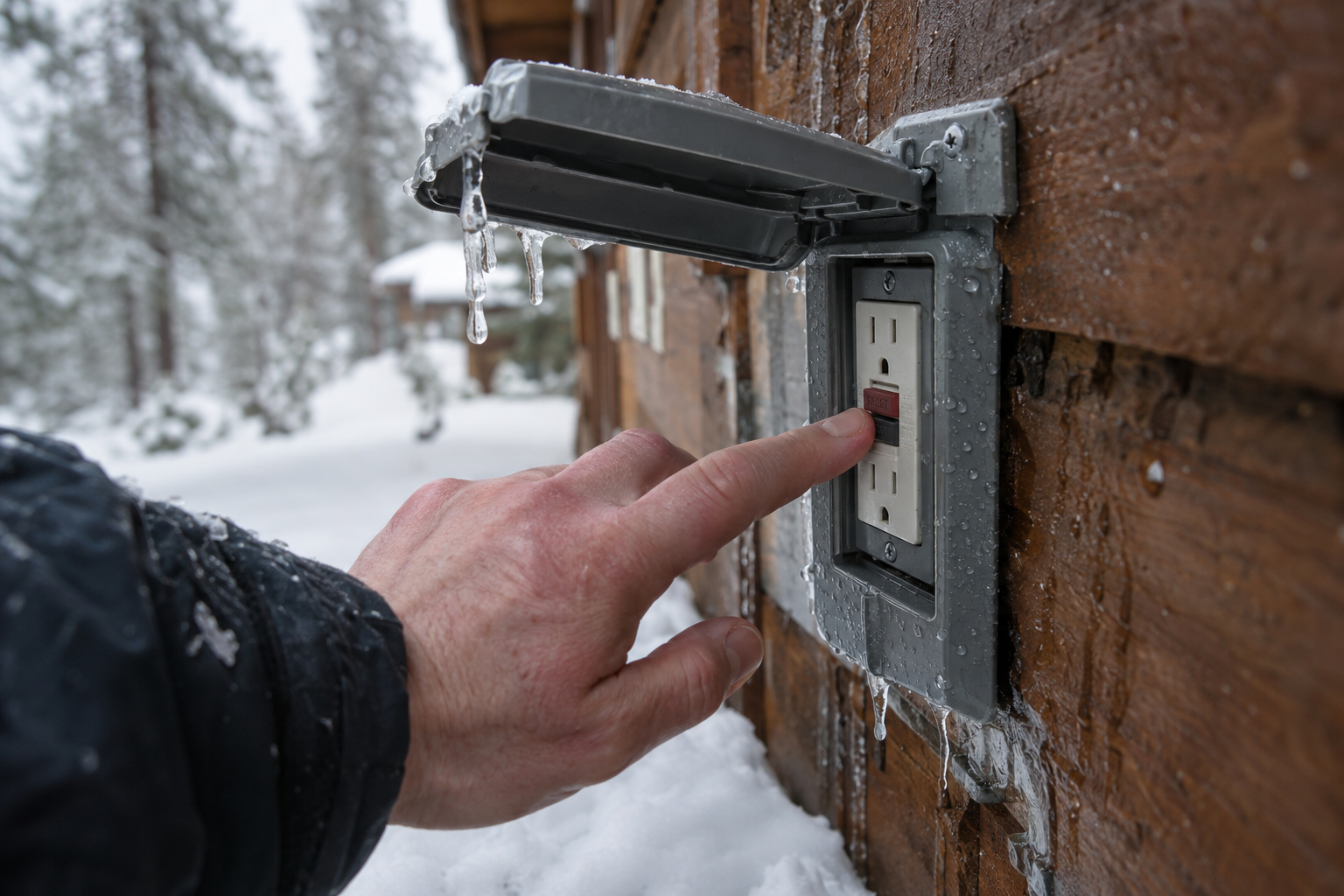
An outdoor GFCI that worked fine all summer and suddenly won't stay on once the snow starts isn't a coincidence, and it isn't usually a sign the outlet itself failed. Winter changes the physical conditions around that outlet in several specific ways, and a GFCI is built to notice exactly the kind of thing winter creates.
What a GFCI Is Actually Watching For
A GFCI continuously compares the current flowing out through the hot wire against the current returning through the neutral. Under normal conditions those two numbers match exactly. The instant they don't — because some current is escaping through an unintended path, like water, salt residue, or a damaged wire — the GFCI detects that imbalance and cuts power in a fraction of a second. Most residential GFCIs trip at a difference of just a few milliamps, a tiny amount of current, which is exactly why they're so sensitive to conditions a standard breaker would never notice.
Snowmelt Is the Biggest Culprit, and It's Sneakier Than Rain
Water from melting snow can sit against an outlet cover, pool near a junction box, or back up behind an ice dam on the roof line right above an exterior fixture — staying wet for days at a time rather than a single storm passing through and drying out. Combined with a cracked, warped, or missing weatherproof cover, that sustained moisture eventually finds its way into the box, and the GFCI does exactly what it's designed to do the moment it detects current taking a path it shouldn't. This is different from a quick summer thunderstorm specifically because of duration — a roof full of slowly melting snow can keep feeding moisture into the same spot for a week or more, which is long enough to work past a cover that's handled every other kind of weather fine all year.
Road Salt Adds a Layer Most Moisture Guides Don't Mention
Salt tracked onto equipment, cords, or plugs — whether from a vehicle, a boot, or just blown debris near a driveway outlet — creates its own conductive path once it gets wet, the same way plain water does, but it can linger on a surface long after the area otherwise looks dry. Dissolved salt residue stays electrically active even as surface water evaporates, which is exactly why an outlet near a salted driveway or a spot where vehicles regularly park can keep tripping intermittently for weeks after the actual snow has melted away. An outlet that trips specifically after plowing, after walking equipment in from a salted driveway, or near where vehicles park is worth checking for this specifically, not just general dampness.
Cold Itself Changes the Physical Connections
Cold does something separate from moisture entirely. Metal contracts as temperatures drop, and a connection that was marginal in warmer months can develop just enough looseness in deep winter to create an intermittent fault that comes and goes with the temperature swing — tripping on the coldest nights and seeming fine again once things warm up slightly during the day. This kind of temperature-linked tripping is a genuine signal that a connection inside the box has degraded, not just that water got in somewhere.
How to Actually Narrow Down the Cause Yourself
A simple way to start: after the outlet trips, shut off power at the breaker, let the box dry out completely for a few hours, and reset. If it holds through the next dry stretch but trips again after the next snowmelt or salt exposure, that confirms moisture or salt as the cause rather than a failing device. If it won't hold a reset even once fully dry, or trips with absolutely nothing plugged in, the outlet itself has likely reached the end of its service life — outdoor GFCIs typically last 7 to 10 years, often less at this elevation given the repeated freeze-thaw cycling they sit through every winter.
What Not to Do
One thing worth never doing regardless of the cause: swapping a tripping GFCI for a standard outlet just to stop the inconvenience. That removes the shock protection the location requires in the first place, and it doesn't fix whatever's actually causing the fault — it just hides the warning. Repeatedly resetting the same outlet without ever identifying the cause carries the same risk: the fault is still there, you've just stopped getting notified about it.
A Few Things Worth Knowing
Why does my outdoor outlet only trip during a thaw, not during the actual snowstorm?
Snowmelt often causes more sustained moisture exposure than falling snow itself, since melting snow can feed water into the same spot continuously for days as it slowly drains off a roof or pools near a cover.
Can road salt really affect an electrical outlet weeks after the snow is gone?
Yes. Dissolved salt residue remains electrically conductive even after surface moisture evaporates, which can cause intermittent tripping well after the actual snow event near a driveway or parking area.
How long do outdoor GFCI outlets typically last in a Big Bear climate?
Generally 7 to 10 years, often shorter at this elevation due to the repeated freeze-thaw cycling exterior electrical components go through every winter season.
Is it safe to just keep resetting a GFCI that trips occasionally in winter?
Occasional resets after confirmed drying are reasonable, but repeated tripping without identifying the cause means a real fault is going unaddressed, which is a safety issue, not just an inconvenience.
GFCI outlet in your Big Bear property that won't stop tripping this winter?
Call Big Bear Electric Pros at (909) 415-5573.

Big Bear Planned Power Outage Oct. 16–17: BVES's Timeline, Rolling Blackouts, and What to Do Tonight