BVES Robots Insulate Big Bear Power Lines: What the New Wildfire Technology Means for Your Power
BVES Robots Insulate Big Bear Power Lines: What the New Wildfire Technology Means for Your Power
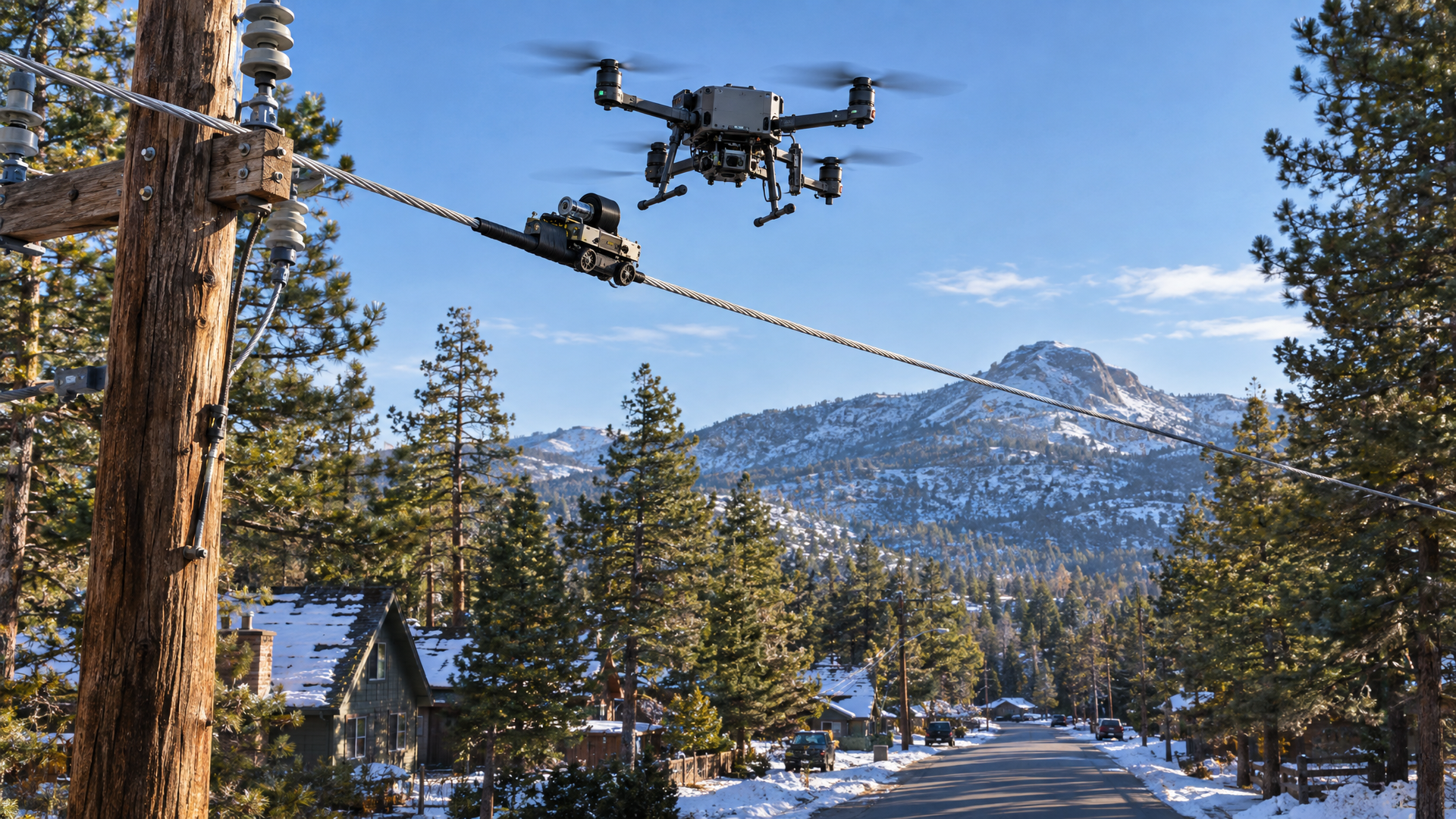
Somewhere above a residential street in Sugarloaf, a small robot is crawling along a live power line, wrapping the bare wire in insulation as it goes. That's the first commercial deployment of the technology, and it's happening in Big Bear.
Bear Valley Electric Service announced a partnership with a wildfire-prevention startup called Witching Hour, and KBHR reported it on September 21. Here's what it is, why it matters, what it doesn't change, and what you can do on your side of the meter.
What BVES is doing
According to BVES and Witching Hour:
- Robots install insulation directly onto existing bare wire. That avoids replacing both the wire and the poles, which has historically been how bare lines are converted to covered ones.
- They work on energized lines. Because the robots operate on live wire, BVES says the project didn't need a power shutoff to do the insulating.
- They're autonomous and can climb steep lines, which matters in mountain terrain.
- The insulation is estimated to last about 30 to 40 years. That's the company's estimate.
- It's the first commercial deployment. Witching Hour's founder says this is the first time the technology has been used commercially. The initial BVES project covers one circuit mile in a residential area of Sugarloaf.
In August 2026, BVES also began using a fleet of drones to survey its lines for damage, vegetation encroachment, and other hazards.
Why covered wire matters here
A bare overhead line can spark when a tree branch or another object touches it, and in a valley with drought stress and dry, dense vegetation, a spark can be an ignition. Covered conductor, wire with a protective coating, is meant to prevent that. BVES has said it chose covered conductor over undergrounding as its primary hardening method, citing its small service area.
The obstacle has been cost. KBHR's report says converting to covered conductor can run about $1 million per circuit mile. BVES says the Witching Hour method cuts that to less than half the cost per circuit mile, and that the work is faster and safer for linemen. Those are BVES's figures for a method that's being used commercially for the first time, so how it performs at scale remains to be seen.
What this has to do with your bill
Covered conductor replacement is one of the wildfire and reliability investments in BVES's 2027 General Rate Case, which we covered in our guide to the rate case and CPUC public forums. BVES says a cheaper method means the community gets more hardening for its money. Whether the final rate decision reflects that is for the CPUC to decide, and the in-person forums on October 27 at 2 p.m. and 6 p.m. at Big Bear Lake City Hall are where residents can weigh in on it.
What it won't change
- Shutoffs that start outside the valley. BVES imports much of its power over SCE transmission lines, so an SCE shutoff can darken the whole valley even when the weather is calm locally. We explain that in why Big Bear loses power when SCE shuts off its lines.
- Outages from other causes, like equipment failures, snow loads, and storms.
- Your side of the meter. Insulated lines don't help a worn service mast, an aging panel, or a surge that travels into your house.
What you can do on your side
- Leave trees near power lines to BVES. Don't trim branches near lines yourself. Report them instead.
- Have your service entrance and meter checked if they've taken a beating in storms or are visibly corroded or loose.
- Protect against surges. Restorations and switching can send voltage swings through the house. See our guide to what to do when the power comes back on.
- Check whether your panel can support a generator or a transfer switch. Our panel upgrade guide and backup generator guide cover it.
- Keep the area around your meter and panel clear, especially of dry brush.
Questions about BVES's robot technology
Will this stop power shutoffs?
Not the ones that start with SCE's transmission lines. Hardening the local lines reduces ignition risk on BVES's own system, but it doesn't change decisions made upstream.
Did the insulating work cause an outage?
BVES says no. The robots operate on energized lines, and the company says the project didn't require a shutoff for the insulating work.
Will this raise or lower my bill?
BVES says the method is cheaper than conventional covered conductor, but the company's rates are set by the CPUC in its rate case. The October 27 forums are the public's chance to comment.
Want your service entrance, panel, and surge protection checked before the next outage?
Call Big Bear Electric Pros at (909) 415-5573 for a free estimate.
Big Bear Planned Power Outage Oct. 16–17: BVES's Timeline, Rolling Blackouts, and What to Do Tonight