Your Power Can Go Out in Big Bear Even When It's Calm Here — Here's Why
Your Power Can Go Out in Big Bear Even When It's Calm Here — Here's Why
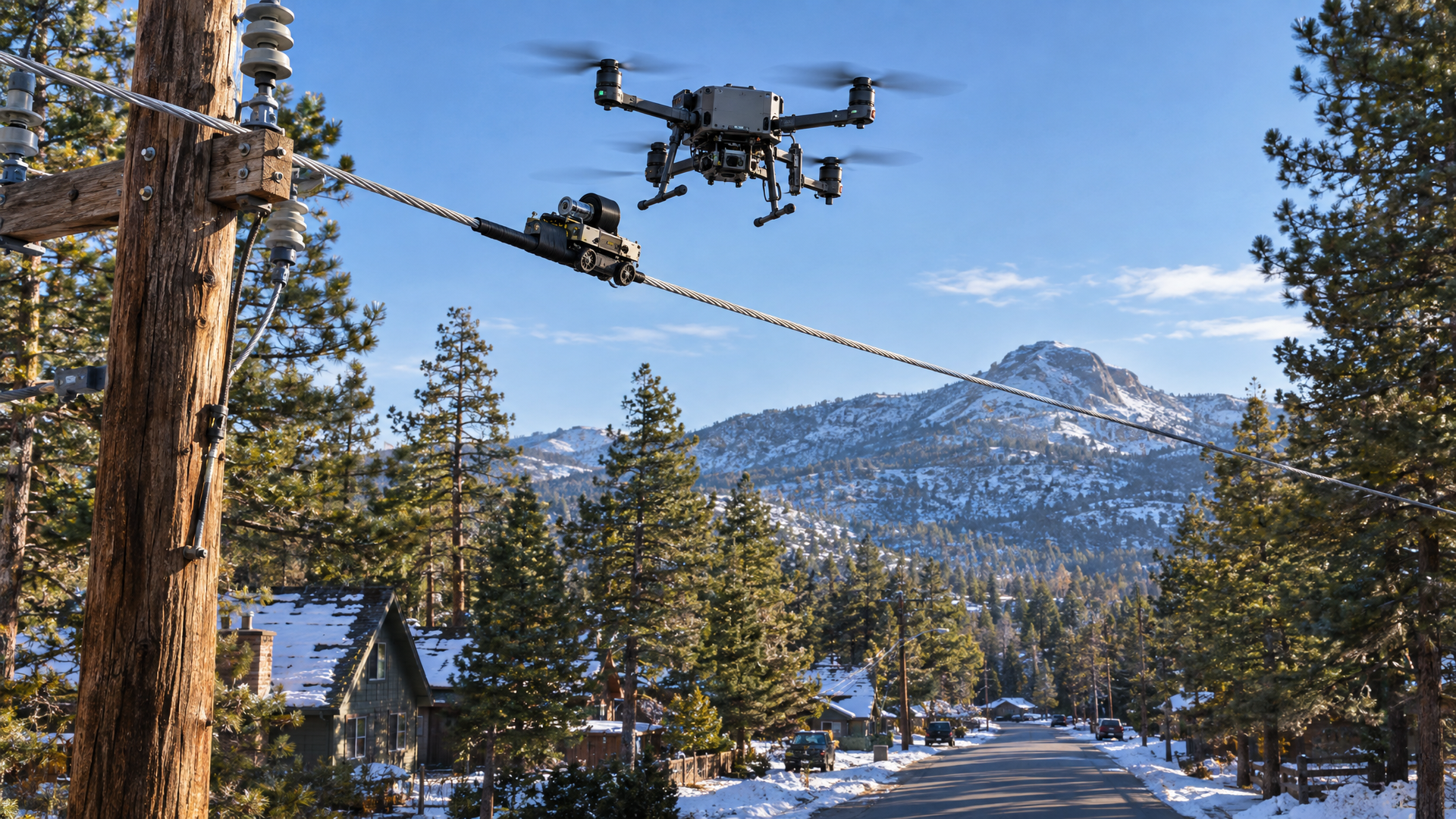
If you've ever lost power on a still, quiet Big Bear evening and wondered what happened, the answer usually isn't anything happening in Big Bear at all. Bear Valley Electric Service doesn't generate its own power — it imports nearly all of it over Southern California Edison transmission lines running up from Lucerne Valley. When wind conditions get dangerous down there, dozens of miles away, SCE can de-energize those lines to prevent a spark, and BVES loses the supply feeding the entire Big Bear Valley, regardless of what the weather is actually doing up here.
This isn't a rare edge case. It's happened repeatedly just this year — PSPS periods of concern in late June, again in late August into September, each one triggered by wind and fire conditions on the transmission corridor rather than conditions in Big Bear itself. And according to BVES's own recent statement, this isn't unusual: in 2025 alone, SCE transmission-line PSPS events left Bear Valley customers without power for an average of 2,754 minutes over the year — nearly two full days, cumulatively, of outage time driven by weather happening somewhere else entirely.
That structural dependency is exactly why "the forecast looks fine here" isn't the same thing as "my power is safe today." Your actual exposure to an outage depends on wind conditions across a transmission corridor you can't see from your property, which is a genuinely different risk profile than most people plan around.
Why a Single Point of Failure Puts the Whole Valley at Risk
This is worth understanding clearly, because it changes what "backup power" actually needs to account for. BVES serves roughly 22,000 residents across Big Bear Valley, and nearly all of that supply funnels through the same SCE transmission corridor from Lucerne Valley.
That's a single point of failure affecting essentially the entire community at once — not a localized circuit issue that knocks out one neighborhood while the rest of town stays lit. When SCE de-energizes that line, BVES has said plainly that its own local generation capacity is limited, meaning some or all of its customers can lose power simultaneously, regardless of which part of the valley they live in or how far they are from any actual fire risk.
What a Full Year of PSPS Activity Actually Looks Like
To put the "nearly two full days a year" figure in real terms: that's not one dramatic multi-day event, it's the accumulated total across multiple separate PSPS periods throughout a single year — exactly the pattern 2026 has already shown, with distinct events in June, August, and September alone. Each individual event might run anywhere from several hours to multiple days depending on how long the underlying wind and fire conditions persist on the transmission line, and BVES has no control over that timeline since the triggering decision sits with SCE, not with the local utility serving your home.
What This Actually Means for How You Prepare
If you're relying on a backup generator, remember that BVES's limited local capacity during a transmission PSPS means outages here can run longer than a typical single-circuit shutoff elsewhere — sizing your system for a multi-day event, not just a few hours, is the realistic planning assumption. If you already have a generator installed, this is worth using as your prompt to actually test it under real load rather than assuming it'll perform the same as the day it was installed.
Given how often these events are tied to conditions BVES can't control or predict with much lead time, whole-house surge protection matters more here than it might in a market with more stable grid conditions — repeated de-energize-and-restore cycles are exactly the kind of event that stresses electrical equipment, and a surge protector that's already absorbed a hit won't announce it's no longer working.
If your property has smoke and CO detectors tied into backup power, or a heated driveway system that can't run during an outage, this is also the moment to confirm those systems and your understanding of their limitations line up — not during the outage itself, when you're trying to remember what does and doesn't work without grid power.
The Realistic Planning Assumption
Given how frequently this has happened just in the past few months, treating a PSPS-driven outage as a rare, occasional inconvenience isn't the right mental model for a Big Bear property anymore. Nearly two full days a year, on average, according to BVES's own numbers, is a real and recurring cost of living on this grid — one that's worth planning around directly rather than hoping this season is quieter than the last one.
A Few Things Worth Knowing
Why does Big Bear lose power when the weather here is fine?
Because BVES imports nearly all of its electricity over SCE transmission lines from Lucerne Valley. Dangerous wind conditions along that corridor, dozens of miles from Big Bear, can trigger a shutoff that affects the entire valley regardless of local conditions.
How much outage time does this actually add up to in a year?
According to BVES's own 2025 figures, PSPS events on the SCE transmission line left customers without power for an average of 2,754 minutes over the year, nearly two full days cumulatively.
Does everyone in Big Bear lose power at the same time during one of these events?
Often yes, or close to it. Because the entire valley depends on the same transmission supply, a shutoff on that line can affect most or all BVES customers simultaneously, not just one localized circuit.
How much backup runtime should I actually plan for?
Given that these events have run anywhere from several hours to multiple days depending on conditions, sizing backup power for a multi-day scenario is the more realistic planning approach than assuming a quick, few-hour outage.
Can BVES prevent these shutoffs?
No. The decision to de-energize the transmission line sits with SCE, since BVES doesn't own or operate that infrastructure. BVES's role is limited to managing local distribution and notifying customers once SCE flags the line for a potential shutoff.
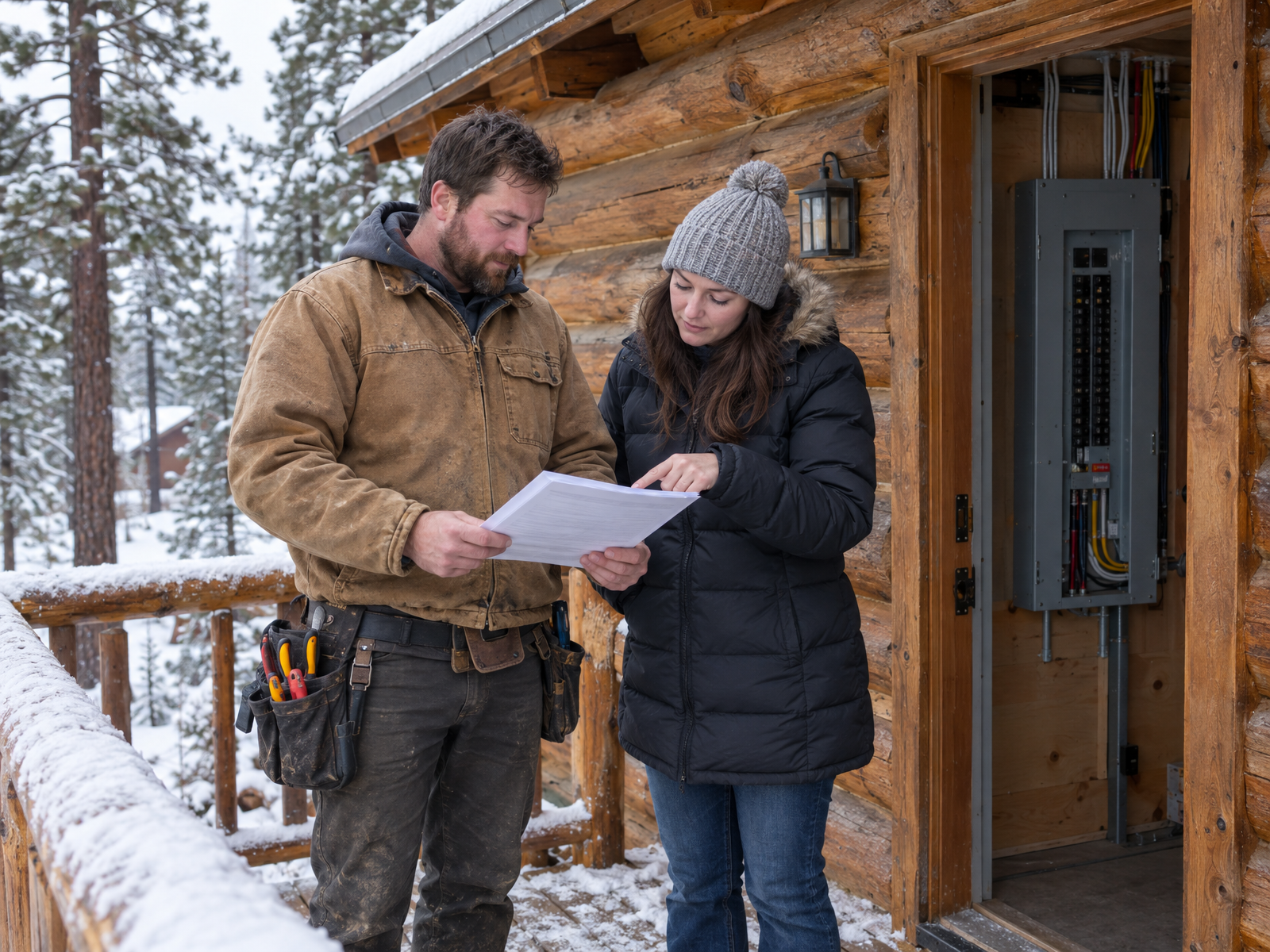
Don't wait for the next transmission PSPS to find out your generator won't hold up, your surge protection has already failed, or your panel can't handle what you're asking of it. Big Bear Electric Pros inspects, sizes, and installs backup power systems built for how outages actually happen on this grid — not a generic setup.
Call (909) 415-5573 today and get your property ready before the outage, not during it.
Big Bear Planned Power Outage Oct. 16–17: BVES's Timeline, Rolling Blackouts, and What to Do Tonight