Home Sauna Electrical Requirements in Big Bear: What the Heater Size Actually Determines
Home Sauna Electrical Requirements in Big Bear: What the Heater Size Actually Determines
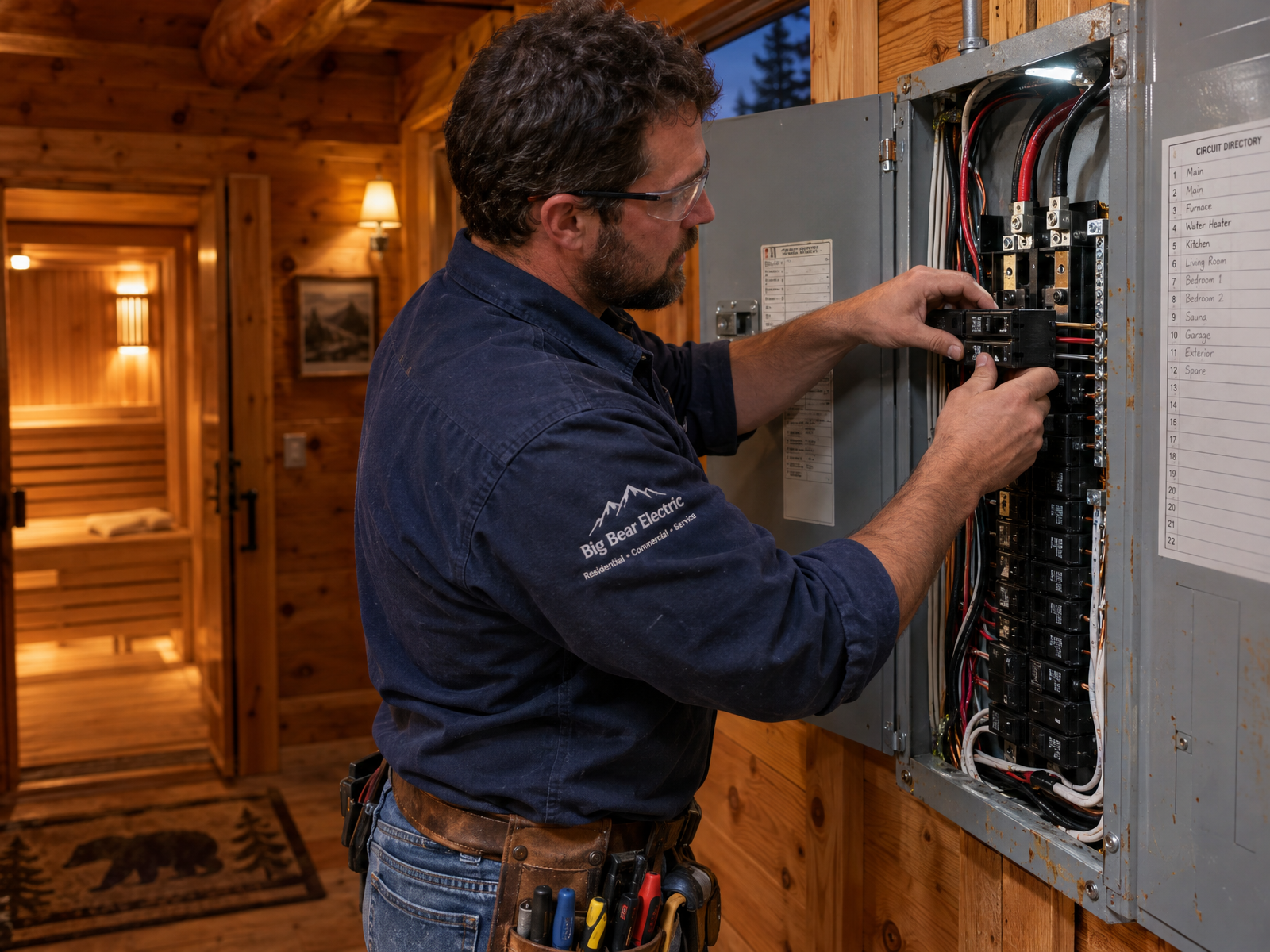
A home sauna has become a genuinely common addition to Big Bear properties — a natural pairing with a day on the slopes or a cold winter evening, and often something homeowners add alongside a hot tub rather than instead of one. What a lot of people don't realize until they're already shopping for a heater: the electrical requirements aren't a minor detail to figure out later. They determine almost everything about the installation itself.
Why 240 Volts Isn't Optional
Every traditional electric sauna heater runs on 240 volts, full stop — there's no standard outlet that delivers that, which means the heater has to be hardwired to a dedicated circuit, not plugged in. The circuit can't be shared with anything else either. A sauna heater draws serious, continuous current for the full length of a session, and sharing that circuit with another load is exactly how you end up with nuisance tripping mid-session or a heater that never quite reaches the temperature it's rated for.
Why the 125% Rule Exists, and What It Means for Your Breaker
The specific breaker and wire size scales directly with the heater's wattage, under a provision in the National Electrical Code requiring continuous loads — anything running steadily for three hours or more — to be sized at 125% of their actual draw, not matched to it exactly. A sauna session is the textbook example of exactly this kind of load: the heater isn't cycling on and off the way a refrigerator does, it's pulling close to full current the entire time you're in there. That extra 25% of headroom is what keeps the breaker from nuisance-tripping on a long session and keeps the wire from running hotter than it should over time.
Here's how that math plays out by heater size:
- A 4.5 kW heater draws about 18.75 amps, which under the 125% rule needs a 30-amp double-pole breaker on 10-gauge copper wire
- A 6 kW heater draws about 25 amps, needing a 40-amp breaker on 8-gauge copper wire
- An 8 kW heater draws about 33 amps, needing a 50-amp breaker on 6-gauge copper wire
- A 9 kW heater draws about 37.5 amps, also typically landing on a 50-amp breaker, sometimes 60 depending on the specific model and run length
Why This Becomes a Panel Capacity Question Fast
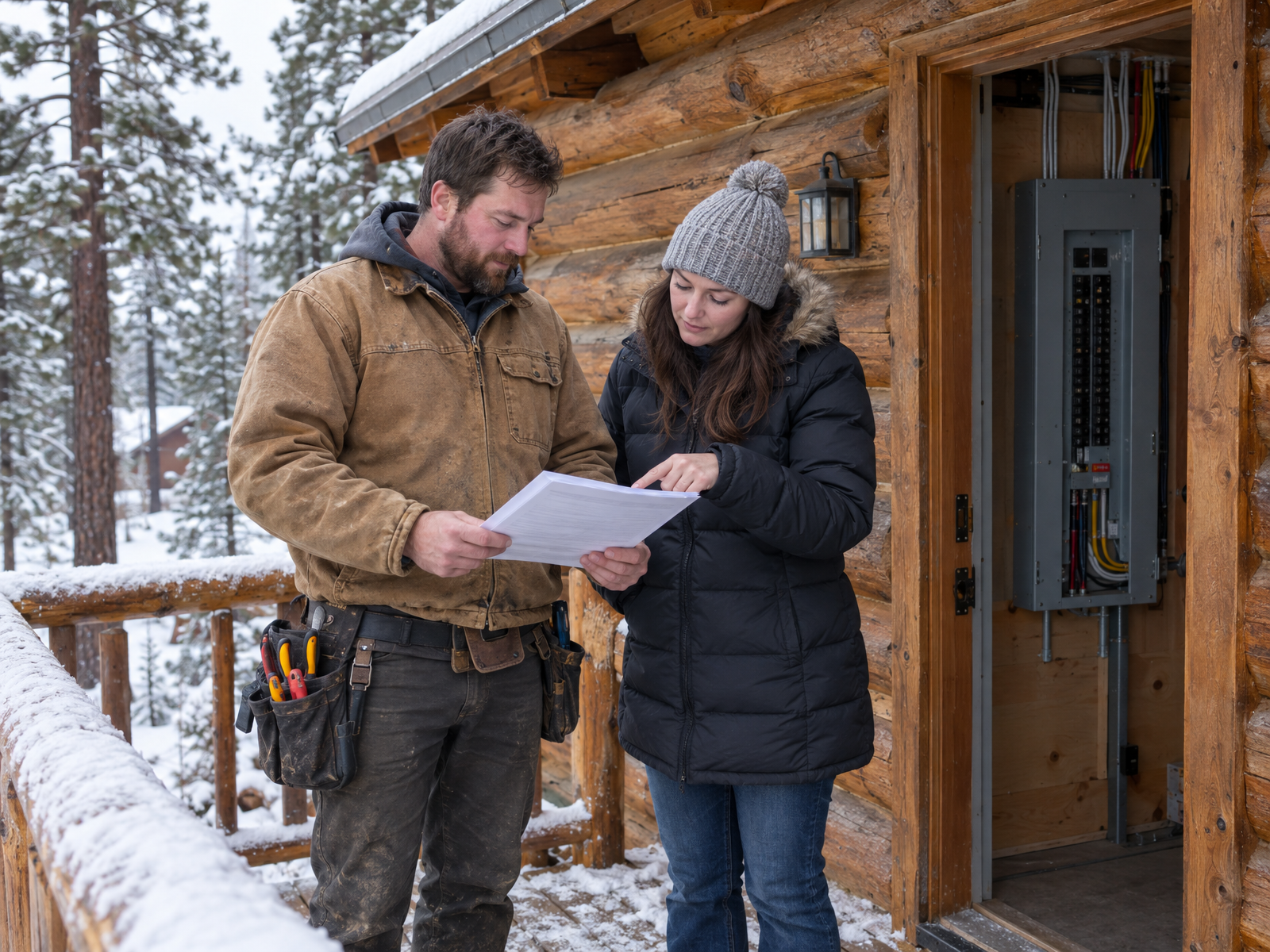
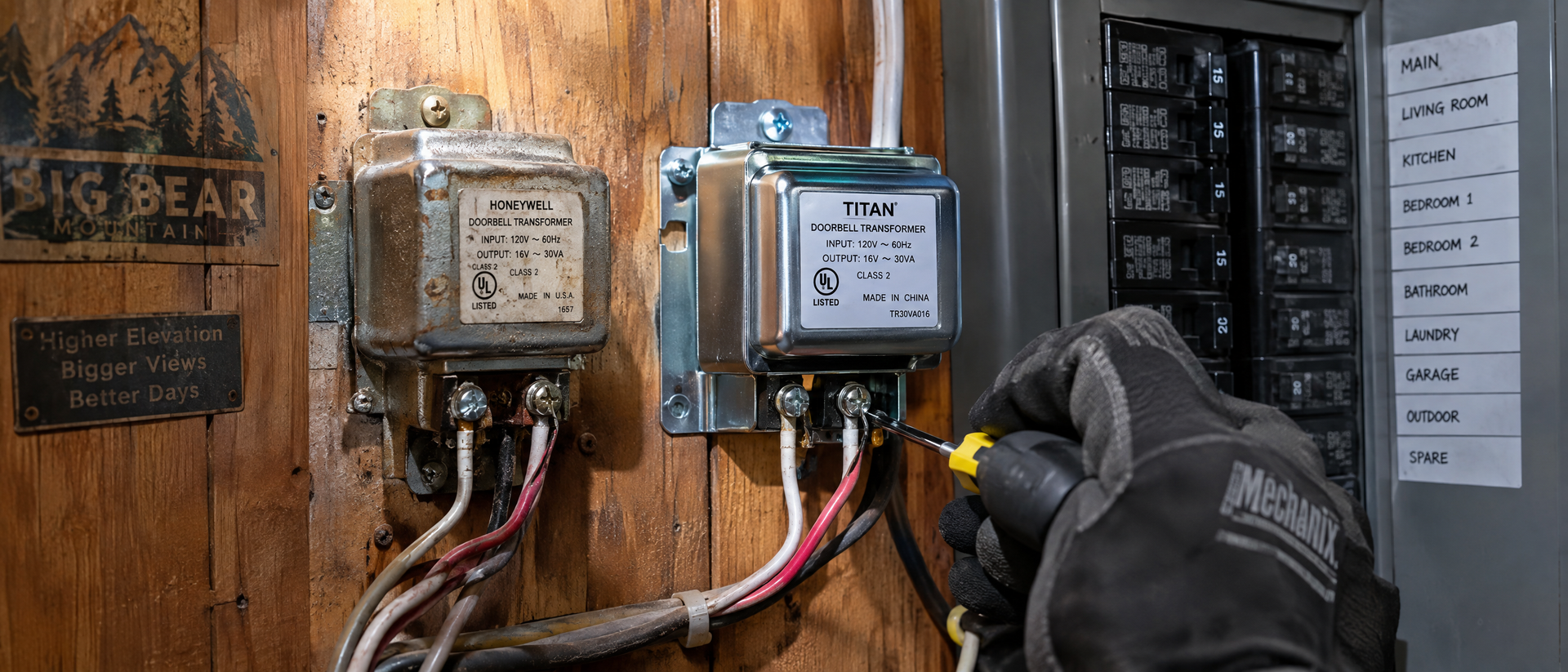
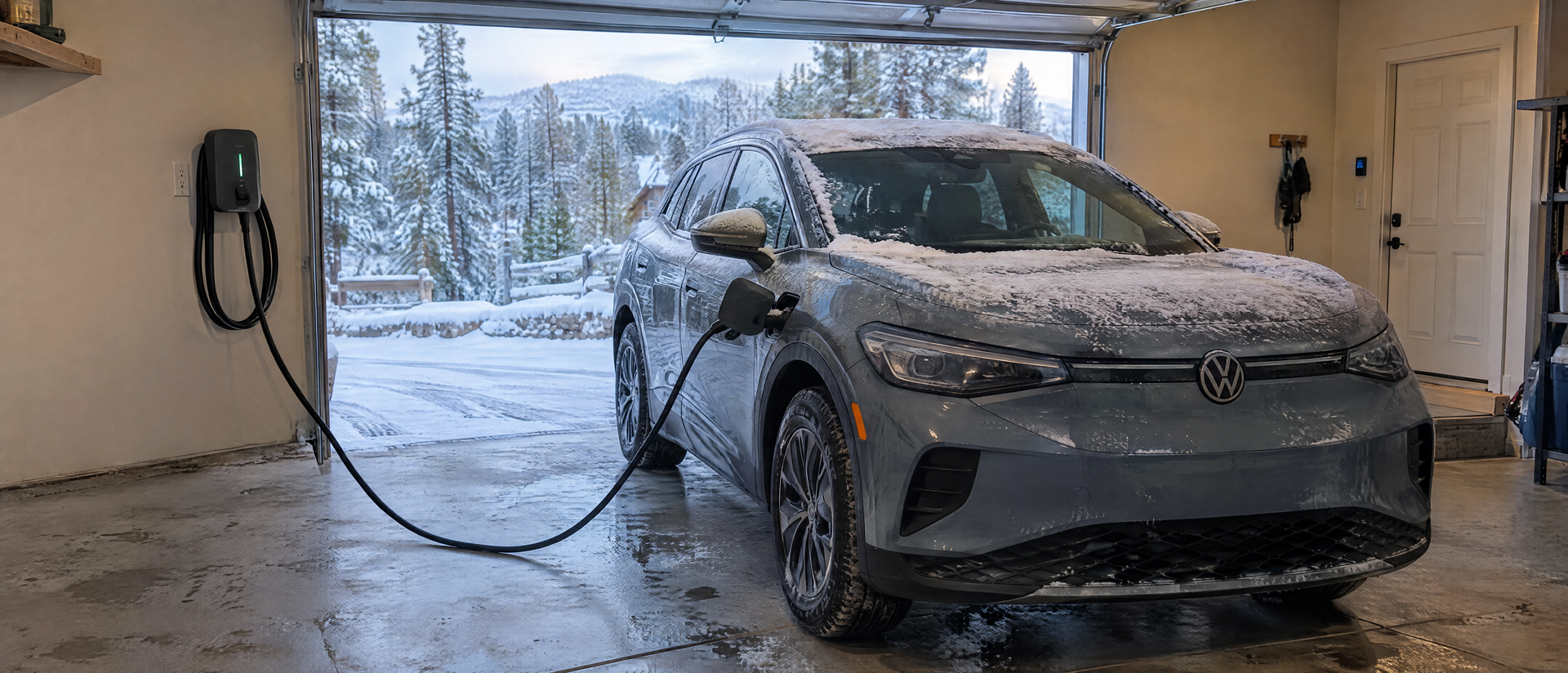
This is exactly where a lot of Big Bear cabin panels run into a real capacity question. A property that's already carrying a hot tub, a mini-split or baseboard heat, and maybe an EV charger on an older 100 or 150-amp panel may not have the room left for a second major 240V appliance without a broader look at the panel's total load. Adding up a hot tub's roughly 50-amp draw, a sauna's 30-to-50 amp draw, and everything else already on the panel can get close to or past what an older service was ever designed to carry simultaneously — even though no single appliance looks unreasonable on its own. This is the same assessment we cover in our panel upgrade guide — adding a sauna is a good moment to find out whether your panel can actually support it before you've already purchased the heater.
What Else the Installation Actually Requires
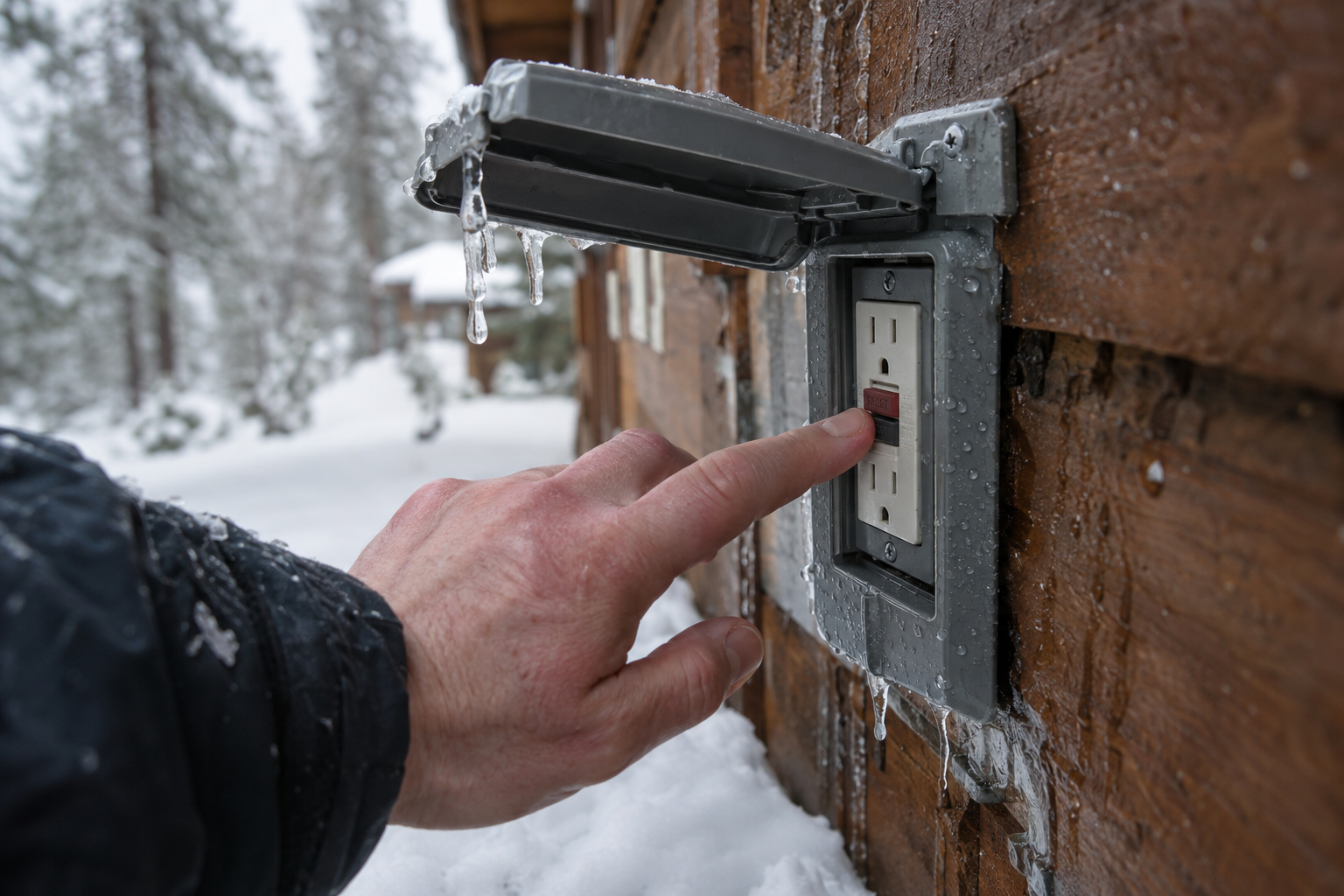
A properly installed sauna circuit also needs a local disconnect within sight of the heater in most jurisdictions, giving anyone working on the unit a way to cut power without walking back to the main panel. GFCI protection is required in many cases too, depending on the sauna's specific location relative to wet areas — a sauna installed near a hot tub or shower room falls under different rules than one in a dry, isolated room. None of this is something a sauna kit's included instructions fully walk you through, since manufacturers write those for a generic installation, not your specific panel, your specific run length, or San Bernardino County's specific permit requirements.
What to Check Before You Buy the Heater, Not After
If you're still shopping for a heater, it's worth having a rough electrical assessment done before you commit to a specific kW rating, not after. A heater that's a reasonable size for the room but turns out to need a 50-amp circuit your panel can't currently support is a much more expensive problem to discover post-purchase than before, when switching to a smaller heater or planning a panel upgrade alongside the sauna install is still an easy adjustment.
Adding a sauna to your Big Bear property?
Get the electrical sized right from the start.
Call Big Bear Electric Pros at (909) 415-5573.

Big Bear Planned Power Outage Oct. 16–17: BVES's Timeline, Rolling Blackouts, and What to Do Tonight