Why Your New Video Doorbell Won't Stop Chirping (Or Won't Work at All)
Why Your New Video Doorbell Won't Stop Chirping (Or Won't Work at All)
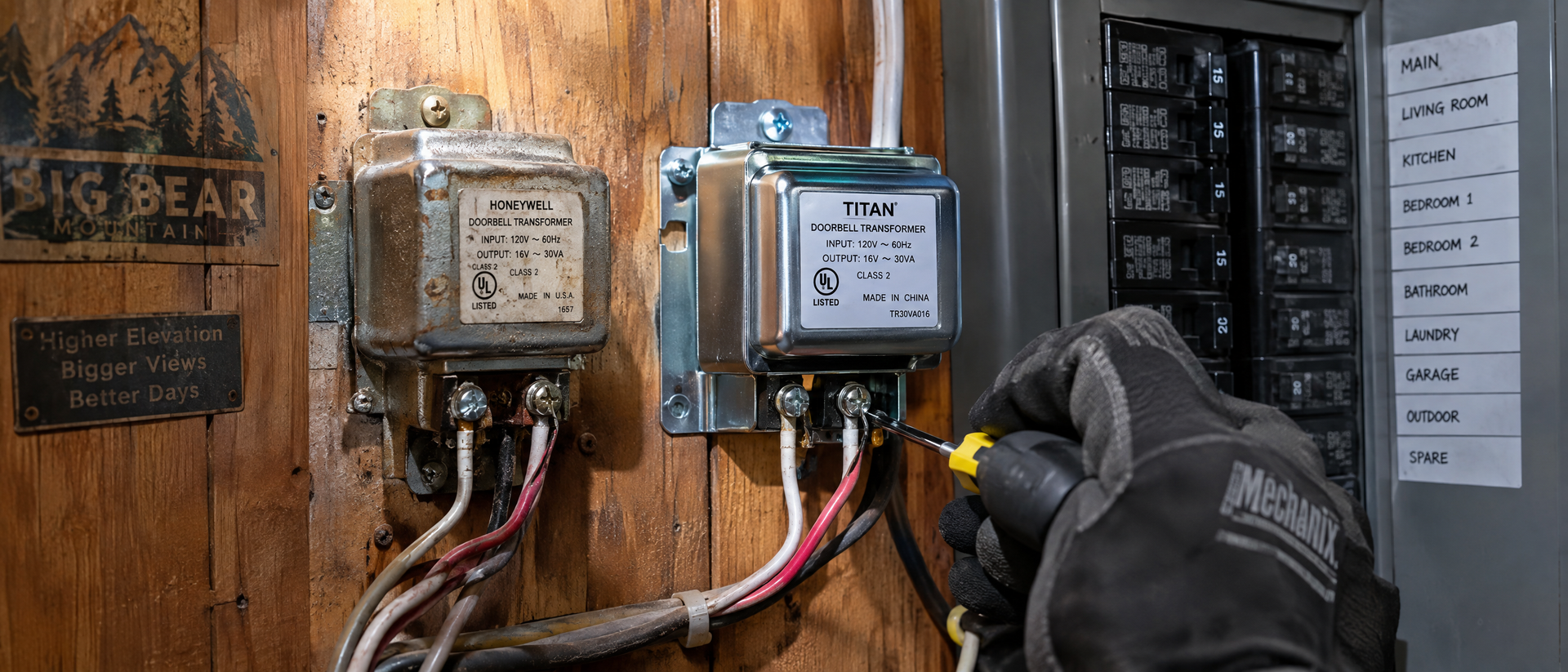
If you just installed a Ring, Nest, or Blink video doorbell in your Big Bear cabin and it's chirping constantly, not holding a charge, or flat-out refusing to power on, the doorbell probably isn't broken. The transformer feeding it almost certainly is — not broken exactly, just built for a completely different era of doorbell.
Every hardwired doorbell runs on a small transformer, usually tucked away near the main panel, in a utility closet, or sometimes in the attic, that steps household voltage down to something a doorbell can actually use. A basic mechanical "ding-dong" chime — the kind that's been quietly working in a lot of Big Bear cabins since they were built decades ago — only needs a modest 8 to 16 volts and a small power draw to do its job. A modern video doorbell is an entirely different animal: it's running a camera, Wi-Fi radio, processor, and often an LED ring, all continuously, which is a genuinely bigger and steadier power draw than a chime ever needed.
The Actual Voltage and VA Numbers That Matter
Here's roughly where things stand, based on what most manufacturers actually require:
- 8V transformer: Not compatible with any video doorbell
- 10V transformer: Also not compatible — insufficient voltage regardless of amperage
- 16V, 10VA transformer: Marginal at best. This is probably the single most common setup in an older home, and exactly the range where people report chirping, intermittent connectivity, or a doorbell that works for a while and then quietly fails
- 16V, 30VA transformer: Generally works fine for most video doorbells
- 24V, 20VA or higher: About as close to ideal as it gets
Given how many Big Bear cabins were wired well before video doorbells existed as a product category, it's genuinely common to find an original transformer from the original construction date still doing the job — perfectly adequate for the chime it was installed for, and simply undersized for what's being asked of it now. This isn't a sign anything was done wrong originally; it's just a mismatch between decades-old infrastructure and a device category that didn't exist when that infrastructure was installed.
Why Voltage Alone Doesn't Tell the Whole Story
This is worth understanding, because checking voltage alone can still leave you with a doorbell that misbehaves. VA — volt-amperes — measures how much actual power capacity the transformer can sustain, and it's just as important as the voltage reading itself. A transformer can technically output the right voltage while still being too weak in VA capacity to handle a camera and radio running continuously, which is exactly why a 16V, 10VA transformer sits in that frustrating "marginal" zone: the voltage number looks fine on paper, but the transformer simply can't sustain the load a video doorbell places on it hour after hour. Wire gauge and run length matter too — a longer, thinner wire run between the transformer and the doorbell causes voltage drop along the way, meaning even a transformer that tests fine at the source can deliver less than it should by the time power actually reaches the doorbell itself.
How to Actually Check What You Have
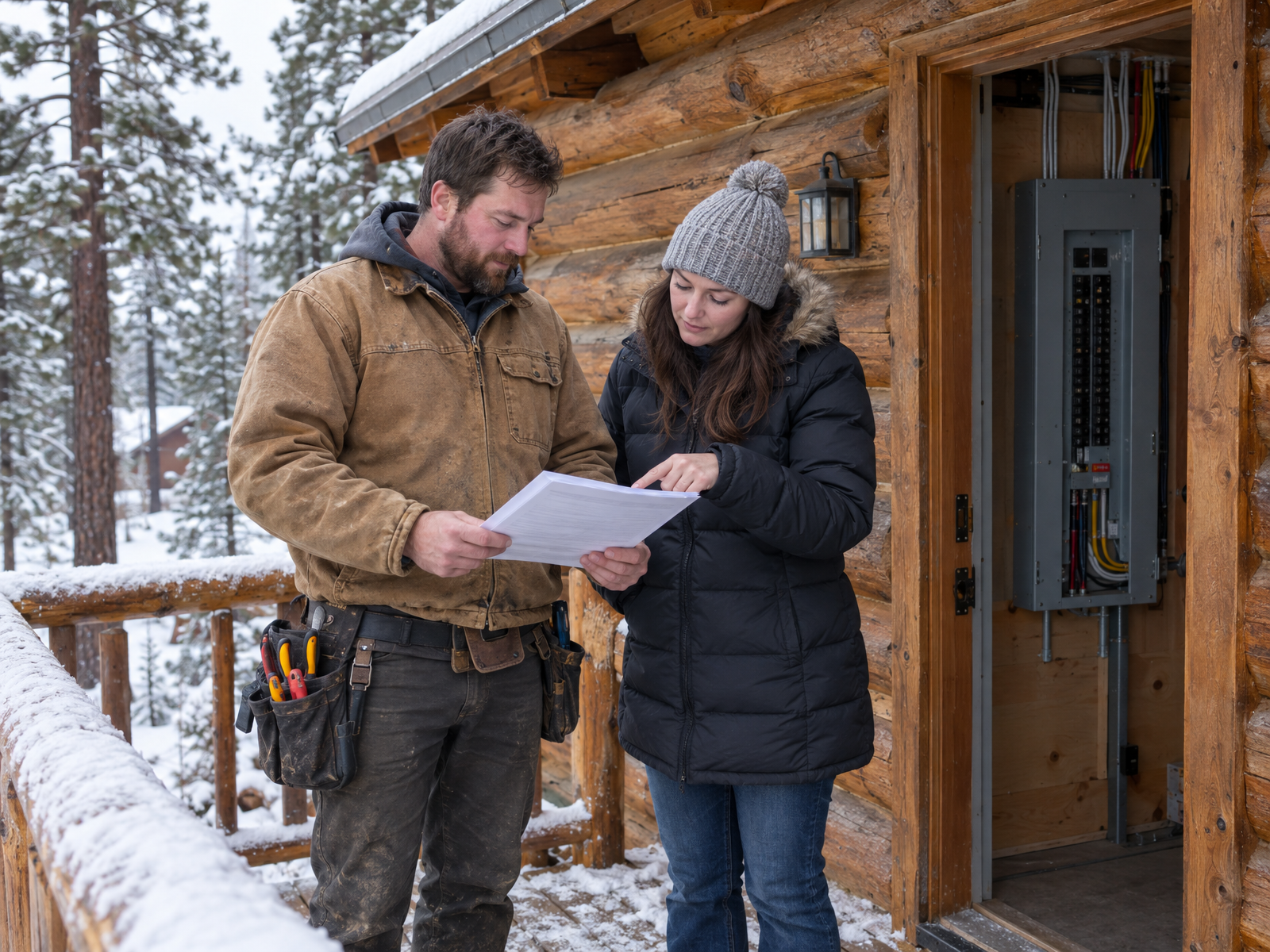
If you're troubleshooting this yourself before calling anyone, the transformer is usually labeled directly on its housing with both its voltage and VA rating — look near the main panel, in a utility closet, near the furnace, or occasionally in the attic. A multimeter can confirm the actual output if the label is worn or missing. If what you find matches the "not compatible" or "marginal" categories above, that's your answer, and no amount of doorbell troubleshooting, app resets, or Wi-Fi adjustments is going to fix a genuine hardware mismatch.
Why This Is a Quick Fix, Not a Big Project
The fix itself is usually straightforward once it's actually diagnosed: swap the old transformer for one rated for the doorbell's specific voltage and VA requirements, which typically means shutting off the circuit, disconnecting the old unit, and wiring in a compatible replacement in its place. Some newer video doorbells also come with a compatible power kit designed to bypass an incompatible transformer entirely, which is worth checking before assuming a full swap is the only option. Either way, this is exactly the kind of quick, inexpensive fix that turns "my doorbell doesn't work" into a five-minute non-issue, rather than something people end up living with for months, assuming the doorbell itself is defective.
As a licensed Big Bear electrician, this is one of the most common small service calls we get after someone upgrades their home security setup — right alongside the broader security and lighting work we handle throughout the valley.
Video doorbell acting up in your Big Bear cabin? It's probably the transformer, not the doorbell.
Call Big Bear Electric Pros at (909) 415-5573.

Big Bear Planned Power Outage Oct. 16–17: BVES's Timeline, Rolling Blackouts, and What to Do Tonight