RV and Trailer Electrical Hookup Installation in Big Bear, CA: What NEC 551 Actually Requires
RV and Trailer Electrical Hookup Installation in Big Bear, CA: What NEC 551 Actually Requires
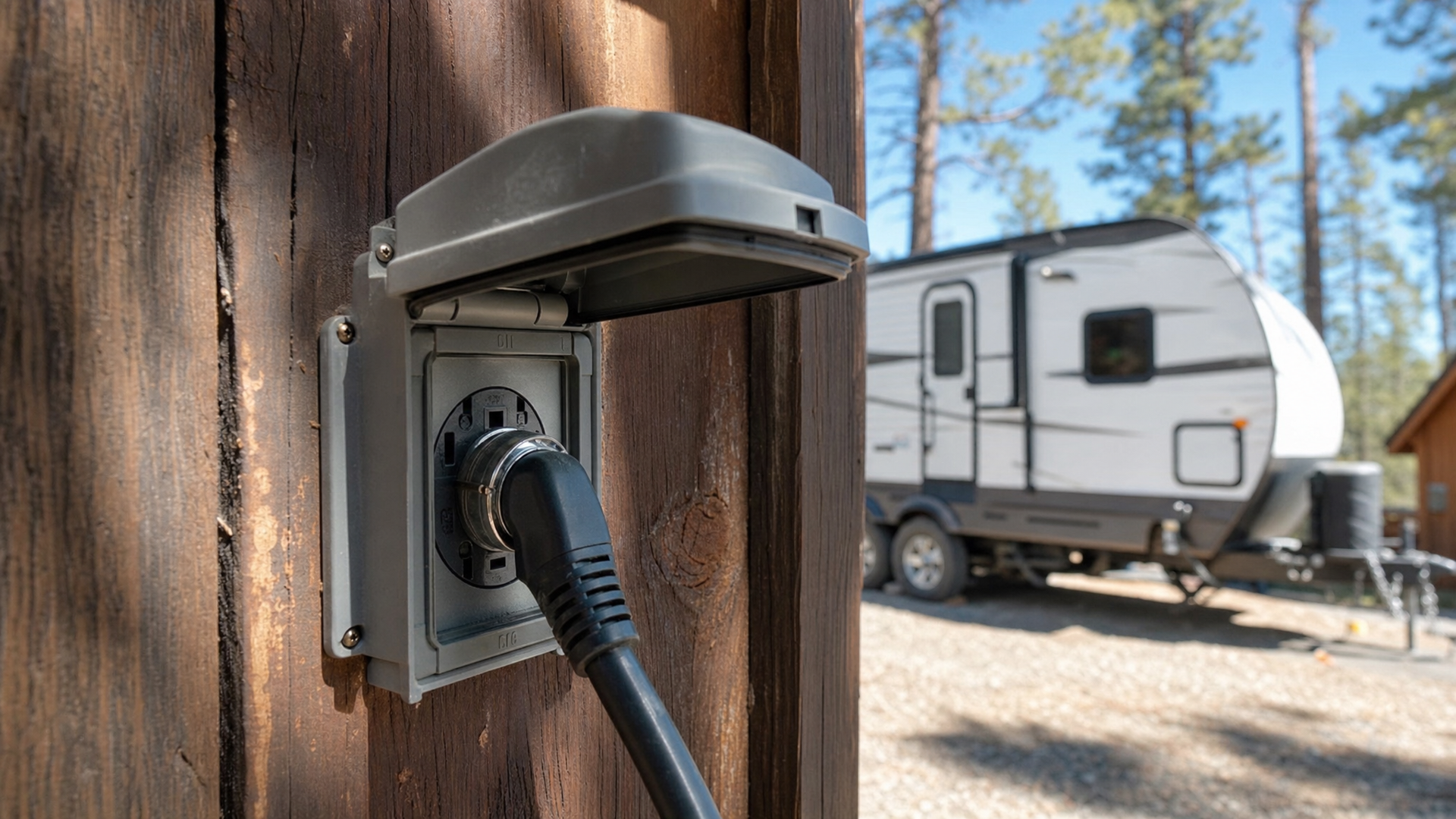
Quick answer: A proper 50-amp RV hookup requires a dedicated circuit with a NEMA 14-50R receptacle, 6 AWG copper wire, a 50-amp double-pole breaker, a weatherproof enclosure, and GFCI protection under NEC Article 551. It's not a simple outlet swap — undersized wire or an improperly wired ground can create a real fire or shock hazard, including energizing an RV's metal frame in the worst cases.
Why Are Big Bear Homeowners Adding RV Hookups?
Between national forest camping, family visits with trailers in tow, and the sheer number of RVs that pass through Big Bear every summer, a dedicated hookup at home has become a genuinely practical upgrade for a lot of properties — whether it's for your own rig, visiting family, or making a driveway RV-ready for guests. It also means not running extension cords across the yard or relying on a generator for basic RV power needs during a stay.
What Does a Proper 50-Amp RV Hookup Actually Require?
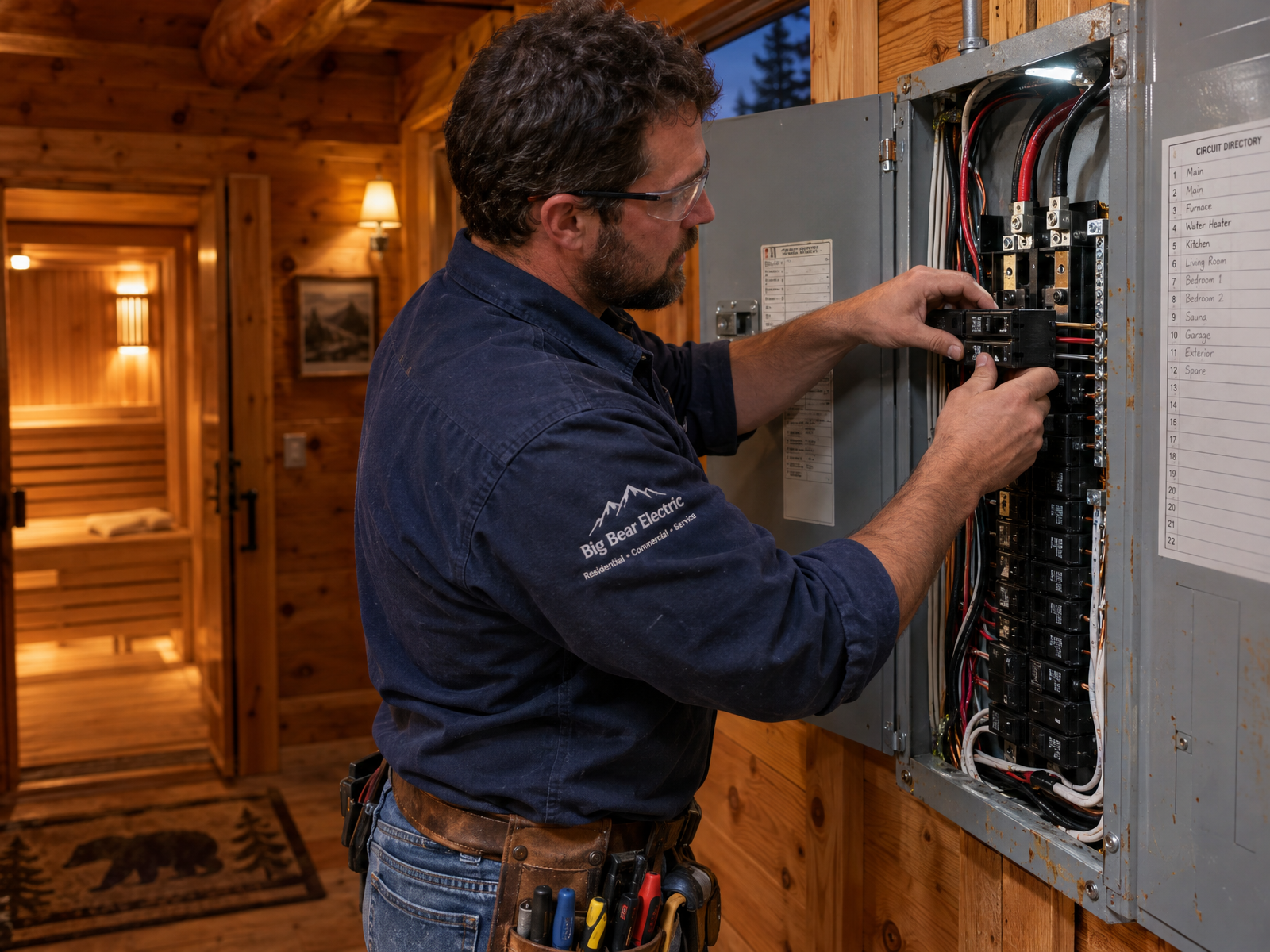
A 50-amp RV connection needs a NEMA 14-50R receptacle — the standard nearly all modern 50-amp RVs are built to plug into — fed by a dedicated 240V circuit with a minimum of 6 AWG copper wire and a 50-amp double-pole breaker at your panel. The receptacle itself needs to be industrial or commercial grade if it's going to see regular use, housed in a NEMA 3R weatherproof enclosure since these installations are almost always outdoors. This isn't a simple receptacle swap — it involves panel-level work and should be handled by a licensed electrician.
Why Does Your RV Outlet Need GFCI Protection?
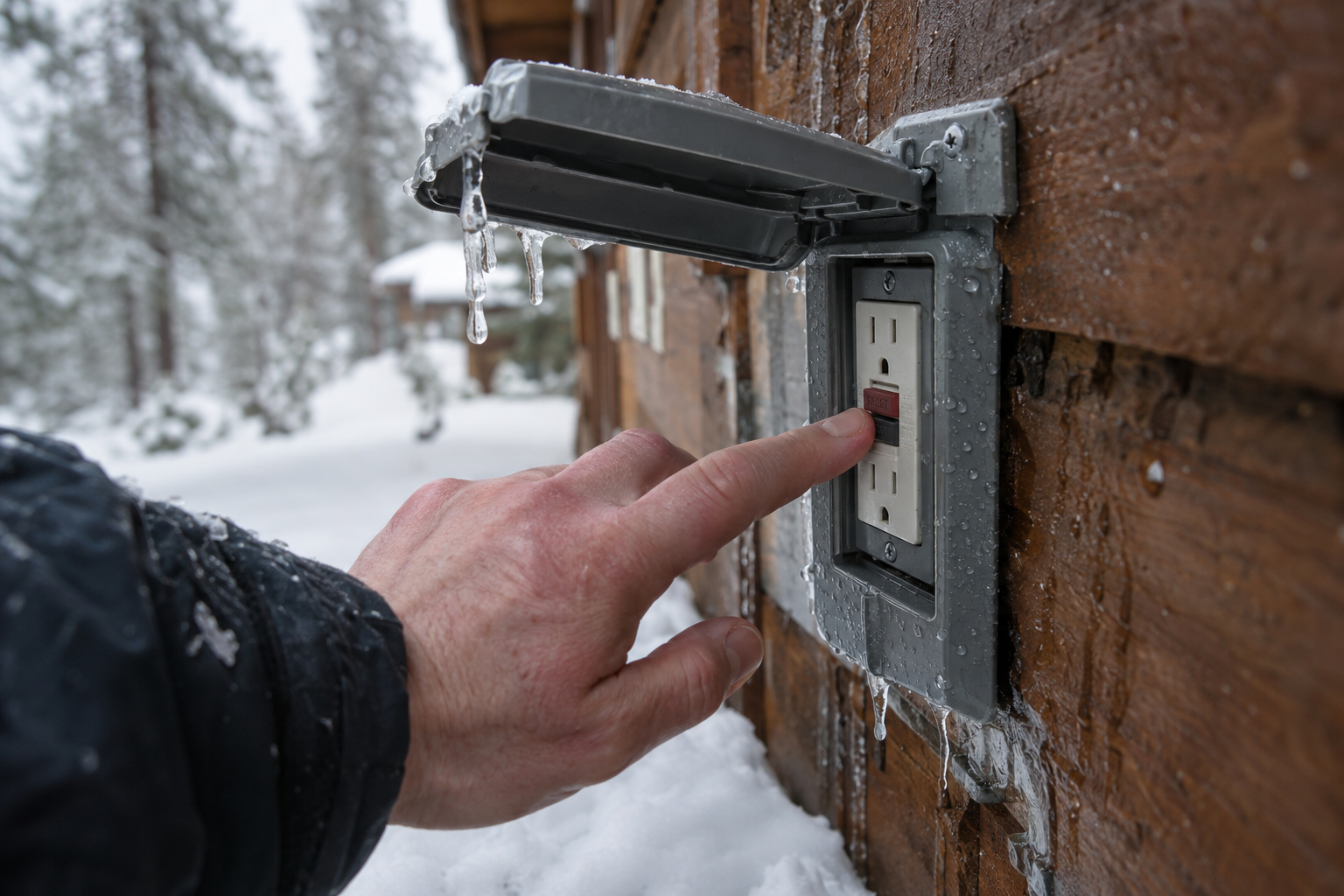
Under current National Electrical Code adoption, outdoor receptacles rated 50 amps or less — which includes RV hookups — require ground-fault circuit interrupter protection, per NEC 551.41. This matters more than it might seem: RV owners are frequently standing on the ground near a metal-framed vehicle while connecting or disconnecting power, which is exactly the scenario GFCI protection is designed to catch before it becomes dangerous. Some RV owners report occasional nuisance tripping from certain RV appliances, but that's a wiring and equipment issue to diagnose, not a reason to skip the protection.
The Bootleg Ground Mistake That Can Energize an RV's Frame
This is worth knowing even if someone else is doing the installation. A NEMA 14-50R needs a proper 4-wire circuit — two hot legs, a neutral, and a separate equipment grounding conductor. Older 3-wire wiring that bonds the neutral and ground together at the receptacle — sometimes called a bootleg ground — is a serious code violation that can force neutral return current onto the grounding system, which in an RV context can energize the vehicle's metal chassis. If you're having an RV outlet added to an older home, confirm the electrician is running proper 4-wire cable, not adapting existing 3-wire circuitry to save a step.
Can the Same Outlet Charge Your EV and Power Your RV?
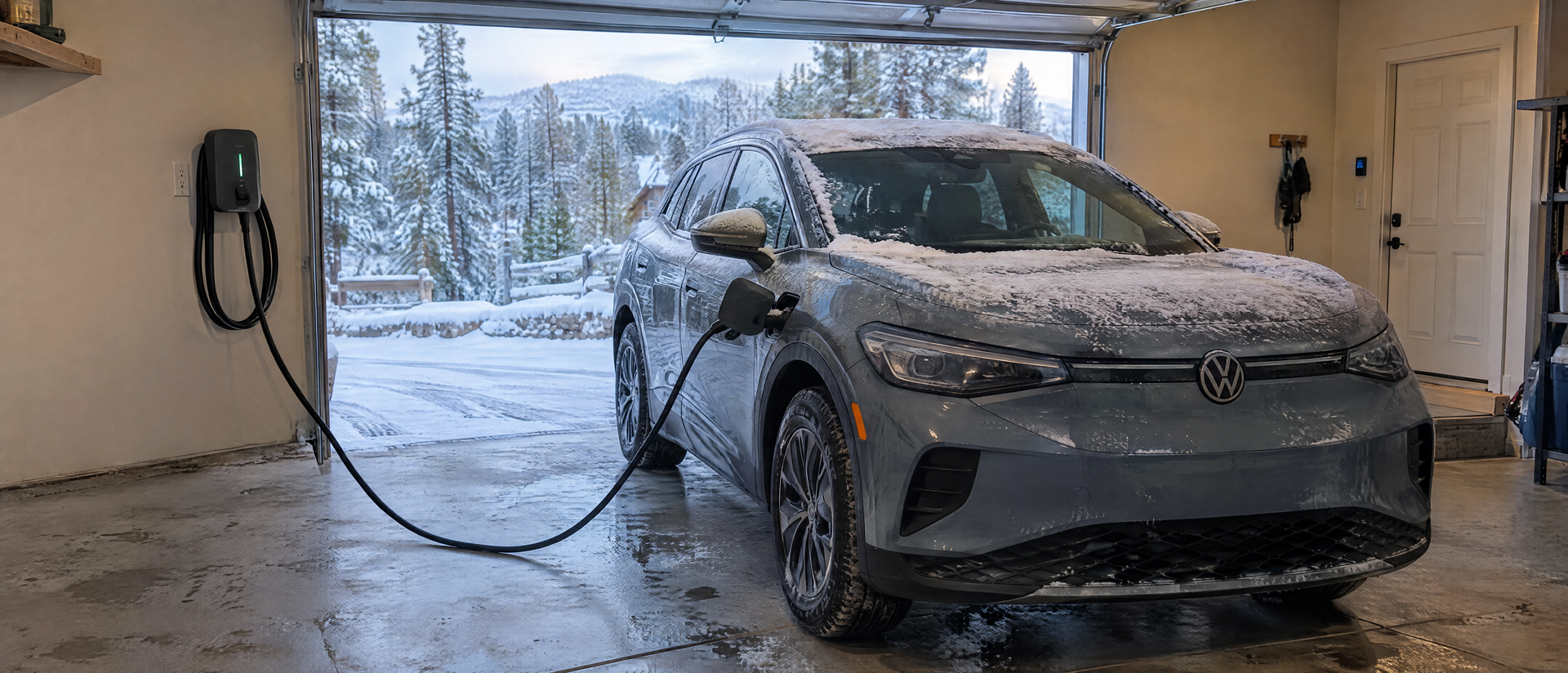
Often, yes — a NEMA 14-50 outlet is the same connection standard used for most Level 2 EV chargers, which means a single, properly installed outlet can serve double duty depending on what's parked in the driveway that week. If you're already considering an EV charger installation, it's worth discussing whether a shared NEMA 14-50 setup makes sense for your situation rather than installing two separate circuits.
Does Your Panel Have Room for an RV Circuit?
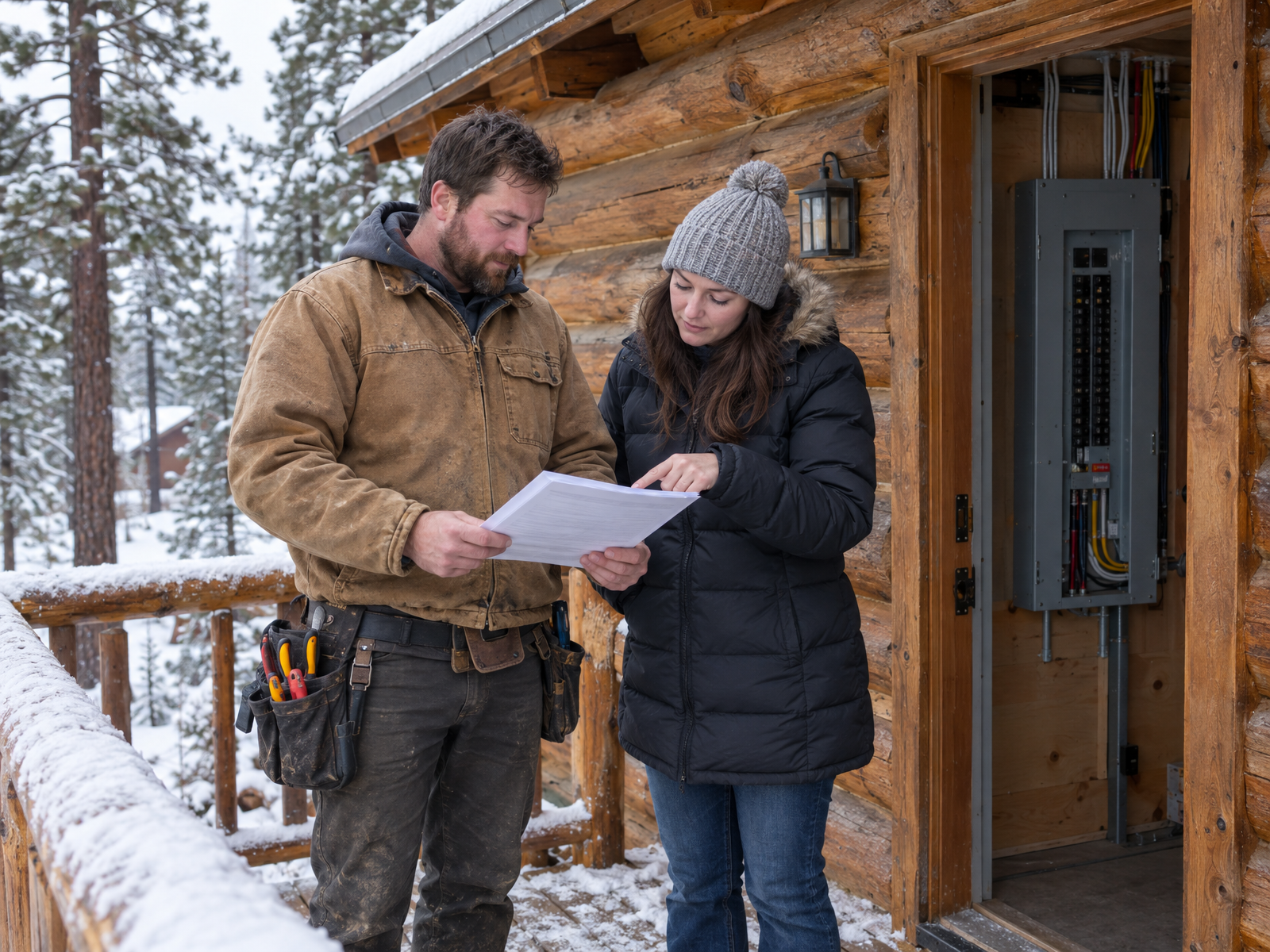
A 50-amp RV circuit is a substantial addition to your electrical load, and it's exactly the kind of project that can reveal an older Big Bear panel doesn't have the capacity to support it safely. We cover this in more detail in our panel upgrade guide — a load calculation before installation tells you whether your existing panel can handle it or whether an upgrade needs to happen first.
What Does RV Hookup Installation Cost in Big Bear?
- 50-amp RV outlet installation (adjacent to panel, straightforward run): $600–$1,200
- Longer run or underground conduit to a detached parking area: $1,200–$2,500+
- Panel upgrade, if needed to support the added load: $2,800–$4,800
FAQ
Can I just plug my RV into a regular outdoor outlet?
No. RVs, especially 50-amp rigs, require a dedicated NEMA 14-50R receptacle on its own circuit. Standard household outlets aren't rated for the load and don't meet code for RV connections.
Does an RV hookup need GFCI protection?
Yes. Under current code, outdoor receptacles rated 50 amps or less, including RV hookups, require GFCI protection under NEC 551.41.
Can the same outlet be used for both my RV and my EV?
Often, yes. NEMA 14-50 is the standard connection type for both most 50-amp RV hookups and most Level 2 EV chargers, so one properly installed outlet can potentially serve both.
What's a bootleg ground, and why is it dangerous for an RV hookup?
It's when the neutral and ground are improperly bonded together at the receptacle instead of wired separately. This can force current onto the grounding system and, in an RV context, potentially energize the vehicle's metal frame.
Will my existing panel support a new RV circuit?
It depends on your panel's age and current load. A load calculation before installation determines whether your panel has capacity or needs an upgrade first.
Get your RV hookup wired to code, not just wired to work.
Call Big Bear Electric Pros at (909) 415-5573 for a free quote.

Big Bear Planned Power Outage Oct. 16–17: BVES's Timeline, Rolling Blackouts, and What to Do Tonight