Fall Shutdown and Spring Startup: The Electrical Checklist Every Big Bear Cabin Owner Needs
Fall Shutdown and Spring Startup: The Electrical Checklist Every Big Bear Cabin Owner Needs
Quick answer: Properly shutting down a Big Bear cabin's electrical system for the off-season means opening branch breakers in order before the main disconnect, not just flipping one switch. Just as critical: never flip the main breaker back on in spring without inspecting the panel first. At Big Bear's elevation, a winter's worth of freeze-thaw cycling, rodent activity, and moisture intrusion can compromise a circuit in ways you won't see from outside the panel door.
Why Does Big Bear's Elevation Make This More Critical Than a Typical Cabin?
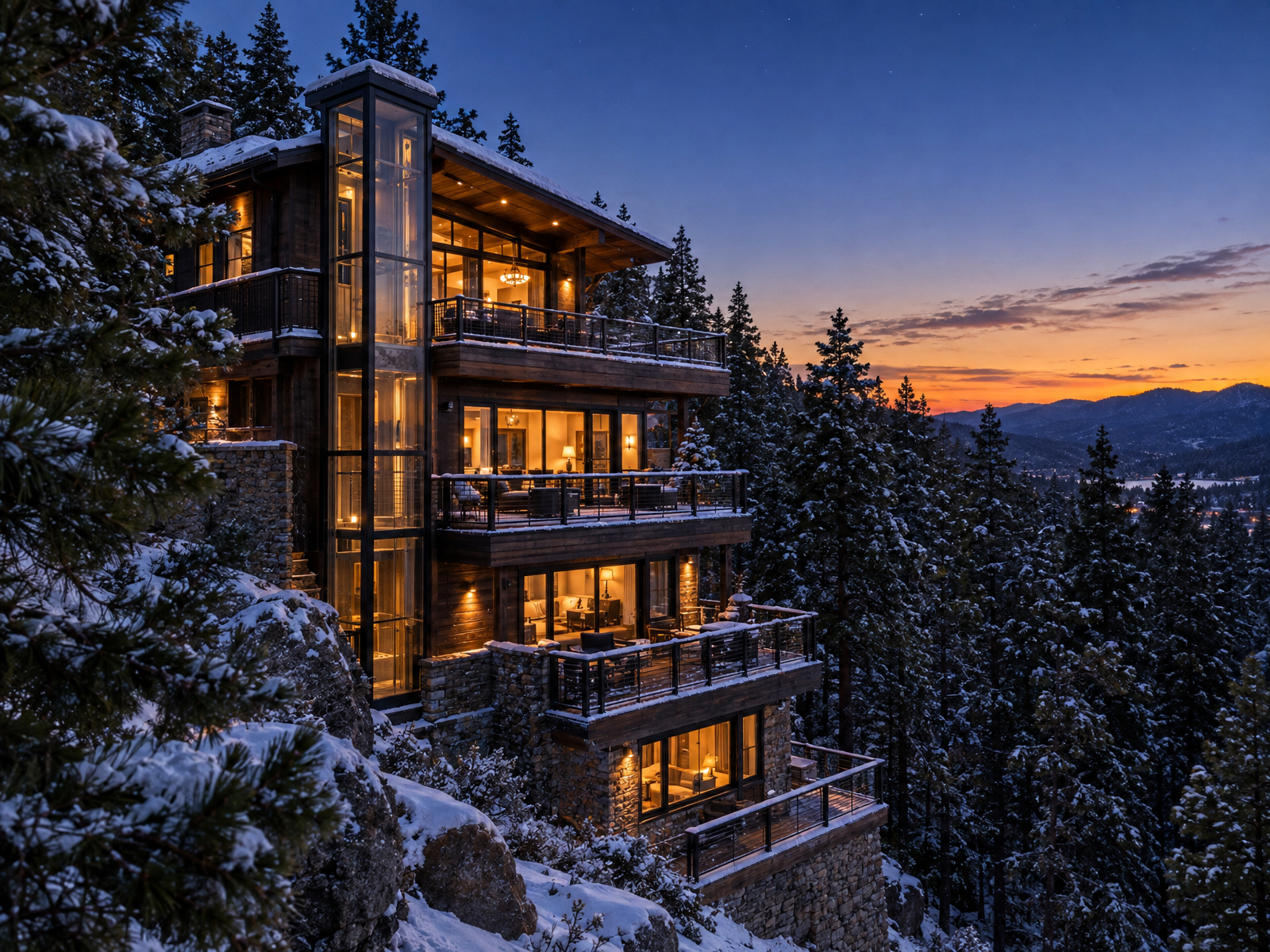
At 6,750 feet and higher, Big Bear properties endure a longer, harder freeze-thaw season than lower-elevation mountain communities, which means more sustained stress on buried conduit, exterior junction boxes, and any wiring exposed to repeated temperature swings. A cabin sitting empty through a full Big Bear winter isn't just cold — it's absorbing months of exactly the conditions that compromise wiring and connections in ways that aren't visible until something fails.
What's the Proper Fall Shutdown Sequence?
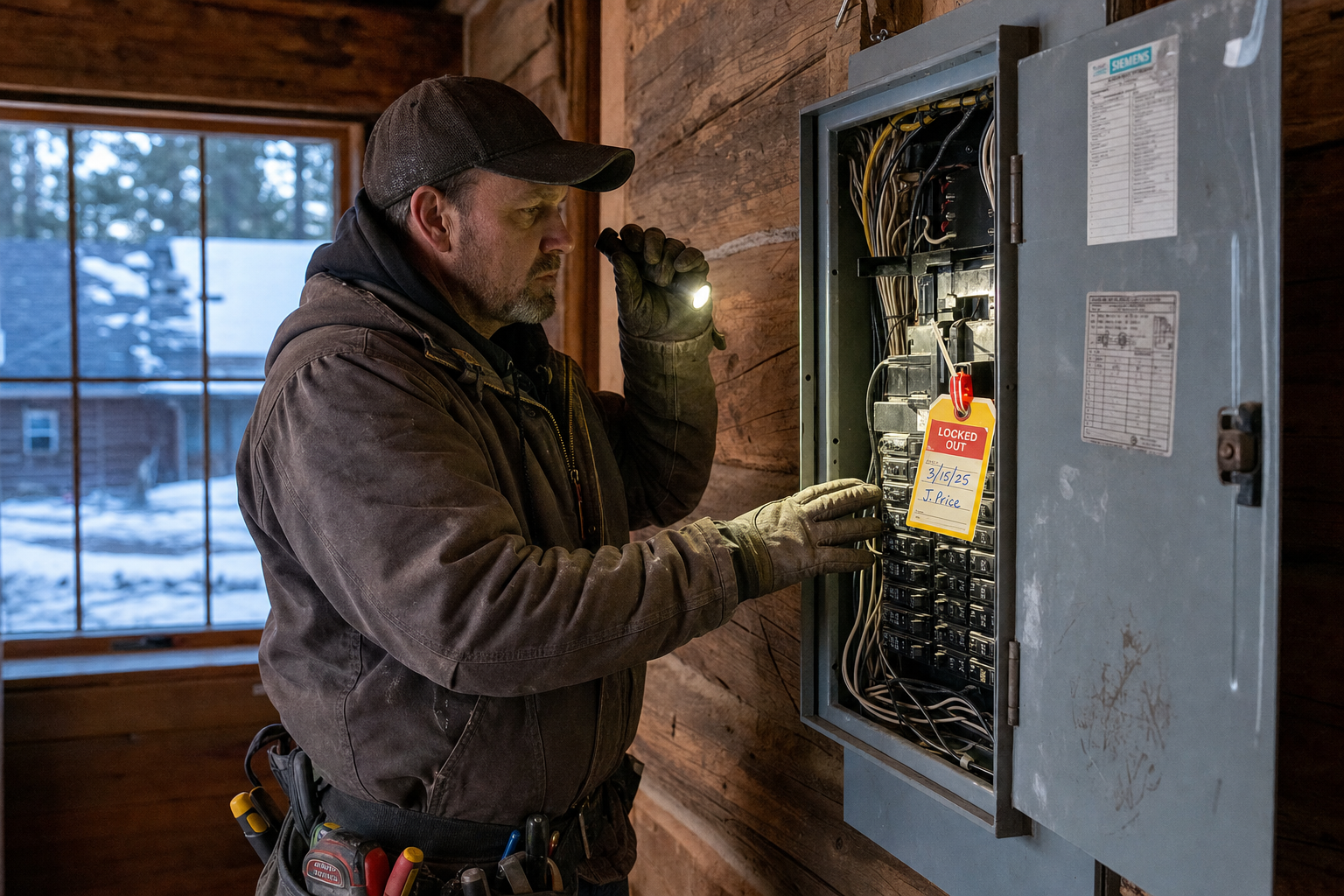
Before closing up for the season, open your largest branch breakers first — electric range, water heater, well pump, heated driveway snow melt system, and any electric baseboard heat — then work through the remaining branch breakers individually, opening the main service disconnect last. Leaving individual breakers off while the main stays on doesn't fully de-energize the panel the way opening the main disconnect does. Apply a lockout tag with the shutdown date and your contact information, and make sure your panel is clearly labeled before you leave.
Why Should You Never Flip the Main Breaker Back On Blind?
This is the single most important habit for any seasonal Big Bear cabin owner. A circuit that's sat compromised all winter — rodent-damaged wiring, a freeze-cracked exterior box, a dock GFCI that failed silently — gives no warning before you throw the main breaker and energize everything at once. Inspect the panel and any accessible wiring before restoring power, not after something starts smoking.
What's the Spring Startup Checklist?
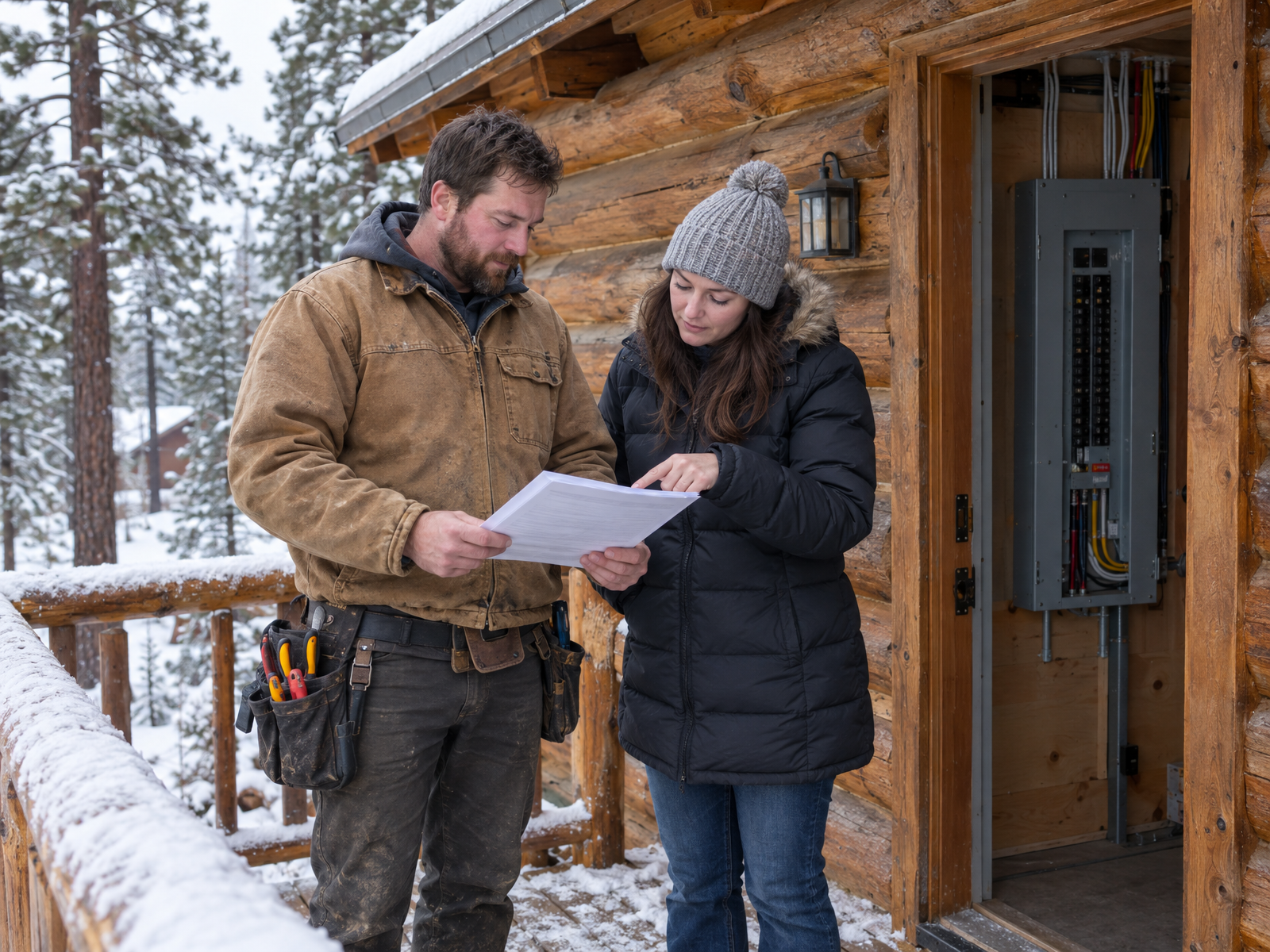
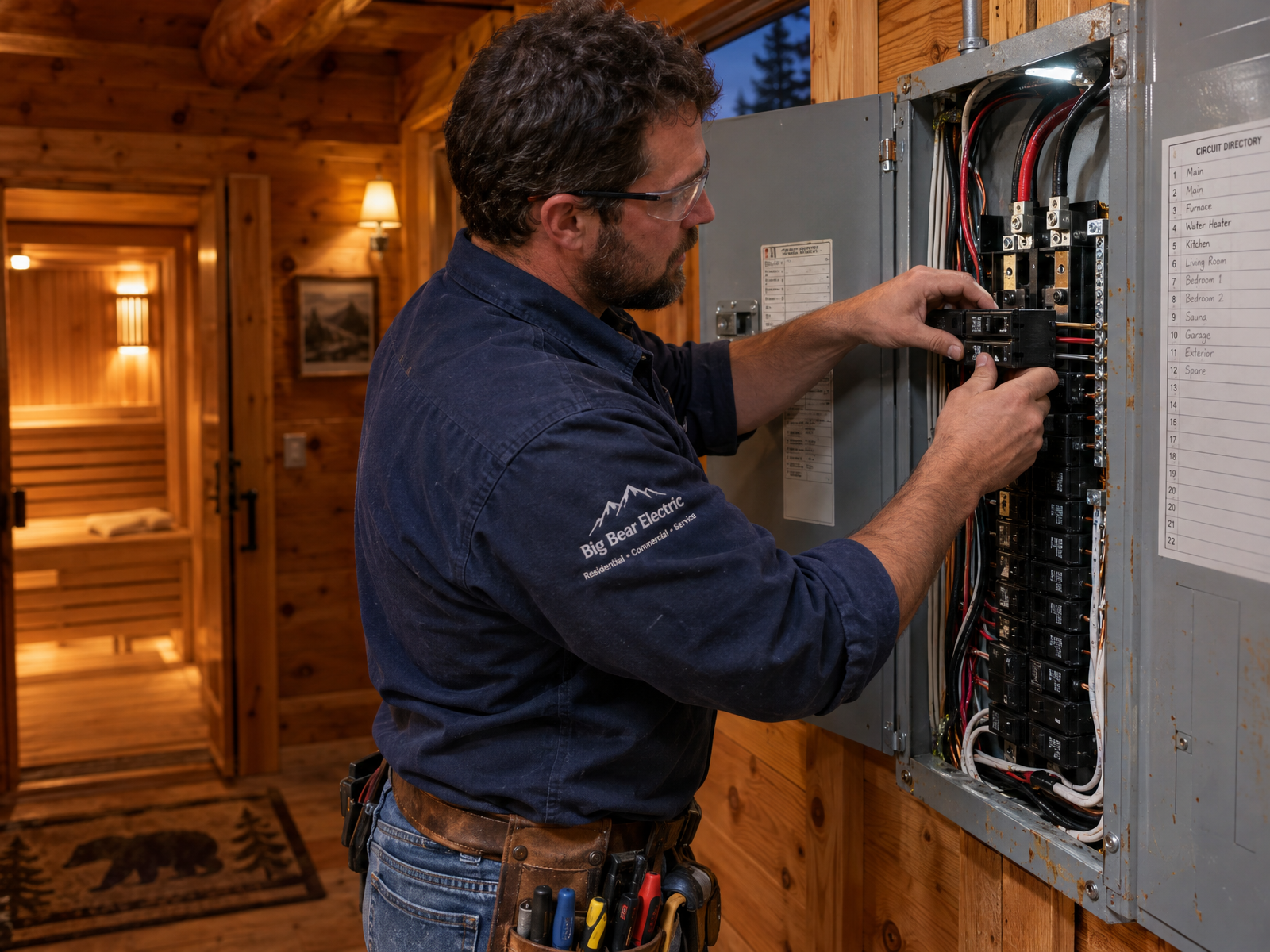
- Visually inspect the panel for moisture, rodent damage, or corrosion before touching anything
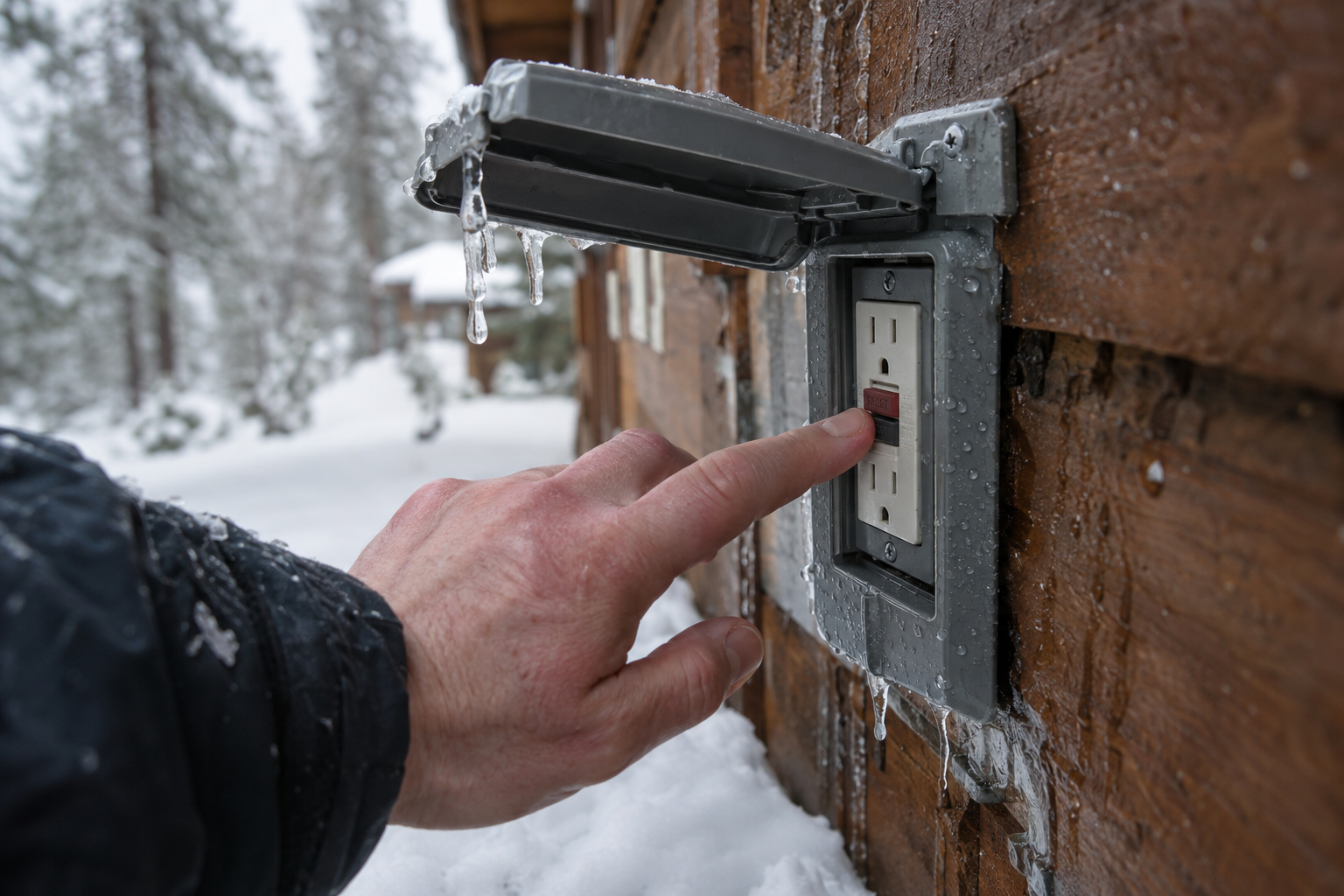
- Test dock and boat lift GFCI outlets if your property has lake access — see our dock electrical guide for what proper protection looks like before anyone goes near the water
- Confirm your heated driveway or snow melt system's circuit is intact if you have one installed — a system that seemed fine in fall can develop issues after months of dormancy
- Check your backup generator's connections and transfer switch for corrosion or rodent damage before the next storm actually needs it — see our backup generator guide for sizing and maintenance basics
- Restore power branch by branch, not all at once, watching for anything that trips a breaker or behaves abnormally
- Document anything unusual and don't use a circuit you're not confident is safe until it's evaluated
Does a Documented Inspection Help With Insurance?
It can, and this is worth knowing given how much scrutiny California insurers are putting on wildfire-zone electrical systems these days. A professional spring inspection that documents your panel and wiring condition is exactly the kind of paper trail that supports a mitigation discount conversation or a renewal dispute — the same principle we cover in our panel upgrade and insurance guide. A seasonal inspection you were already doing for safety reasons can double as documentation you need for an entirely different purpose.
What Do Cold Temperatures Actually Do to Your Breakers?
Breakers exposed to sustained cold can trip at a lower percentage of their rated load or respond more slowly to an actual fault than they would at normal temperature. That's part of why a panel that's been through a full Big Bear winter deserves a real inspection before you trust it fully again, rather than assuming it performs exactly as it did last fall.
FAQ
What order should I shut off breakers when closing up my Big Bear cabin for winter?
Open branch breakers first, largest loads first, then open the main service disconnect last to fully de-energize the panel.
Is it safe to just flip the main breaker back on when I arrive in spring?
No. Inspect the panel and visible wiring for rodent damage, moisture, or corrosion first, and restore power branch by branch rather than all at once.
Does a heated driveway system need to be checked after winter?
Yes. A system that seemed fine in fall can develop circuit issues after months of dormancy, and it's worth confirming before the next snow season relies on it.
Can a seasonal electrical inspection help with my homeowners insurance?
Potentially. A documented panel and wiring inspection is exactly the kind of evidence some insurers factor into coverage and mitigation discount decisions for wildfire-zone properties.
Do cold temperatures actually affect how my breakers perform?
Yes. Breakers exposed to sustained cold can trip at a lower percentage of their rated load or respond more slowly to a fault.
Closing up your Big Bear cabin for the season, or need a proper spring inspection before you trust the power again?
Call (909) 415-5573 for a free assessment.
Big Bear Planned Power Outage Oct. 16–17: BVES's Timeline, Rolling Blackouts, and What to Do Tonight